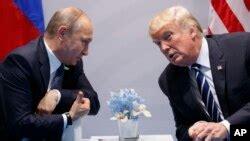
In a high-stakes diplomatic revelation, former U.S. President Donald Trump disclosed that Russian President Vladimir Putin issued a “very strong” warning in response to Ukraine’s recent drone strikes targeting Russian strategic airfields. The incident, which unfolded on June 1, marked one of the most aggressive Ukrainian operations on Russian soil since the invasion began, escalating tensions on both military and political fronts.
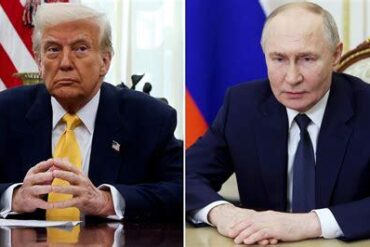
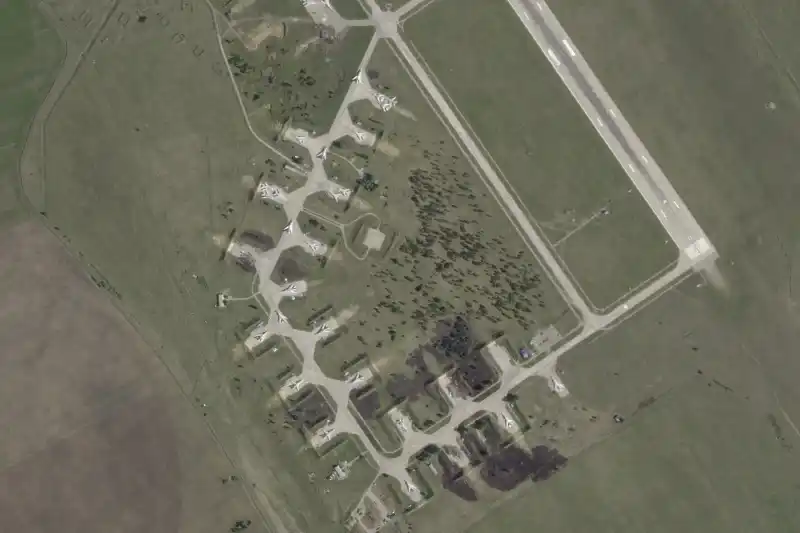
The warning came during a 75-minute phone call between the two leaders, which Trump described on Truth Social as a “good conversation,” albeit one that offered no immediate pathway to peace. At the heart of the exchange was Ukraine’s bold assault on airbases deep inside Russian territory, particularly in the Irkutsk region, where satellite imagery confirmed the destruction of at least 11 Russian strategic bombers.
Ukraine’s Strategic Strike: The Bold Drone Offensive
Ukraine’s Security Service (SBU) carried out the sophisticated drone operation, which reportedly targeted more than 40 Russian bombers. Ukrainian President Volodymyr Zelenskyy hailed the attack as “absolutely brilliant,” emphasizing that the strike was the result of over 18 months of planning. The operation demonstrated the growing effectiveness of Ukraine’s drone warfare capabilities, pushing the conflict into a new technological dimension.
Zelenskyy’s praise was echoed by Ukrainian intelligence chief Andriy Yermak, who highlighted the symbolic weight of the attack, noting that Ukraine had once surrendered its strategic bombers to Russia in exchange for security guarantees—a deal now rendered meaningless in the face of Russia’s full-scale invasion.
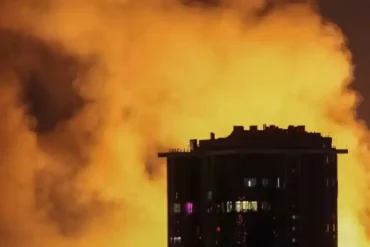
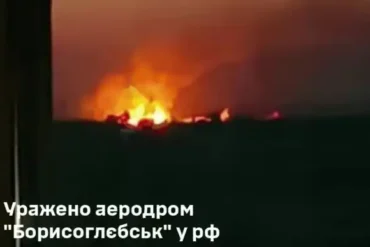
Video footage shared online showed burning aircraft and plumes of smoke rising from the Belaya air base near Russia’s border with Mongolia, signaling the reach and precision of Ukraine’s evolving drone arsenal. According to RFE/RL and independent video analysis, the scale of destruction inflicted by Ukraine was significantly damaging to Russia’s long-range bombing capabilities.
Putin’s Warning: Escalation in the Shadows of Diplomacy
In response, President Putin reportedly told Trump that Russia “will have to respond” to the attack. While Putin’s foreign policy aide Yuri Ushakov confirmed that the issue was discussed, he offered no details on what such retaliation would entail. However, analysts believe a new wave of Russian escalation is likely.
Robert Pszczel, a veteran security expert, noted that the probability of Russian retaliation is almost certain. Yet, the unpredictability lies in its intensity and scope, especially given Russia’s past record of targeting Ukraine’s civilian and energy infrastructure. From missile barrages on Kyiv to the weaponization of winter via energy grid assaults, the Kremlin has previously shown little restraint.
In Putin’s own words, aired during a Russian government meeting, he lambasted Kyiv’s leadership, branding recent attacks on border bridges as “terrorist acts” and accusing Ukraine of sabotaging cease-fire possibilities. “The Kyiv regime does not need peace at all,” Putin stated, effectively dismissing any progress achieved during recent negotiations in Istanbul.
Diplomatic Chess: Talks in Istanbul Offer Faint Hope
Even as Putin warned of retaliation, he also briefed Trump on a new round of Russia-Ukraine negotiations, which took place in Istanbul on June 2, just one day after the drone strikes. Led by Ukrainian Defense Minister Rustem Umerov, the Ukrainian delegation emphasized its commitment to diplomatic solutions.
Despite the symbolism of direct dialogue, the talks ended with little substantive breakthrough. The Kremlin called the talks “useful,” but observers noted a hardening of positions on both sides. With Zelenskyy reiterating that a cease-fire was necessary to prevent such drone attacks, and Putin simultaneously rejecting peace overtures, the Istanbul dialogue seemed to further underscore the chasm between war and diplomacy.
American Mediation: Trump’s Role and Washington’s Calculus
Trump’s role in the conversation with Putin brings an unusual twist. Though not currently in office, Trump’s discussion with the Russian leader carries geopolitical weight, especially amid ongoing U.S. support for Ukraine. According to Ushakov, Trump clarified that the United States had no prior knowledge of Ukraine’s drone plans—seeking to distance Washington from the surprise offensive.
While this distancing may help cool immediate tensions, it also exposes the limits of U.S. influence over Ukraine’s tactical decisions. Meanwhile, Ukrainian officials visiting the U.S. Congress, including Yermak, were focused on securing a new package of sanctions against Russia, stressing that “pressure remains the only tool” to counter Russian aggression.
Washington’s broader position remains consistent: unwavering support for Ukraine’s sovereignty, military assistance, and sanctions diplomacy. However, as Ukraine’s battlefield tactics grow bolder and more autonomous, the U.S. may find itself in an increasingly reactive posture, balancing alliances and global stability.
Backlash on the Home Front: Russian Civilian Anxiety Mounts
The drone attacks have also sent ripples across Russian civilian society. Residents in regions previously untouched by the war are now confronting the harsh reality that the conflict is no longer distant. “Now the war has reached us too,” one Russian civilian told RFE/RL after witnessing the aftermath of the drone assault.
These psychological shifts are significant. As drone warfare bypasses traditional frontlines, the illusion of invulnerability inside Russian borders is shattered. The Kremlin, long confident in its ability to keep the fight confined to Ukrainian soil, must now grapple with homeland vulnerability—a potentially destabilizing dynamic.
Ukrainian Losses Amid Gains: Russia’s Ongoing Strikes
In a grim turn, Ukraine also suffered renewed Russian drone assaults following the strike on the Irkutsk base. In Nikopol, a 45-year-old woman was killed and five others injured during a Russian drone attack. In the Zaporizhzhya region, another 54 civilians were wounded, including an 83-year-old woman, as FPV drones struck residential areas in Marhanets.
These attacks underscore the tit-for-tat escalation that has come to define this war. Each Ukrainian tactical success is often followed by civilian-targeted reprisal from Moscow. The humanitarian toll continues to rise even as Ukraine gains military leverage.
Modern Warfare Rewritten: The Drone Revolution
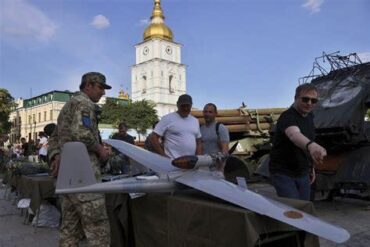
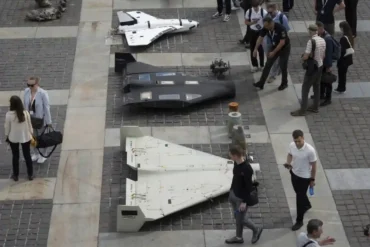
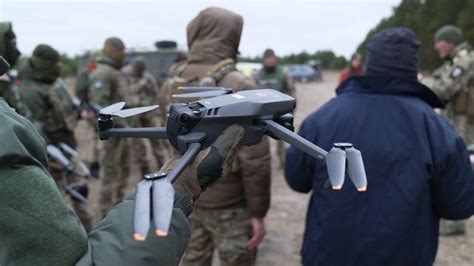
The Ukrainian drone operation represents more than a tactical strike—it signals a paradigm shift in modern warfare. By bypassing traditional air force constraints and utilizing small, affordable, and highly maneuverable drones, Ukraine is redefining how asymmetric warfare is waged.
These attacks also expose critical vulnerabilities in Russia’s military infrastructure, particularly the defense of strategic bombers parked in the open. The Russian air force, once a symbol of Cold War might, has been visibly weakened by weapons that cost a fraction of the aircraft they destroy.
Military analysts suggest that Ukraine’s ability to strike deep into Russian territory with high accuracy may become the defining feature of the war’s next phase. The consequences are geopolitical as well as tactical—thrusting drone warfare into the center of defense strategy discussions across NATO and beyond.
Conclusion: High Risk, High Stakes, and No Turning Back
Putin’s stern warning to Trump reflects more than bluster; it reveals a strategic dilemma. Russia must respond forcefully to deter further strikes but risks widening a conflict it can no longer fully control. Ukraine, emboldened by the success of its drone campaign, is signaling that strategic depth is no longer Russia’s safe zone.
As the technological battlefield evolves, and diplomatic overtures repeatedly stall, the war inches closer to a broader geopolitical reckoning. With civilian lives at stake and military doctrines being rewritten in real-time, the world watches as two superpowers and a resilient nation navigate the treacherous terrain of modern conflict.