Air Canada’s new Business Class Basic fare looks, at first glance, like another example of an airline stripping benefits from a premium product. Introduced on July 28, 2026, alongside a Basic fare for Premium Economy, the option is non-refundable, charges for seat selection, and imposes a fee when travelers need to change a ticket. Those rules can make a premium ticket considerably less attractive.
For Aeroplan elites, however, that conclusion misses the key part of the policy. Air Canada’s loyalty benefits can override several restrictions attached to Basic fares, while the Business Class seat, lounge access, baggage allowance, points earning, and status-earning potential remain largely intact. That creates an unusual situation in which the cheapest premium-cabin fare can retain much of the practical value of a more expensive ticket.
The result is especially interesting for travelers who hold Aeroplan status and an eligible co-branded credit card. Instead of treating Business Class Basic as a compromised product, they can potentially use it to buy the same cabin and much of the same airport experience for less. The catch is that the remaining restrictions still matter, so the cheapest fare is not automatically the best choice for every itinerary.
What Air Canada Business Class Basic Actually Includes
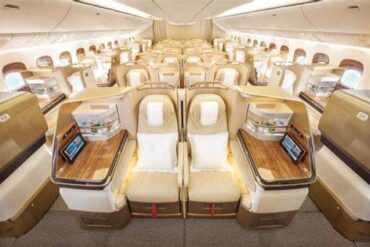
Air Canada now offers three fare families in Business Class: Basic, Standard, and Latitude. The differences are concentrated primarily around flexibility, refunds, and ancillary benefits rather than the physical cabin itself. A passenger buying Business Class Basic still travels in Business Class, earns Aeroplan points, earns Status Qualifying Credits, receives priority boarding and baggage handling, and can access the Maple Leaf Lounge.
The Basic fare includes a carry-on bag and one complimentary checked bag. Seat selection is available for a fee, while the ticket is non-refundable. Changes are allowed, but they are subject to a fee. These limitations matter, yet they are less severe than some other airlines’ premium Basic restrictions.

One significant exclusion is access to the Signature Suite. Business Class Basic passengers can use the Maple Leaf Lounge, but the more exclusive Signature Suite experience is reserved for eligible customers under Air Canada’s applicable access rules. That distinction may matter on a journey through Toronto or Vancouver, especially on transborder or long-haul journeys.
The important point is that Basic does not strip away the fundamental Business Class product. The seat remains a Business Class seat, the passenger receives the associated onboard service, and the ticket continues to participate in Air Canada’s points and status-earning structure. For an elite traveler who does not need flexibility or Signature Suite access, paying more for Standard can therefore become difficult to justify.
Why Aeroplan Elite Status Changes the Value Equation
The real twist is the interaction between Air Canada’s fare restrictions and Aeroplan elite benefits. The program has five published elite levels: 25K, 35K, 50K, 75K, and Super Elite. As travelers move higher through the hierarchy, they receive increasingly valuable benefits involving baggage, seat selection, flight changes, refunds, standby, and points earning.
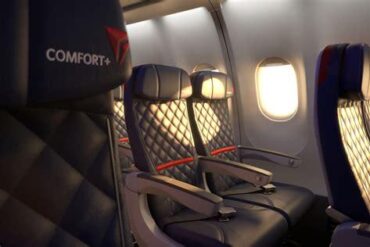
Even at 25K, an elite member receives an additional checked bag, reducing the practical impact of the Basic fare’s baggage limitation. Higher levels provide more generous baggage benefits, while 50K, 75K, and Super Elite members receive complimentary seat selection. That matters because seat selection is one area where Basic normally asks customers to pay extra.
All Aeroplan elites can also stand by at the airport without a fee. More importantly, Super Elite members can change flights without a fee and receive a full refund when they cancel. Those benefits effectively neutralize two of the biggest reasons a traveler might otherwise reject a non-refundable Basic fare.

This is why “Business Class Basic” can be misleading when applied to an elite member. The fare rules may look restrictive, but the passenger’s actual experience is determined by the interaction between the fare and the Aeroplan account. A traveler at the top of the program can therefore approach Basic with far fewer compromises than a non-elite customer.
For Super Elite members in particular, the remaining disadvantage is remarkably narrow. Signature Suite access is still excluded, while eUpgrades are not permitted on Business Class Basic; the latter limitation is more relevant to Premium Economy Basic because Business Class is already Air Canada’s highest cabin. In practical terms, the premium product loses relatively little when an elite member buys at the lowest fare level.
Aeroplan Credit Cards Make Business Class Basic Even More Interesting
Elite status is only part of the story. Air Canada’s Aeroplan co-branded credit cards can add another layer of benefits that reduces the impact of Basic fare restrictions. Air Canada works primarily with TD and American Express, offering several cards with different levels of benefits.
Depending on the card, customers can receive Aeroplan earning opportunities, complimentary checked baggage, lounge access, and boosts toward status qualification. Those benefits can apply regardless of whether the underlying ticket is Basic, Standard, or Latitude, meaning a traveler can buy the cheaper fare without necessarily losing the benefits associated with the card.

This is particularly important because airline fare rules increasingly separate conveniences from the fare. If a credit card already provides a checked bag or lounge access, paying a higher fare simply to obtain a benefit the traveler already has can be wasteful. The same logic applies to seat selection when elite status provides it automatically.
That does not mean every Aeroplan member should automatically choose Basic. The value depends on the benefits attached to the traveler’s status and card, as well as the likelihood that the itinerary will need to change. But for a frequent Air Canada customer who understands those rules, Business Class Basic can be an efficient way to spend fewer dollars without giving up the parts of premium travel that matter most.
The Biggest Weakness Is Still Flexibility
There is an important reason not to get carried away with the apparent bargain. Basic fares are designed to make customers accept restrictions in exchange for a lower price. For travelers without elite status, the non-refundable condition and change fee can quickly become expensive if plans shift.
That risk does not disappear simply because a traveler is loyal to Air Canada. Some elite benefits can override restrictions, but the precise benefit level matters. A 25K member does not have the same flexibility as a Super Elite member, and a traveler should never assume that holding status automatically makes every Basic restriction disappear.
The fare can be excellent for a predictable trip but less attractive for an uncertain one. Someone booking a fixed vacation several months ahead may be comfortable with the risk, particularly if the savings are substantial. A traveler with a constantly changing business schedule may prefer Standard or Latitude because flexibility itself has monetary value.
Why Air Canada Introduced Premium Basic Fares
Air Canada’s move is part of a much larger shift in airline pricing. Basic fares began as a way for traditional airlines to compete with low-cost carriers by displaying a cheaper headline price while separating optional services from the core ticket. The strategy worked, and airlines gradually extended the concept beyond economy.
Business Class Basic and Premium Economy Basic represent the next stage. Instead of selling every premium seat with the same bundle of flexibility and privileges, airlines can offer multiple prices to customers with different willingness to pay. A traveler who wants the seat but does not care about refunds may choose Basic, while someone who values flexibility can pay for Standard or Latitude.
Air Canada also has a strategic reason for the change. The airline participates in a transatlantic joint venture with United Airlines and Lufthansa, and those carriers have also introduced premium Basic concepts. Aligning fare structures makes commercial coordination easier and gives customers across the joint network a more familiar set of choices.

The broader objective is price segmentation. Every aircraft seat that leaves empty represents revenue that can never be recovered after departure. Airlines therefore try to sell seats to passengers with different willingness to pay, using fare buckets, dynamic pricing, and increasingly detailed restrictions. Business Class Basic gives Air Canada another tool for capturing customers who might otherwise consider the premium cabin too expensive.
Who Should Buy Air Canada Business Class Basic?
The strongest candidates are travelers with Aeroplan elite status, especially those whose benefits provide free seat selection, additional baggage, or substantial flexibility. The proposition becomes even stronger when the traveler also holds an Aeroplan co-branded credit card that supplies benefits already removed from the Basic fare.
A passenger without meaningful status benefits should look much more carefully at the total cost before choosing Basic. For an elite traveler, however, the equation can be very different. Benefits that are normally valuable extras become built-in protections, allowing the traveler to focus on the lower headline fare rather than automatically paying for a higher fare family.
The smarter approach is not to ask whether Business Class Basic is good or bad. The better question is what the fare becomes after the passenger’s Aeroplan status and credit-card benefits are applied. For an elite traveler, the answer can be dramatically different from what the fare name suggests.
The Smart Buy Is About the Passenger, Not Just the Fare
Air Canada’s Business Class Basic fare illustrates how complicated modern airline pricing has become. On paper, it is a stripped-down premium ticket: non-refundable, subject to change fees, and less generous in areas such as seat selection and premium lounge access. But those headline restrictions do not tell the whole story for Aeroplan elites.
The airline has created a fare where the cheapest price can coexist with a surprisingly complete premium experience for loyal customers. Business Class Basic still provides the Business Class cabin, points and status earnings, priority services, baggage benefits, and Maple Leaf Lounge access, while elite status and credit-card perks can soften or eliminate several restrictions.
That makes the fare particularly compelling for Aeroplan members who know exactly which benefits they receive. The closer a traveler is to Super Elite, the more powerful the economics become because the program can erase some of the most painful restrictions that make Basic fares unattractive to ordinary customers.
In the end, the smartest Aeroplan strategy is not simply choosing the cheapest ticket. It is choosing the cheapest ticket whose restrictions are already covered by benefits the traveler has earned. Under that calculation, Air Canada’s new Business Class Basic fare is not merely a stripped-down premium product. For the right elite passenger, it may be one of the most efficient ways to buy a Business Class seat in 2026.