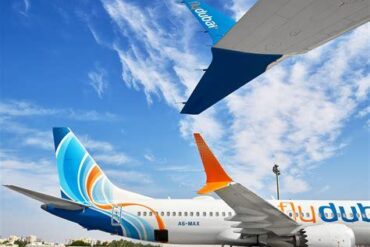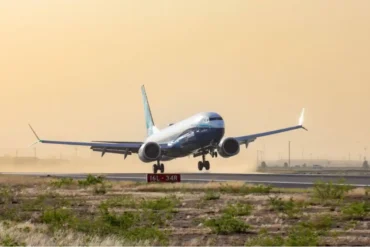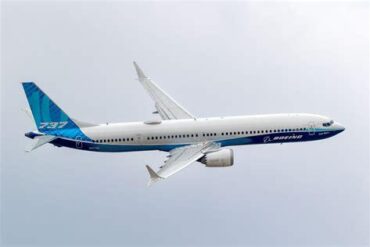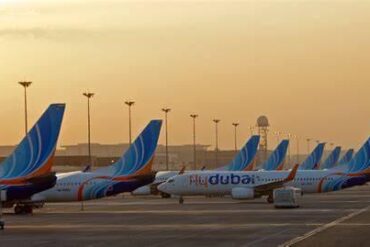
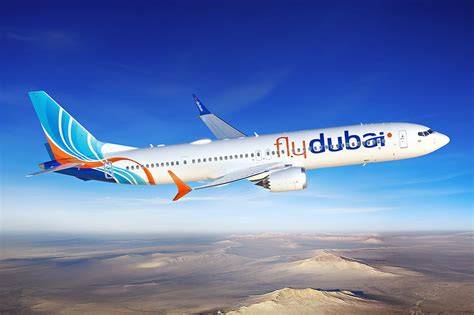
A Boeing 737 MAX 8 operated by flydubai survived an extraordinary emergency after plunging more than 14,000 feet in less than 30 seconds during a cockpit attack on a flight from Dubai to Tel Aviv. The aircraft experienced a descent rate approaching 31,000 feet per minute and reached ground speeds approaching 600 knots before eventually being brought under control.
The incident occurred aboard flydubai Flight FZ1073, which was traveling from Dubai International Airport to Ben Gurion Airport in Israel. The aircraft was cruising at approximately 34,000 feet over Saudi Arabia when the cockpit emergency began at about 05:21 UTC. Flight-tracking data indicates that the aircraft subsequently entered an exceptionally steep descent that placed enormous aerodynamic and structural loads on the airframe.
According to data reported by Flightradar24, the 737 MAX 8 descended from 30,875 feet to 16,750 feet between 05:22:07 and 05:22:36 UTC, losing 14,125 feet in only 29 seconds. Its ground speed increased from approximately 400 knots during cruise to nearly 600 knots during the dive. The aircraft then climbed briefly before descending again and ultimately stabilized at approximately 15,000 feet.
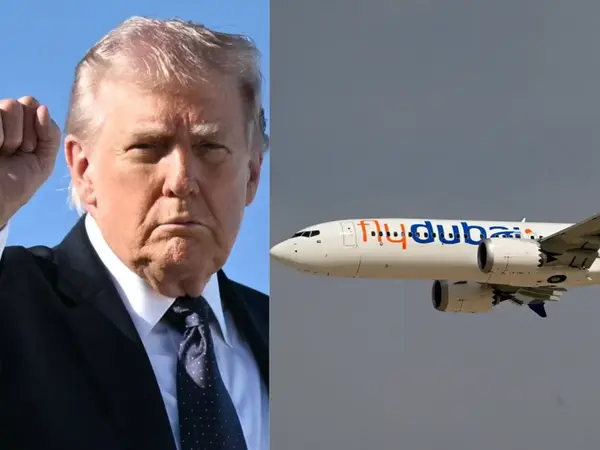
The aircraft’s survival attracted attention from U.S. President Donald Trump, who publicly praised Boeing and its chief executive, Kelly Ortberg. Trump described the aircraft as having demonstrated what he called powerful structural planning and design, saying it had endured forces and strain far beyond what it was designed and expected to withstand. His comments came as investigators began examining precisely how much stress the aircraft experienced.
The 737 MAX did not emerge from the event completely undamaged. Photographs taken after the landing reportedly show a substantial portion of the aircraft’s rudder missing, raising questions about the aerodynamic forces generated during the descent. Former United Airlines pilot and aviation safety expert Steve Arroyo told The Associated Press that he was surprised the aircraft had remained intact given the damage and the severity of the maneuver.
737 MAX Speed Limits and the Extreme Descent
The flight data also raises questions about whether the aircraft exceeded its certified operating envelope. Boeing specifies a maximum operating speed of Mach 0.82, equivalent to roughly 473 knots at higher altitudes, while normal cruise is around Mach 0.79. The reported ground speed during the emergency was considerably higher, although ground speed and true airspeed are not interchangeable, particularly at high altitude and in changing atmospheric conditions.
Commercial aircraft are nevertheless designed with margins beyond their normal operating limitations. FAA certification requirements provide additional structural protection against events involving excessive speed. Among the requirements is a design dive speed with a margin of at least Mach 0.07 above maximum operating speed, while the structure must also remain free from flutter at speeds up to 15 percent beyond that limit.
Those margins are not intended to make excessive-speed flight routine or permissible. Instead, they provide a degree of protection when an aircraft unexpectedly encounters conditions outside its normal operating envelope. The FZ1073 incident appears to have placed the 737 MAX into precisely such an extraordinary situation.
The missing rudder section may indicate that the aircraft experienced aerodynamic loads beyond its normal operating conditions, but it is too early to determine exactly what caused the damage. Airspeed, altitude, control-input and structural-load information recovered from the flight data recorder should provide investigators with a much clearer picture of the forces involved.
Cockpit Attack Triggered the Sudden 737 MAX Dive
The extreme descent reportedly followed an attack in the cockpit. Israeli officials told Reuters that the first officer, an Omani national who had worked for flydubai for approximately nine months, is believed to have stabbed the captain, an Indian national identified as Smit Machchhar.
The captain reportedly managed to press the cockpit-door release button while injured, allowing passengers and crew members to enter the flight deck and confront the attacker. During the struggle, an Israeli passenger named Yaniv Hayoun, who reportedly had no piloting background, took hold of the aircraft controls and helped bring the aircraft toward level flight.
Hayoun later told Israeli Prime Minister Benjamin Netanyahu that he knew to pull back on the controls after seeing similar actions demonstrated on the television program Air Crash Investigation. His intervention was followed by the arrival of off-duty flydubai pilots who were among those aboard the aircraft and were able to take command.
174 Passengers Survived and the Aircraft Diverted Safely
After the initial emergency, the aircraft was diverted to Tabuk Airport in Saudi Arabia, where it landed safely with all 174 passengers aboard accounted for. The safe landing brought the immediate flight emergency to an end, but investigators now face the more difficult task of reconstructing what happened during the cockpit attack and the subsequent dive.
flydubai has suspended its flights to Israel while authorities investigate the incident. The airline normally operates as many as ten daily flights between Dubai and Tel Aviv in each direction, making the route an important part of its regional network.
For Boeing, the episode provides an unusual real-world demonstration of the structural margins built into the 737 MAX. However, the aircraft’s survival should not be interpreted as evidence that such speeds or descent rates are safe. The damaged rudder demonstrates that the aircraft was subjected to extraordinary conditions, and only a detailed examination of the flight recorders, airframe and control systems can establish exactly how close the 737 MAX came to its structural and aerodynamic limits.