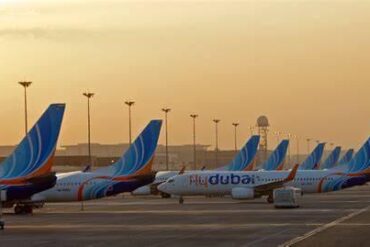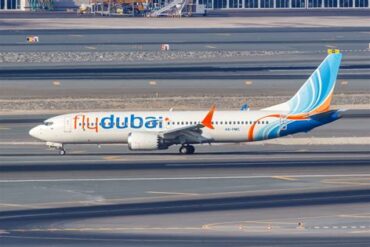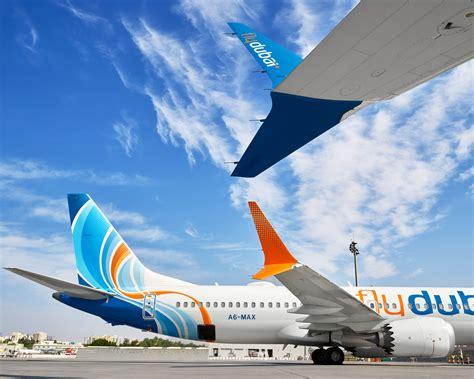
Flydubai is reaching a major milestone in its rapid expansion, with 11 additional Boeing 737 MAX aircraft set to push the Dubai-based carrier’s fleet beyond 100 aircraft. The incoming jets comprise seven 737 MAX 9s and four 737 MAX 8s, strengthening a fleet strategy centered on newer, more fuel-efficient aircraft and providing additional capacity for the airline’s growing network.
The milestone represents another significant step in flydubai’s development since its launch as a low-cost carrier serving Dubai and surrounding markets. The airline has progressively expanded its role across short- and medium-haul markets, using the Boeing 737 family as the foundation of its operation. According to flydubai CEO Ghaith Al Ghaith, surpassing 100 aircraft demonstrates how substantially the carrier has developed while giving it greater flexibility to support future growth.
The new aircraft will also contribute to flydubai’s objective of maintaining a young and fuel-efficient fleet. The carrier sees fleet modernization as an important part of its long-term strategy, particularly as demand for connectivity through Dubai continues to grow. The expansion also aligns with the broader Dubai Economy Agenda D33, which seeks to double the size of Dubai’s economy by 2033 and strengthen its position among the world’s leading global cities.
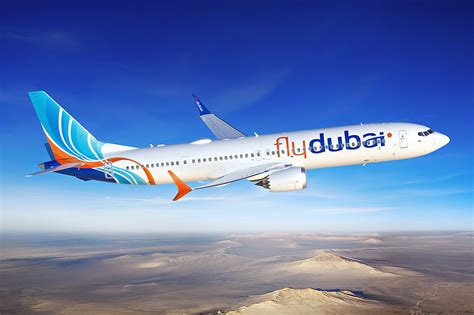
Flydubai Adds Boeing 737 MAX 8 And MAX 9 Aircraft
The 11 aircraft announced by flydubai are split between two versions of Boeing’s narrowbody family. The seven 737 MAX 9 aircraft will provide additional capacity, with the airline’s two-class configuration featuring 16 business class seats and 156 economy seats. The four MAX 8 aircraft will also operate in a two-class configuration, including 10 business class seats.
The choice of both variants gives flydubai additional flexibility as it expands its schedule. The MAX family offers commonality across the fleet while allowing the airline to match aircraft capacity with individual routes. This is particularly relevant for a carrier operating a broad network from Dubai, where demand can vary significantly between markets.
Al Ghaith described the fleet passing 100 aircraft as a significant milestone, noting that the new deliveries are central to flydubai’s long-term fleet strategy. The additional aircraft will increase available capacity while supporting the carrier’s objective of operating one of the youngest fleets in commercial aviation.
Existing Flydubai Aircraft Are Also Being Upgraded
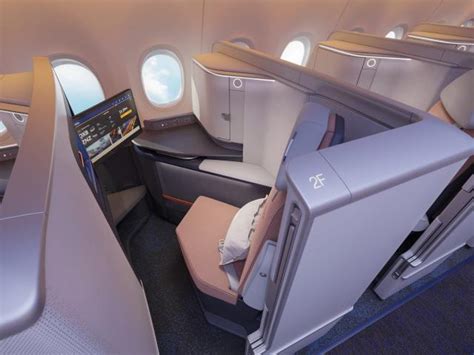
Fleet growth is only part of flydubai’s current strategy. The airline is simultaneously undertaking a substantial retrofit program covering 21 Boeing 737 MAX aircraft that still feature recliner-style business class seats rather than its newer lie-flat product.
Flydubai introduced lie-flat business class in 2017, coinciding with the arrival of its first 737 MAX 8. The latest retrofit project is expected to take approximately 12 months, bringing more aircraft toward a consistent cabin standard and giving business class passengers a more uniform experience across the fleet.
The improvements extend beyond premium passengers. Flydubai is replacing standard overhead bins with Boeing Space Bins, increasing storage capacity throughout the cabin. A conventional overhead bin can accommodate four bags, while a Space Bin can hold up to six bags, potentially making boarding and cabin baggage management easier as more passengers carry larger cabin bags.
The project follows an earlier multimillion-dollar modernization of flydubai’s Boeing 737-800 Next Generation aircraft. That program introduced lie-flat business class, new business class seats and inflight entertainment for passengers. It began in 2024, when flydubai operated 29 737-800s.
Airbus Could Eventually Challenge Boeing’s Fleet Dominance
Despite the arrival of more Boeing aircraft, flydubai’s long-term fleet could become considerably more diverse. In November 2025, Airbus announced that flydubai had signed a memorandum of understanding covering 150 Airbus A321neo aircraft, with options for another 100.
The proposed agreement, announced at the Dubai Airshow, carried a stated list-price value of approximately $24 billion, although actual commercial terms for a transaction of this scale could differ substantially from list prices. Deliveries under the proposed plan were expected to begin toward the end of the decade, with the aircraft planned for delivery by 2031.
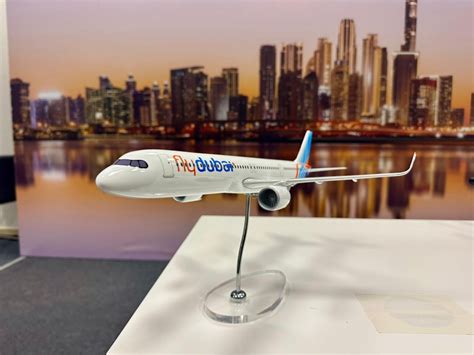
If that Airbus agreement progresses while flydubai continues receiving Boeing aircraft, the carrier’s fleet strategy could eventually become a mixture of 737 MAX and A321neo aircraft. For now, however, Boeing remains firmly at the center of flydubai’s operation, and the 11 incoming MAX jets will provide the immediate capacity needed to take the fleet beyond the 100-aircraft threshold.
The expansion also has a wider strategic dimension because flydubai is state-owned and operated. Its growth supports Dubai’s broader ambitions for connectivity, tourism, trade and economic development. With more than 100 aircraft on the horizon and a potential Airbus order waiting further ahead, flydubai is entering a new phase in which fleet scale and cabin modernization will increasingly shape its next chapter.