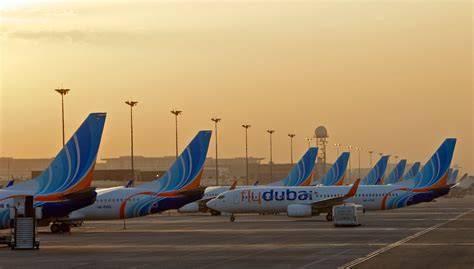
flydubai is expanding beyond its traditional passenger-and-belly-cargo model with the launch of dedicated Boeing 737 freighter operations, creating a new cargo arm designed to strengthen Dubai’s position as a major international trade and logistics hub. The Dubai-based airline announced that it will begin services on October 1, using three wet-leased Boeing 737-800 freighters supplied by SolitAir. The aircraft will be based at Al Maktoum International Airport (DWC), giving flydubai a dedicated platform from which to expand cargo connectivity across some of the world’s fastest-growing commercial regions.
The move represents an important evolution for an airline that has historically built its business around the Boeing 737 family. With 98 Boeing 737 aircraft currently in its fleet, flydubai already carries cargo in the bellies of its passenger aircraft. Dedicated freighters, however, offer something fundamentally different: cargo can occupy the main deck, while flight schedules can be shaped around freight demand rather than passenger requirements. The initial operation therefore gives flydubai an opportunity to test the market before making a much larger investment in converted freighter aircraft.
The three aircraft will collectively add approximately 23,000 kilograms of payload capacity per flight, according to flydubai. That additional capacity comes at an important point in the year, with the airline preparing to serve the fourth-quarter peak season. The Boeing 737-800 freighters will allow flydubai to target shipments that require greater flexibility and specialized handling, while also providing additional options for customers that cannot rely solely on conventional belly-hold capacity.
flydubai Targets Pharmaceuticals, Perishables and High-Value Cargo
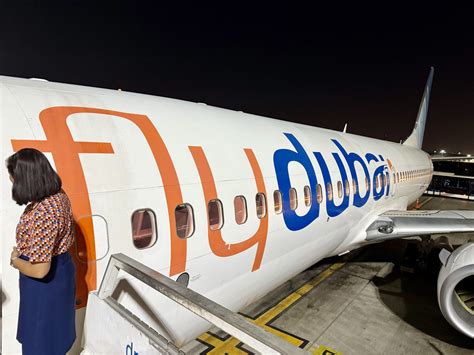
The new freighter operation will focus heavily on high-demand cargo sectors, including pharmaceuticals, temperature-sensitive products, perishables, live animals, dangerous goods and aerospace components. These categories are particularly important for Dubai because the city sits at the intersection of major trade routes linking Europe, Asia, Africa and the Middle East.
Dedicated freighter aircraft can provide shippers with greater control over capacity and scheduling, particularly when cargo volumes rise sharply. For flydubai, the introduction of main-deck capability also creates a more substantial cargo proposition than the belly capacity available on its passenger fleet. The airline will offer both scheduled freighter services and point-to-point charter operations, allowing it to respond to different requirements across its network.
Ghaith Al Ghaith, flydubai’s Chief Executive Officer, described the introduction of dedicated freighters as an important step in the carrier’s development. The strategy builds on flydubai’s existing network while expanding its cargo capabilities and its relationships with codeshare and interline partners. In practical terms, that could allow businesses to move goods through Dubai using a broader combination of passenger and freighter connectivity.
Why Al Maktoum International Airport Matters
flydubai will base its freighter fleet at Al Maktoum International Airport, located south of central Dubai. The airport is particularly important to the carrier’s cargo ambitions because flydubai Cargo already has dedicated airside infrastructure and multimodal connections through Dubai South.
From DWC, flydubai Cargo says it can serve more than 125 destinations across Africa, Central Asia, the Caucasus, Central and Southeast Europe, the Gulf Cooperation Council, the Middle East, South Asia and Southeast Asia. This geographical reach gives the airline a natural foundation for developing a cargo network without having to build an entirely new commercial structure.
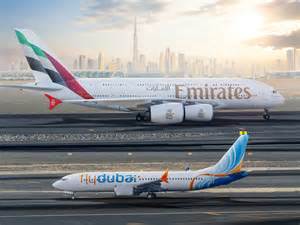
Dubai’s enormous e-commerce and trading economy also provides a strong underlying market. The city has developed into a major redistribution center for international goods, while the Dubai Economic Agenda D33 seeks to strengthen the emirate’s global economic connections. flydubai’s cargo expansion fits neatly into that broader strategy by adding another aviation channel for companies moving valuable or time-sensitive products through the region.
Boeing 737 Freighters Could Be Only the Beginning
The three wet-leased Boeing 737-800 freighters are effectively a test of how much potential flydubai sees in dedicated cargo. The airline plans to evaluate passenger-to-freighter conversions from 2029, potentially transforming the temporary operation into a much larger and more permanent cargo business.
That timing is significant because flydubai is also preparing for its first widebody aircraft. The carrier has 30 Boeing 787 Dreamliners on order, following an $11 billion agreement announced at the 2023 Dubai Airshow. Deliveries are expected to begin toward the end of 2027 and continue through 2033, although the schedule has experienced some delay.
The 787s will dramatically increase flydubai’s long-haul capabilities. The 787-9 has a range of approximately 7,565 nautical miles, compared with about 3,550 nautical miles for the 737 MAX. While flydubai has ruled out North American service, the Dreamliners will allow it to reach substantially farther into global markets and add significant belly-cargo capacity.
For now, however, the three Boeing 737-800 freighters provide the clearest sign of where flydubai is heading. The airline is moving from simply carrying cargo alongside passengers toward building a dedicated freight network, using Dubai’s geography, infrastructure and trade economy as its foundation. If the initial operation performs well, today’s three aircraft could become the starting point for a considerably larger cargo business.