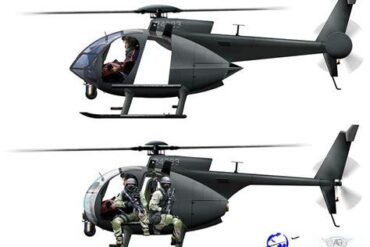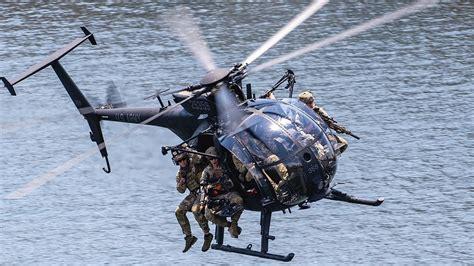
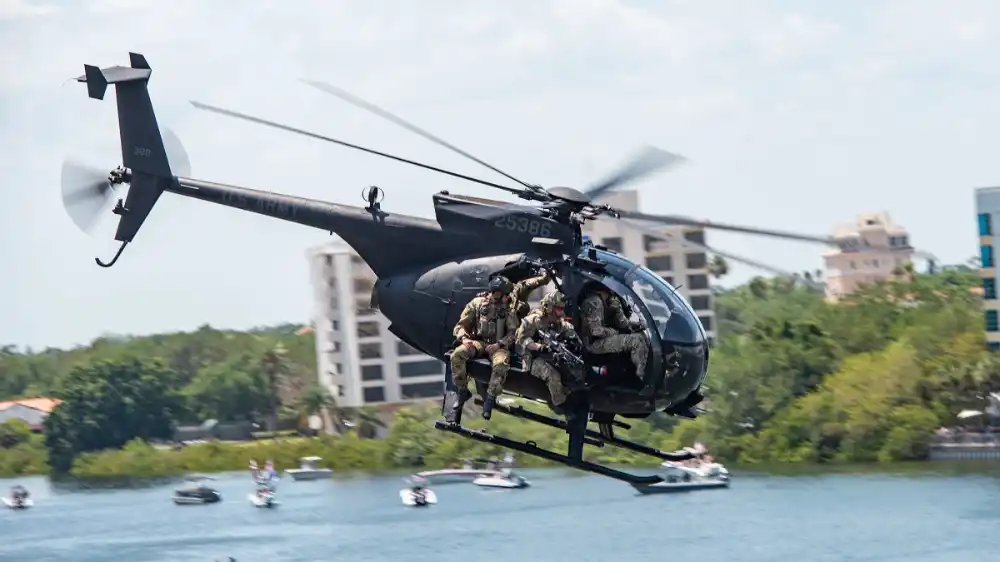
The A/MH-6 Little Bird—a symbol of agility and precision in U.S. Special Operations aviation—is set to remain a key operational asset through 2030, following a newly awarded contract to The Boeing Company. On November 12, 2025, the U.S. Department of War issued an $18.5 million Indefinite Delivery Indefinite Quantity (IDIQ) agreement under contract number H9224126DE002. The deal ensures engineering and technical support for the Little Bird program, to be executed primarily in Mesa, Arizona, highlighting the strategic continuity of a critical military capability.
Boeing’s Engineering Expertise Anchored for the Long Haul
This Cost Plus Fixed Fee (CPFF) contract is designed not for manufacturing, but for an ongoing, adaptable engineering partnership. Through 2030, Boeing will provide OEM-level support, managing everything from configuration validation to technical troubleshooting and modification integration. The contract is structured to allow the U.S. Special Operations Command (USSOCOM) to issue specific tasks over time, making it an ideal solution for the bespoke operational profile of the A/MH-6 platform.
The platform’s niche nature means it cannot be efficiently supported through generic logistical chains. Instead, Boeing’s direct and exclusive support ensures rapid issue diagnosis, coherent technical solutions, and strict configuration control—all of which are essential for aviation assets tasked with high-risk, short-notice deployments.
Sustainment Over Acquisition: A Strategic Philosophy
Rather than merely investing in new assets, USSOCOM’s decision represents a mature approach to lifecycle management. The Little Bird’s evolution is deeply tied to field performance and real-time mission requirements, which are then cycled back into its design loop. This feedback-driven sustainment model avoids the expense and disruption of launching new development programs, while still advancing platform relevance through iterative improvement.
Engineering support like this not only keeps the aircraft in the air—it elevates it with each mission cycle, incorporating lessons learned from the battlefield. Whether through adapting avionics, mitigating component obsolescence, or implementing mission-specific mods, the continuous support ensures the Little Bird remains a sharp tool in a dynamic global theater.
Why OEM Support Matters for Special Operations Platforms
In high-stakes operations, support latency and system reliability become operational risks. Boeing’s involvement as the original design authority eliminates third-party fragmentation. This minimizes downtime, simplifies system validation, and improves the agility of technical decision-making. For aircraft that fly in the most hostile and austere environments, such coherence and reliability are not luxuries—they are prerequisites.
This contrasts with platforms managed via multiple contractors, where misaligned design interpretations and inconsistent documentation can lead to dangerous discrepancies and delays. In USSOCOM’s Little Bird program, tight integration between operator, program office, and manufacturer results in a closed-loop sustainment system that enhances combat readiness.
Mesa, Arizona: Strategic Geography Meets Industrial Capability
The contract anchors the support infrastructure in Mesa, reinforcing the city’s importance in the defense industrial base. This choice offers not just technical advantages but strategic industrial localization, keeping specialized expertise within the U.S. and readily available to the Special Operations community.
Mesa’s proximity to other aerospace hubs, skilled labor availability, and Boeing’s established facilities make it an ideal support location. It also serves as a tangible commitment to the domestic defense ecosystem, ensuring secure, sovereign capability sustainment amid growing global instability.
Financial Scope: Modest Budget, High Strategic Yield
Though $18.5 million may seem modest by Pentagon standards, the real value lies in the knowledge, readiness, and adaptability this investment delivers. With no full production runs anticipated, the CPFF structure allows SOCOM to control cost while adjusting scope dynamically. This makes it a financially disciplined yet strategically potent instrument to sustain an elite aviation toolset.
The contract does not detail previous sustainment efforts or parallel awards, but this new agreement unequivocally cements Boeing’s role as the single-point sustainment provider. That continuity strengthens both technical execution and institutional memory around the Little Bird platform.
Enduring Relevance Amid Shifting Global Threats
At a time when U.S. defense strategy is pulled between great power competition and irregular warfare, the ability to execute tailored, low-visibility missions remains paramount. The A/MH-6 is not built for spectacle—it’s built for precision. By securing its support through 2030, the U.S. sends a clear signal to allies, partners, and adversaries alike: niche capabilities will not be neglected in the push toward modernization.
For Boeing, the deal is more than a revenue stream; it is a reaffirmation of trust and responsibility. For SOCOM, it is an assurance of performance continuity, risk mitigation, and warfighter effectiveness. And for the nation, it reflects a broader commitment to sustaining those critical edges that often operate in the shadows—but make all the difference when the stakes are highest.