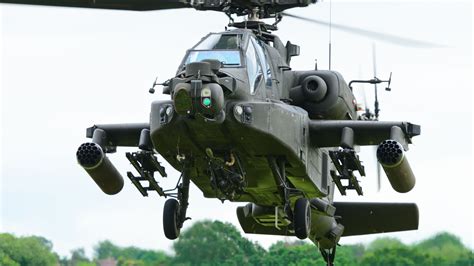
On December 31, 2025, the U.S. Army solidified a monumental $2.7 billion contract with Boeing to ensure the long-term operational readiness of the AH-64 Apache attack helicopter fleet. This firm-fixed-price agreement marks a pivotal move by the Pentagon to bolster the Army’s aviation sustainment capabilities and maintain combat readiness well into the next decade.
The contract, officially valued at $2,728,234,918, was awarded through the Army Contracting Command at Redstone Arsenal, Alabama, with Boeing standing as the sole bidder. This long-term support initiative will remain in effect through December 31, 2030, covering essential post-production services including maintenance, repair, overhaul, technical support, and spare parts management for the Army’s Apache fleet.
Strategic Imperative: Sustainment Over Replacement
The awarding of this contract highlights a fundamental shift in military aviation strategy: prioritizing sustainment over new acquisitions. As the global threat landscape grows increasingly complex, and with defense budgets scrutinized more closely than ever, the U.S. Army is channeling significant resources into extending the life and combat reliability of existing high-performance platforms. The Apache, with its proven combat record and modular upgrade capabilities, stands as the cornerstone of this effort.
Boeing’s support contract allows for flexible task orders, adapting to real-time needs related to deployment cycles, mission tempo, and advancing technological standards. This modularity ensures that maintenance and upgrade efforts evolve in step with the battlefield, rather than lag behind it.
Apache: A Battle-Tested Titan of the Skies
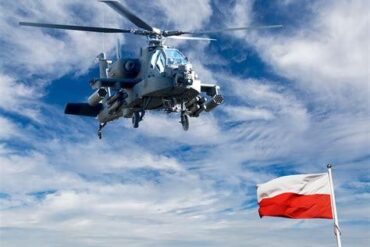
The AH-64 Apache is not merely a helicopter—it’s a symbol of dominance in aerial combat. Designed for high-intensity conflict, the twin-engine, four-blade platform offers superior maneuverability, survivability, and lethality. Each Apache is powered by General Electric’s T700 turboshaft engines, with newer models employing the T700-GE-701D variants to deliver optimal performance in hot-and-high environments.
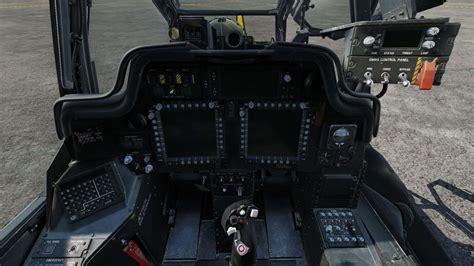
Its tandem-seat cockpit, placing the pilot in the rear and the copilot/gunner in the front, allows for mission redundancy and independent weapon deployment, maximizing effectiveness even in contested zones.
Cutting-Edge Avionics and Sensor Systems
What sets the Apache apart is its sophisticated sensor suite and digital integration. The AH-64D and subsequent models feature the AN/APG-78 Longbow radar, housed in a dome above the rotor mast, providing real-time all-weather targeting and situational awareness. This radar enables simultaneous tracking of up to 128 targets and prioritization of threats.
Crew members also benefit from the Integrated Helmet and Display Sight System (IHADSS), which allows for intuitive targeting by simply turning their heads, aligning the 30 mm M230 chain gun with the gunner’s line of sight. The helicopter’s electronic warfare package includes radar warning receivers, laser warning sensors, and infrared countermeasures—key to surviving in electronic warfare environments.
What the Contract Covers: More Than Just Repairs
The $2.7B contract does more than maintain engines and rotor blades. It includes:
- Depot-level maintenance for structural components, transmissions, and rotor systems
- Avionics and electronics repair and upgrades, ensuring the integration of evolving battlefield technologies
- Spares logistics and inventory management to reduce downtime
- Engineering and technical support for addressing emerging operational issues
Modern configurations like the AH-64E Guardian feature composite rotor blades, split-torque face gear transmissions, and open-architecture mission systems, all of which require highly specialized sustainment protocols. Notably, the E model supports Manned-Unmanned Teaming (MUM-T), allowing pilots to control drones from the cockpit—an innovation redefining reconnaissance and combat engagement tactics.
Sustaining Lethality: Apache’s Evolving Combat Edge
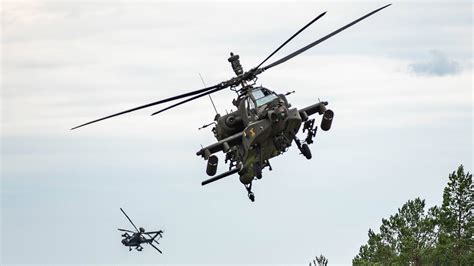
Apache helicopters remain a lethal force on the modern battlefield, thanks in part to continued investments in their firepower and precision strike capabilities. The Apache’s primary weapon, the M230 chain gun, delivers 625 rounds per minute of 30 mm high-explosive incendiary ammunition. For longer-range engagements, the Apache carries:
- AGM-114 Hellfire missiles, effective up to 12 km
- 70 mm Hydra rockets, including precision-guided APKWS variants
- Stinger or AIM-92 air-to-air missiles for self-defense
In August 2025, the Army showcased the Apache’s adaptability during live-fire exercises in South Carolina, successfully engaging hostile drones with proximity-fused 30 mm ammunition. This event underscored the platform’s capacity to counter the growing threat of unmanned aerial systems (UAS) in both symmetrical and asymmetrical warfare environments.
Parallel Investments: Apache Production for Foreign Allies
This sustainment contract complements another major Apache investment announced in November 2025, when Boeing was awarded a separate $4.7 billion contract for new-build AH-64Es and Longbow crew training systems destined for foreign military partners, including Poland. Together, the two contracts underscore a dual-pronged strategy: support existing platforms while expanding global Apache capabilities.
These foreign sales not only deepen U.S. defense partnerships but also help amortize the cost of Apache upgrades, ensuring technological cohesion across allied forces. The AH-64’s commonality in NATO and partner arsenals ensures interoperability in joint operations, from Europe’s eastern flank to the Indo-Pacific.
A Global Workhorse: 5.3 Million Hours in the Sky
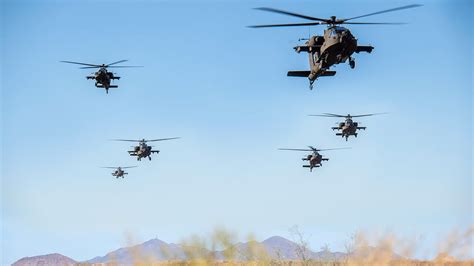
Few rotary-wing platforms boast the operational legacy of the Apache. With over 1,300 aircraft deployed across 17 nations, and more than 5.3 million flight hours, including 1.3 million in combat, the AH-64 remains unrivaled in its role as the backbone of Western attack helicopter forces.
Its legacy spans the Gulf War, Afghanistan, Iraq, and numerous contingency operations worldwide. Yet it continues to evolve, thanks to both industrial innovation and smart sustainment investments like this latest $2.7B deal.
Long-Term Implications: Future-Proofing Army Aviation
As geopolitical tensions intensify, the U.S. Army’s aviation branch faces mounting pressure to maximize readiness and reduce downtime. The Apache’s multi-decade life cycle makes it uniquely suited to modular upgrades and life extension programs, provided the right sustainment strategies are in place.
This contract serves as a blueprint for future military-industrial logistics, offering a scalable and adaptive model for supporting high-value platforms in dynamic threat environments. With defense spending increasingly tied to performance metrics and availability rates, contracts like these will define not just operational capability, but strategic advantage.
In a world where drone swarms, electronic warfare, and contested airspace dominate military planning, the Apache’s continued evolution—anchored by robust support—ensures it won’t just survive, but thrive.