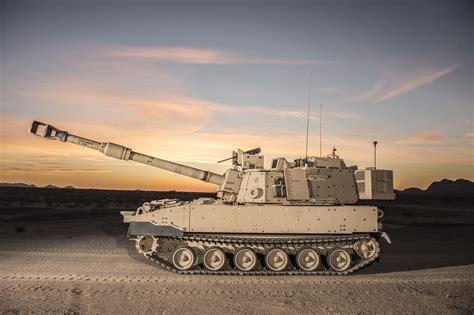
The U.S. Army has moved decisively to reinforce its heavy artillery capability, awarding BAE Systems a $473 million contract for the production of 40 additional M109A7 Paladin self-propelled howitzer systems, complete with their M992A3 Carrier Ammunition Tracked vehicles. The contract, confirmed on January 21, 2026, signals not expansion for expansion’s sake, but a focused commitment to sustainment, readiness, and industrial continuity within America’s armored brigade combat teams.
This procurement underscores a strategic truth that modern conflicts continue to validate: tube artillery remains indispensable. Precision airpower and missiles dominate headlines, but sustained ground combat still leans heavily on armored, survivable, and responsive cannon artillery. The Paladin A7 sits squarely at that intersection, combining legacy firepower with modern digital and mechanical architecture.
The deal was announced through BAE Systems’ Combat Mission Systems business, reinforcing the company’s central role in maintaining the Army’s tracked combat vehicle fleet. Importantly, the funding goes beyond simple vehicle production. It also covers technical support, post-production refurbishment, and welding compliance activities, emphasizing lifecycle durability rather than short-term capability spikes.
Sustaining Heavy Artillery for Armored Brigade Combat Teams
The Army’s decision to order additional Paladin systems reflects a doctrine-first approach. Rather than increasing total artillery numbers, the service is prioritizing fleet modernization and availability within existing armored formations. Armored brigade combat teams rely on self-propelled howitzers that can move, fight, and survive alongside Abrams tanks and Bradley infantry vehicles, and the M109A7 was specifically engineered to meet that requirement.
This contract helps ensure that artillery battalions remain fully equipped with systems capable of operating in high-intensity, contested environments. It also keeps production lines warm, a subtle but crucial factor in an era where defense industrial capacity has re-emerged as a strategic variable.
The M109A7 Paladin: A Deep Redesign, Not a Minor Upgrade
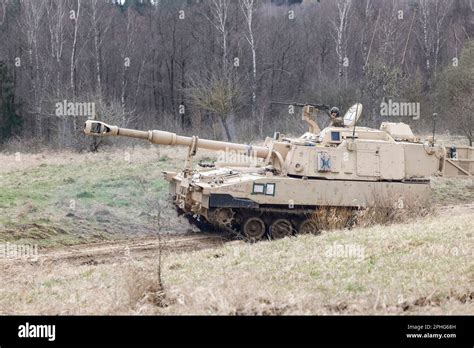
The M109A7 Paladin represents the most extensive transformation of the M109 family since its Cold War origins. While it retains the familiar 155 mm cannon lineage of the earlier M109A6, nearly everything beneath and around that gun has been reimagined.
The A7 variant features a completely new chassis and cab, derived directly from the M2/M3 Bradley Infantry Fighting Vehicle. This design choice was not cosmetic. By sharing engines, transmissions, suspension components, and steering systems with the Bradley fleet, the Army dramatically improves logistical commonality, reduces spare parts diversity, and simplifies maintenance during prolonged deployments.
In practical terms, this means fewer unique tools, faster repairs, and higher operational availability in combat zones where supply chains are stretched thin.
Firepower Built for Precision and Volume
At the heart of the Paladin A7 is the 155 mm M284 cannon, mounted on the M182A1 gun cradle. With standard high-explosive ammunition, the system delivers effective fires out to approximately 24 kilometers, extending to around 30 kilometers with rocket-assisted projectiles.
What elevates the A7 beyond traditional artillery is its seamless compatibility with the M982 Excalibur precision-guided munition. Using GPS guidance, Excalibur rounds can achieve near-meter-level accuracy under optimal conditions. This precision allows commanders to neutralize high-value targets with fewer rounds, reducing collateral damage and logistical burden while increasing tactical flexibility.
In modern battlefields shaped by drones, sensors, and rapid target acquisition, this ability to deliver accurate, responsive fires is not optional—it is foundational.
Electric Gun Drives and Reliability Gains
One of the most consequential engineering changes in the M109A7 lies in its gun drive system. Legacy hydraulic elevation and traverse mechanisms have been replaced with fully electric drives, drawing on technologies originally developed for the cancelled XM2001 Crusader and XM1203 Non-Line-of-Sight Cannon programs.
The benefits are tangible. Electric systems reduce maintenance demands, eliminate hydraulic leaks, and improve reliability across temperature extremes. Manual backup controls remain in place, ensuring continued operation even under degraded conditions.
Projectile handling is managed by a full-stroke hydraulic rammer, with optional semi-automatic functionality. This configuration supports sustained rates of fire while minimizing crew fatigue during extended missions.
Mobility and Power for the Digital Battlefield
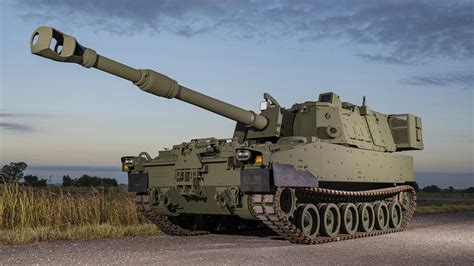
Mobility is central to the Paladin’s survivability. The A7 is powered by a 600-horsepower Cummins diesel engine, identical to that used in Bradley vehicles, paired with an upgraded transmission and torsion bar suspension. This enables road speeds of up to 61 kilometers per hour and cross-country performance aligned with armored maneuver units.
Equally significant is the platform’s modernized electrical architecture. The system converts engine output into up to 70 kilowatts of onboard power, distributed through both 600-volt and 28-volt direct current networks. This surplus energy supports advanced digital fire control, onboard diagnostics, environmental systems, and future growth capacity for sensors, communications, or electronic warfare equipment.
The result is a howitzer designed not just for today’s fight, but for decades of incremental modernization.
Survivability in a Counter-Battery Environment
The Paladin A7 integrates survivability enhancements throughout its structure. An all-welded aluminum hull and turret are reinforced with Kevlar anti-spall liners and improved applied armor. The platform includes automatic fire suppression, nuclear, biological, and chemical protection, and provisions for underbelly armor kits to counter mines and improvised explosive devices.
A roof-mounted 12.7 mm M2 heavy machine gun, optionally integrated into a remotely operated weapon station, provides close-in defense. Combined with the system’s ability to rapidly displace after firing, these features reduce vulnerability to counter-battery fire in sensor-dense battlefields.
The M992A3 Ammunition Carrier: Enabling Sustained Fire
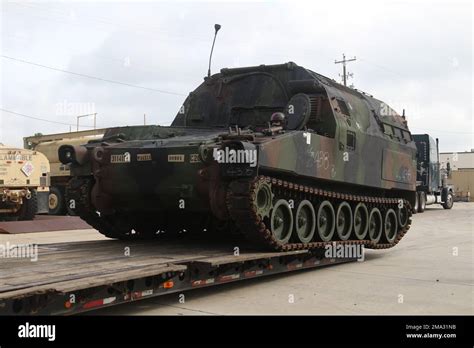
Each Paladin A7 operates alongside the M992A3 Carrier Ammunition Tracked vehicle, an armored resupply platform capable of transporting up to 95 rounds of 155 mm ammunition. Ammunition transfer is conducted via a conveyor system, allowing crews to remain under armor and typically away from firing positions.
This pairing enables high-tempo, sustained artillery operations while preserving crew safety and reducing exposure during resupply, a critical advantage in contested environments.
Strategic and Industrial Implications
Beyond the battlefield, the contract reflects Washington’s broader strategic calculus. As peer competitors expand long-range fires and counter-battery capabilities, maintaining a modern, survivable artillery fleet strengthens conventional deterrence and reassures allies of U.S. land combat readiness.
The program also sustains the domestic defense industrial base, ensuring skilled labor, compliant manufacturing processes, and production capacity remain intact. Internationally, the Paladin’s adoption by partners such as Taiwan reinforces interoperability and highlights the enduring relevance of armored tube artillery in regional security planning.
In an era fascinated by hypersonics and autonomy, the M109A7 Paladin stands as a reminder that some instruments of war endure not because they are old, but because they continue to evolve—and continue to matter.