The U.S. Navy has awarded BAE Systems two major ship maintenance contracts worth a combined $98 million, reinforcing the service’s emphasis on fleet readiness as operational demand remains high across multiple theaters. The awards cover scheduled dry-dock maintenance for the USS Kansas City (LCS-22) and the USS Stockdale (DDG-106), with work to be performed at BAE Systems’ San Diego shipyard beginning in May 2026.
These contracts fall under Docking Selected Restricted Availability (DSRA) periods, a critical phase in the Navy’s maintenance cycle designed to restore material condition, preserve hull integrity, and address wear accumulated during sustained deployments. For both ships, the focus is firmly on sustainment rather than capability expansion, reflecting the Navy’s near-term priority of keeping existing surface combatants mission-ready.
The maintenance awards also highlight the continued reliance on private-sector shipyards to support the Navy’s surface fleet, particularly on the U.S. West Coast, where operational tempo tied to Indo-Pacific requirements has remained consistently high.
Strategic Sustainment at the San Diego Shipyard
BAE Systems’ ship repair facility in San Diego has long been a cornerstone of the Navy’s public-private industrial base, supporting destroyers, amphibious ships, and littoral combat vessels operating in the Pacific. Under oversight from Naval Sea Systems Command (NAVSEA), the yard provides dry-dock capacity, skilled labor, and integrated project management for complex maintenance availabilities.
The latest contracts underscore the Navy’s confidence in BAE Systems’ ability to execute time-sensitive maintenance while meeting strict quality and safety standards. By scheduling DSRA work for two very different platforms—a littoral combat ship and a guided-missile destroyer—the Navy is leveraging the yard’s flexibility and technical breadth.
USS Kansas City: Sustaining the Independence-Class Littoral Combat Ship
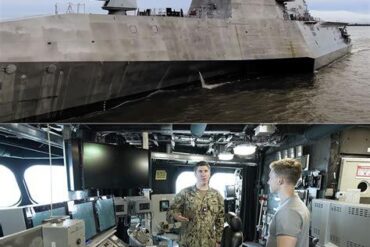
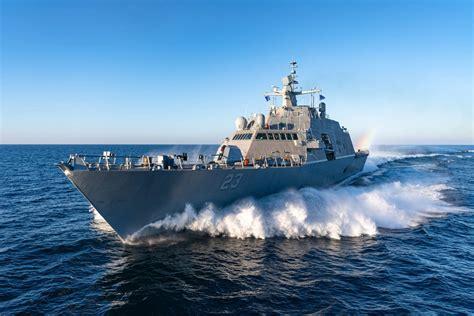
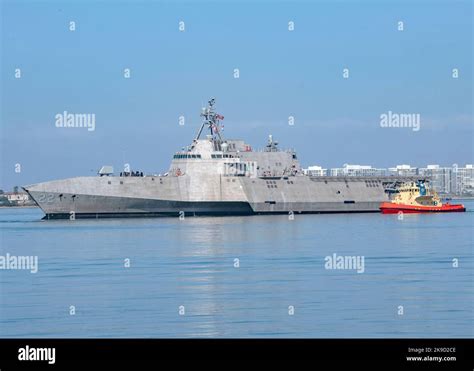
The first contract, valued at approximately $37 million, covers DSRA maintenance for USS Kansas City, an Independence-class littoral combat ship built by Austal USA. Designed for operations in near-shore and contested maritime environments, the Independence variant emphasizes speed, shallow draft, and mission modularity.
Planned work includes drydocking, underwater hull preservation, maintenance of selected mechanical and auxiliary systems, and refurbishment of habitability spaces to support the ship’s rotational crewing model. These efforts are intended to counter corrosion and structural wear associated with high-tempo operations, particularly in warm-water environments where aluminum hulls require careful preservation.
Within the broader LCS concept, DSRA periods are essential to maintaining baseline platform availability. While mission packages enable surface warfare, mine countermeasures, or anti-submarine roles, those capabilities depend on a hull and machinery plant kept within specification. The Kansas City availability reflects a pragmatic sustainment approach, prioritizing reliability and crew endurance over near-term upgrades.
USS Stockdale: Preserving a Frontline Arleigh Burke Destroyer
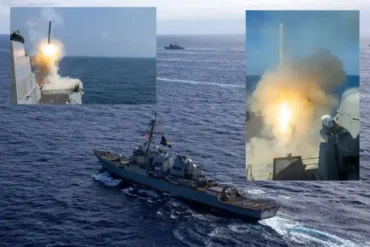
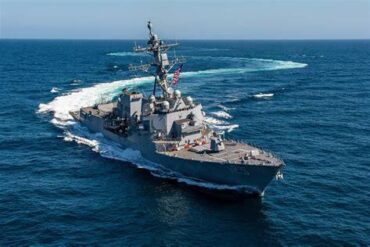
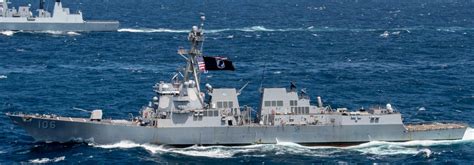
The second and larger award, valued at approximately $61 million, covers DSRA maintenance for USS Stockdale, an Arleigh Burke-class Flight IIA guided-missile destroyer commissioned in 2009. As a core element of the Navy’s multi-mission surface force, Stockdale routinely operates with carrier strike groups and in independent tasking roles.
The planned scope of work includes hull and superstructure preservation, interior tank maintenance, and targeted improvements to crew living spaces. These measures are designed to restore material readiness following deployments and to extend the ship’s service life within the Navy’s long-term force structure.
Flight IIA destroyers remain central to U.S. naval power projection, providing air and missile defense, anti-surface warfare, anti-submarine operations, and maritime security. Scheduled maintenance availabilities such as DSRA are critical to ensuring compliance with fleet safety standards and maintaining the high readiness levels required for global tasking.
Industrial Base and Fleet Readiness Implications
Commenting on the awards, Eric Icke, vice president and general manager of BAE Systems Maritime Solutions San Diego, emphasized that the objective is to return both ships to the fleet meeting Navy material condition requirements while adhering to schedule and quality benchmarks. The statement reflects a broader Navy expectation that maintenance partners deliver predictable outcomes amid tight operational timelines.
From a strategic perspective, these contracts illustrate how the Navy balances modernization ambitions with the immediate necessity of sustainment. As new platforms and systems progress through development, the existing surface fleet continues to shoulder the bulk of forward presence and deterrence missions. Keeping ships like Kansas City and Stockdale fully mission-capable is therefore a direct contributor to overall naval readiness.
Looking Ahead to 2026 Deployments
With DSRA work scheduled to begin in May 2026, both vessels are expected to rejoin the fleet with restored readiness, improved habitability, and extended operational longevity. Their return will support ongoing U.S. Navy commitments across regions where surface combatants remain in constant demand.
The $98 million investment in maintenance signals a clear message: sustainment is not a secondary concern but a foundational element of maritime power. For BAE Systems, the contracts reinforce its role as a key enabler of U.S. naval operations in the Pacific, while for the Navy, they represent a deliberate step toward maintaining a resilient, deployable surface force in an increasingly complex security environment.