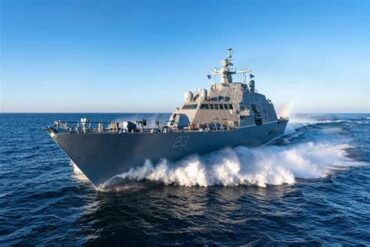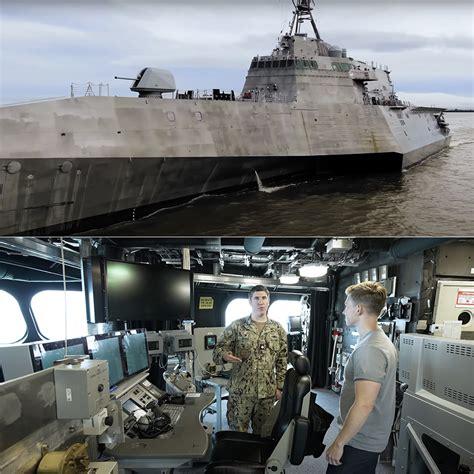
The Littoral Combat Ship (LCS) was once envisioned as the US Navy’s agile spearhead in modern coastal warfare — a nimble, reconfigurable platform that could slip into shallow waters and execute high-tech missions. Designed to operate in littoral zones — areas close to shorelines — the LCS was supposed to outmaneuver traditional warships in environments cluttered with mines, small boats, and diesel submarines. But what started as a revolutionary concept has evolved into a cautionary tale in modern defense procurement.
By 2025, the LCS program has become a symbol of unmet promises, persistent technical flaws, and ballooning costs. Though the Navy has made improvements and doubled down on making the ships combat-relevant, the saga continues to unfold as a complex, controversial chapter in American naval history.
The Birth of a Bold Naval Vision
At its inception in the early 2000s, the Littoral Combat Ship program embodied post-Cold War naval thinking. The Pentagon anticipated a future dominated by irregular threats — pirates, terrorists, and small, fast attack craft — especially in chokepoints like the Strait of Hormuz or the South China Sea. The LCS was designed to be a “Swiss Army Knife” for such missions: sleek, fast, and modular, capable of swapping out mission packages in a matter of days.
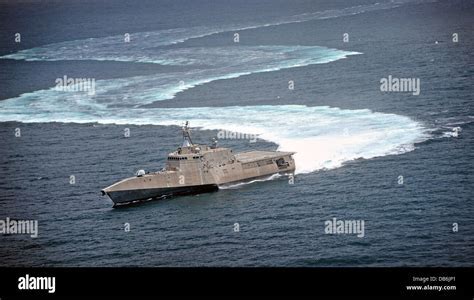
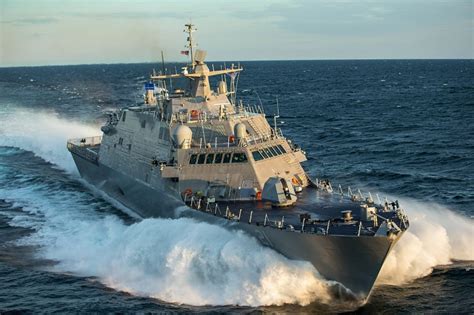
The Freedom-class and Independence-class emerged as the two competing variants, both derived from commercial high-speed ferry hulls. Freedom-class featured a traditional monohull design, while Independence-class opted for a futuristic-looking trimaran. But this dual-track procurement — driven by political compromise — sowed the seeds for later logistical nightmares. Each class required different training, maintenance procedures, and supply chains, complicating integration into the fleet.
Fragility in Design and Unmet Promises
One of the most innovative aspects of the LCS was its modular mission system. Instead of building different ship classes for tasks like mine-hunting, submarine tracking, or surface warfare, the Navy intended to reconfigure LCS platforms with swappable modules. Each package combined manned and unmanned systems, specialized sensors, and software — promising unmatched flexibility.
But that promise never materialized. The mine countermeasure package failed basic reliability tests. The anti-submarine warfare module suffered from integration failures and poor sonar performance. Even the surface warfare package, the only one still in active use, fell short of expectations in heavily contested environments. The concept of plug-and-play naval warfare turned out to be more conceptual than operational.
Worse still, the LCS was built with minimal armor and survivability. The reliance on high speed and the assumption that crews could evacuate under threat defied the hard lessons of naval combat, where redundancy and toughness are paramount. Critics labeled the ships as glorified patrol boats — too fragile for serious combat and too specialized for general utility.
Engine Failures and Automation Pitfalls
The LCS was also pitched as a highly automated ship requiring a crew of only 40 core sailors, plus mission specialists. That lean manning concept demanded sophisticated automation across propulsion, combat systems, and ship maintenance. But in practice, automation introduced more problems than it solved.
Key systems were proprietary, locked behind software managed by contractors. If a system broke — even a basic pump or valve — crews often couldn’t fix it themselves. They had to wait for technicians to arrive, often resulting in extended downtime.
The Freedom-class vessels were plagued by particularly severe combining gear failures — a mechanical system that links gas turbines and diesel engines to the propulsion shafts. Repeated breakdowns led to mission cancellations, costly repairs, and eventual retraining of all LCS crews in 2016. The program’s reputation took a major hit, casting doubt on the entire fast-ship paradigm.
Decommissioned Before Their Time
Perhaps the most damning statistic: many LCS vessels were retired after just a fraction of their expected service life. Ships like the USS Independence (LCS-2) and USS Fort Worth (LCS-3) were decommissioned well ahead of schedule — some having served fewer than 10 years.
This was not just a financial issue. The early retirements signaled a loss of institutional confidence in the platform’s future. At over $500 million per hull, the LCS was not inexpensive. When adding the costs of training, maintenance, and deferred upgrades, each failed ship represented a costly experiment in naval innovation gone awry.
Congressional critics were vocal. GAO reports highlighted repeated mismanagement and underestimated operational costs. The Navy faced increasing scrutiny, and by the mid-2020s, program cuts were deep and unavoidable.
A Shift Toward Salvaging What Works
Still, the Navy didn’t abandon the entire fleet. Faced with sunk costs and limited new shipbuilding capacity, the Navy pivoted toward making the best of what it had. In recent years, both LCS classes have seen incremental upgrades aimed at enhancing survivability and relevance.
USS Charleston (LCS-18) and others demonstrated improved operational records, achieving milestone deployments in the Pacific. The Navy introduced a dedicated LCS Task Force, tasked with addressing long-standing technical flaws and streamlining operational doctrine. Software updates, logistics reworks, and retraining helped improve mission readiness.
Today, some Independence-class vessels are reportedly achieving up to 96% operational availability, a figure that would have been unthinkable just five years ago. Recent missions in Southeast Asia and the Arabian Gulf reflect a Navy trying to squeeze utility from a once-discredited platform.
Modernization and New Capabilities
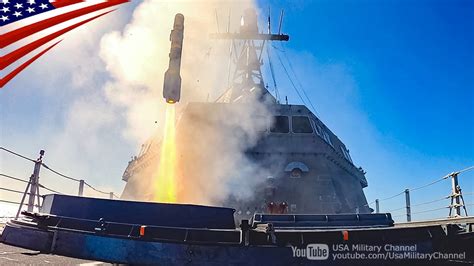
In a bid to reassert the LCS’s value, the Navy has begun retrofitting ships with advanced weapons and countermeasures. These upgrades include:
- Longbow Hellfire missiles for surface-to-air and surface-to-ground precision
- Naval Strike Missiles (NSM) for over-the-horizon targeting
- Mk 70 launchers for future integration with SM-6 and Tomahawk cruise missiles
- Drone-based surveillance and strike systems for ISR and asymmetric warfare
These enhancements are part of a broader strategy to transform LCS into a counter-drone, fast-strike escort — roles that align with future Indo-Pacific operations.
Lessons for Future Naval Procurement
The LCS program’s legacy will undoubtedly shape how the Navy approaches future shipbuilding. Its biggest lessons include:
- Avoid over-promising modularity without proven technology
- Design for combat survivability, not just versatility
- Minimize fleet fragmentation caused by dual or multiple classes
- Invest early in sailor-led maintenance solutions
- Maintain unified command structure and training doctrine
Despite its checkered history, the LCS still represents a valuable experiment in pushing naval boundaries. The agility it was meant to embody is now being refocused through hard-earned operational experience and retroactive fixes.
Conclusion: From Debacle to Determination
The Littoral Combat Ship program began with boundless ambition and ended up buried under the weight of flawed execution. From unreliable systems to strategic miscalculations, the LCS represents both the risks of technological overreach and the inertia of bureaucratic momentum. Yet, the Navy’s refusal to completely abandon the platform — and its recent steps to modernize and deploy them more effectively — underscores a commitment to learning from the past.
In the end, the LCS story is not just about ships — it’s about the shifting tides of naval warfare, where speed, flexibility, and tech integration must be carefully balanced against durability, simplicity, and crew survivability. The next generation of naval vessels, including the Constellation-class frigates, are already being shaped by the hard lessons of the LCS era. If those lessons hold, then perhaps this costly chapter may yet yield long-term dividends for American sea power.