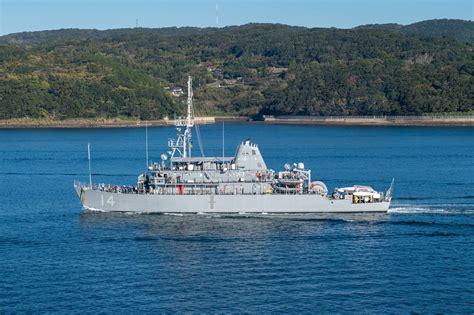
The withdrawal of the US Navy Avenger-class minesweepers from the Middle East marks the end of a distinct chapter in modern naval warfare. For decades, these specialized mine countermeasure ships stood as quiet guardians of some of the world’s most strategically sensitive waterways, particularly in the Persian Gulf. Their removal is not a sudden retreat but a calculated transition, driven by evolving technology, changing operational doctrine, and the inevitable reality of aging steel and fiberglass hulls.
Naval mines remain among the most cost-effective and disruptive weapons in maritime conflict. A single mine, concealed beneath murky coastal waters, can paralyze shipping lanes and trigger global economic ripples. That is precisely why mine countermeasure ships (MCMs) like the Avenger class were indispensable. Unlike aircraft carriers or destroyers that project power visibly, these ships specialized in the patient, methodical work of detecting and neutralizing hidden threats beneath the sea’s surface.
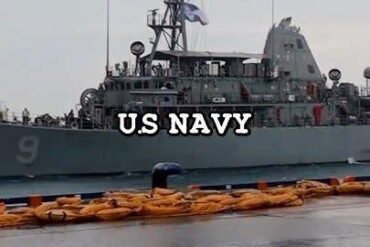
Commissioned in the 1980s, the Avenger-class minesweepers were purpose-built for mine hunting and clearance. Constructed primarily of wood and fiberglass to reduce magnetic signatures that could trigger mines, they were engineered to survive in hazardous waters. During Operations Desert Shield and Desert Storm, these vessels played a critical role in safeguarding coalition naval forces and commercial shipping against Iraqi-laid mines in the Persian Gulf.
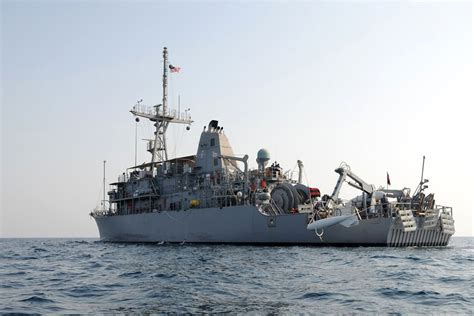
By early 2026, only four Avenger-class ships remained operational, forward-deployed in Japan. Four others — USS Devastator, USS Dextrous, USS Gladiator, and USS Sentry — had continued operating in the Persian Gulf until their decommissioning in late 2025. In January 2026, a contracted heavy-lift vessel transported them out of the region entirely. Their final destination is dismantlement and scrapping, a sobering but predictable end for vessels that had exceeded their intended service lives.
The central reason behind the withdrawal lies in fleet modernization and force transition efforts. The Avenger-class ships, though reliable, were approaching the limits of their mechanical viability. Maintenance demands increased, parts became harder to source, and operational flexibility lagged behind emerging threats. In a maritime environment increasingly shaped by unmanned systems, networked sensors, and modular warfare capabilities, the Navy required a more adaptable solution.
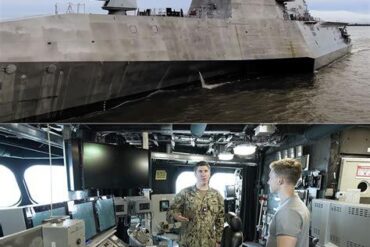
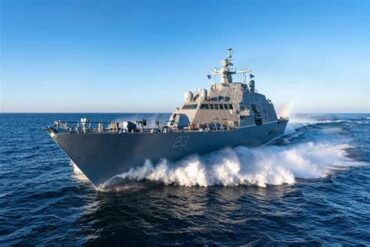
That solution arrived in the form of the Independence-class Littoral Combat Ship (LCS). First introduced in 2010, these trimaran-hulled vessels represent a fundamentally different philosophy of naval warfare. Designed for operations in the littoral zone — the complex, shallow waters near coastlines — the Independence class combines speed, modularity, and advanced technology. Capable of speeds up to 52 mph, they dramatically outpace the Avenger class, which tops out at roughly 16 mph.
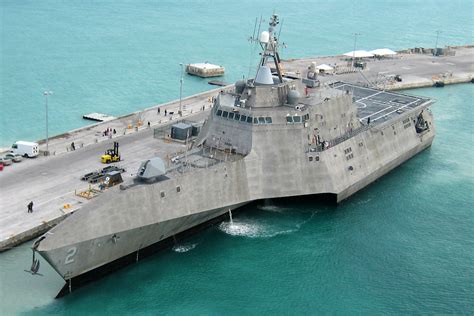
Speed alone does not explain the transition. The true advantage lies in the modular mission package system integrated into the LCS platform. Unlike the single-purpose Avenger-class ships, Independence-class vessels can swap mission modules tailored for mine countermeasures, anti-submarine warfare, or surface warfare. This adaptability allows the Navy to reconfigure ships based on emerging threats without designing entirely new hulls.
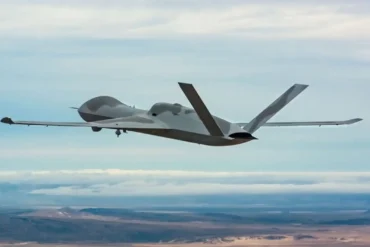
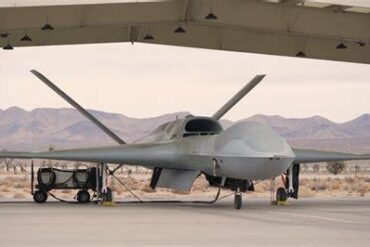
The mine countermeasure module deployed aboard Independence-class ships represents a technological leap forward. Instead of relying primarily on ship-tethered remote vehicles, LCS platforms deploy aviation assets, uncrewed surface vehicles, and autonomous underwater vehicles equipped with advanced sonar and detection systems. These unmanned systems operate at a safe distance from the mothership, identifying, classifying, and neutralizing mines before the host vessel enters a dangerous zone. The approach minimizes risk while increasing detection capability against buried, moored, or drifting mines.
In contrast, Avenger-class ships relied on remotely operated vehicles and mechanical sweep systems operating relatively close to the vessel itself. While effective for their time, these systems lacked the sensor diversity and stand-off capabilities of the newer LCS-based architecture. Additionally, Avenger-class ships faced limitations in highly dynamic littoral environments where agility, rapid redeployment, and integrated air assets are essential.
Construction materials further highlight generational differences. Avenger-class ships were built of wood and fiberglass to reduce magnetic signatures. Independence-class ships, constructed largely of aluminum, integrate modern stealth shaping and signature management techniques without relying on traditional low-magnetic materials. The trimaran hull design enhances stability and deck space, supporting aviation operations and unmanned deployments more effectively than the compact Avenger platforms.
The withdrawal from the Middle East also reflects broader strategic recalibration. The Navy’s global posture increasingly prioritizes flexibility and distributed operations. Concentrating aging, single-mission vessels in high-risk environments runs counter to that philosophy. By replacing Avenger-class ships with Independence-class LCS platforms, the Navy consolidates capabilities into multi-role ships that can pivot quickly between missions.
This transition does not signal a diminished emphasis on mine warfare. If anything, it underscores its continued relevance. Naval mines remain a favored tool of asymmetric warfare, particularly in chokepoints such as the Strait of Hormuz. However, the method of countering them has evolved. Autonomous systems, networked detection arrays, and modular platforms now define the cutting edge of mine countermeasure strategy.
The departure of the Avenger-class minesweepers from the Persian Gulf closes a significant operational era. These ships performed a mission that rarely captured headlines but safeguarded maritime stability for decades. Their retirement is not a retreat from responsibility but an acknowledgment that maritime threats evolve — and so must the fleet designed to confront them.