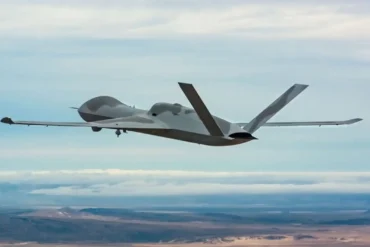
The F-22 Raptor, long hailed as the apex predator in the skies, has once again elevated its dominance with a groundbreaking demonstration of Manned-Unmanned Teaming (MUMT). In a remarkable leap toward next-generation warfare, a pilot operating an F-22 successfully commanded an MQ-20 Avenger drone directly from the cockpit, integrating sophisticated software-defined radios (SDRs), cutting-edge data links, and an open-architecture computing environment. This test, which took place over the Nevada Test and Training Range (NTTR) on October 21, 2025, marks a transformative milestone for air combat capabilities.
The Future Is Now: A Seamless Symbiosis Between Man and Machine
This first-of-its-kind demonstration was the product of a high-powered collaboration between General Atomics, Lockheed Martin, and L3Harris Technologies. Their combined efforts not only showcased the feasibility of such integration but validated the effectiveness of interoperable, non-proprietary systems that underpin the USAF’s future air combat strategies.
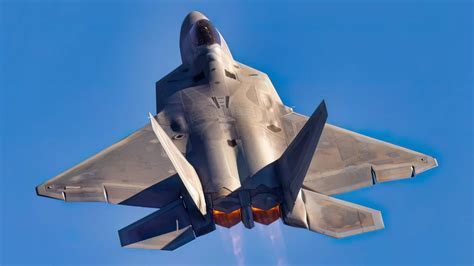
At the heart of this demonstration was the F-22 Raptor’s Government Reference Architecture Compute Environment (GRACE) module—an open-architecture platform enabling new software to be seamlessly loaded onto the fighter jet. Complementing GRACE was the Pilot Vehicle Interface (PVI) tablet, through which the pilot exercised real-time control over the MQ-20.
Two L3Harris SDRs enabled the robust and secure connection between the platforms. One was installed onboard the Avenger, and the second inside the single-seat F-22. The SDRs, coupled with L3Harris’ BANSHEE™ Advanced Tactical Datalinks and Pantera radios, created a hardened, flexible communication link capable of adapting to dynamic battlefield conditions.
General Atomics’ MQ-20 Avenger: The Loyal Wingman Evolves
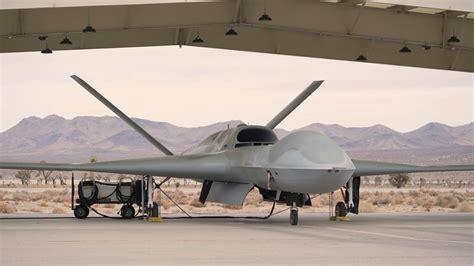
Once merely a concept, the loyal wingman drone has now become an operational reality. The MQ-20 Avenger—developed by General Atomics—is no stranger to experimentation. Its proven record as a testbed for autonomy and teaming technologies made it the perfect surrogate for the USAF’s Collaborative Combat Aircraft (CCA) initiatives.
The Avenger used in the demonstration was equipped with mature autonomy software, enabling it to receive complex commands, maneuver in coordination with the F-22, and even return to autonomous mode for re-tasking.
According to General Atomics spokesperson C. Mark Brinkley, “The MQ-20 Avenger, tricked out with mature mission autonomy software, is a perfect CCA surrogate and allows us to move fast and move first.”
Why the F-22 Still Matters in the Age of NGAD
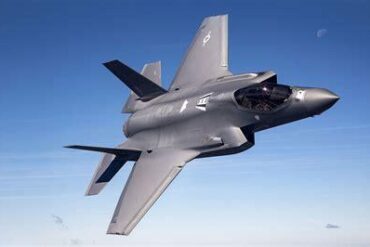
The F-22 Raptor was once presumed to be on a glide path to retirement in favor of the Next-Generation Air Dominance (NGAD) fighter. However, this recent evolution signals a longer-term role. Now envisioned as a threshold platform for drone integration, the F-22 will remain a key component in the U.S. Air Force’s strategy well into the 2040s, operating alongside the upcoming F-47 stealth jet and the F-35 Lightning II.
This prolonged service life is underscored by the FY2026 U.S. Air Force budget proposal, which included $15 million under the Crewed Platform Integration program. Notably, $12.2 million of that allocation is earmarked for procuring 142 PVI tablets and related cabling, all intended for F-22 modification and CCA control.
Inside the CCA Ecosystem: The Air Force’s Grand Vision
Launched in March 2023 under the leadership of former USAF Secretary Frank Kendall, the Collaborative Combat Aircraft (CCA) program is designed to augment manned fighters with a fleet of semi-autonomous drones. These units, often referred to as “loyal wingmen,” are poised to transform aerial combat by:
- Extending sensor coverage
- Carrying additional munitions
- Supporting electronic warfare
- Executing reconnaissance and intelligence tasks
- Performing high-risk missions instead of manned jets
In the short term, CCAs are expected to serve primarily as missile trucks, flying alongside manned aircraft to deliver firepower efficiently. Long-term visions include expanding their role to complex autonomous operations across various mission profiles.
General Atomics YFQ-42A and the Race to Increment 1
While multiple contractors vie for leadership in the CCA domain, General Atomics is surging ahead with the YFQ-42A drone. The prototype made its first flight in August 2025, testing key attributes such as flight autonomy, mission system integration, and airworthiness. This demonstration with the F-22 places General Atomics firmly in the pole position as the U.S. Air Force progresses toward Increment 1 procurement.
Simultaneously, Anduril Industries is developing the YFQ-44A as a competitor. While it has yet to complete flight testing, its integration roadmap aligns closely with the USAF’s iterative approach to CCA development.
An Expanding MUM-T Arsenal: Beyond the Raptor
While the F-22 currently spearheads MUM-T integration, the long-term vision encompasses multiple airframes, including:
- F-35 Lightning II: Stealth and data fusion make it an ideal MUM-T hub.
- F-47: A yet-to-be-unveiled stealth fighter expected to operate extensively with CCA.
- F-15EX and F-16: Both legacy platforms are being evaluated for future CCA compatibility.
This multigenerational teaming strategy ensures that even fourth-generation fighters can remain combat-relevant in future high-threat environments through intelligent drone augmentation.
Cost and Survivability: CCAs Tip the Balance
One of the most compelling aspects of the CCA concept is its cost-effectiveness. With each F-35 costing between $80 million and $115 million, deploying entire squadrons for high-risk missions is strategically expensive. In contrast, CCA drones are projected to cost between $25 million and $35 million each.
Deploying these relatively inexpensive drones as attritable assets allows commanders to:
- Conduct operations in high-threat, anti-access zones
- Employ decoys and saturate enemy defenses
- Execute high-risk ISR (Intelligence, Surveillance, Reconnaissance) missions
- Enhance strike accuracy through laser designation or real-time target painting
China’s Anti-Access/Area Denial (A2/AD) umbrella presents a key example of an environment where unmanned teaming would provide a significant tactical edge. The USAF’s MUM-T strategy, by leveraging AI-enabled CCA units, mitigates risk to human pilots and improves mission outcomes.
Global Momentum: Loyal Wingman Arms Race
The U.S. is not alone in its push for manned-unmanned teaming. Several global powers are fast-tracking similar programs:
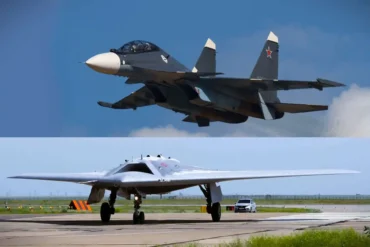
- China: Developing loyal wingman drones for its J-20 stealth fighters. The newly revealed J-20S twin-seat variant could dedicate one pilot to drone operations.
- France: Pursuing an uncrewed stealth UAV to operate alongside the future Super Rafale.
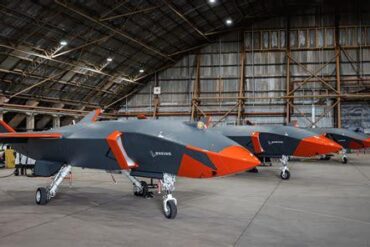
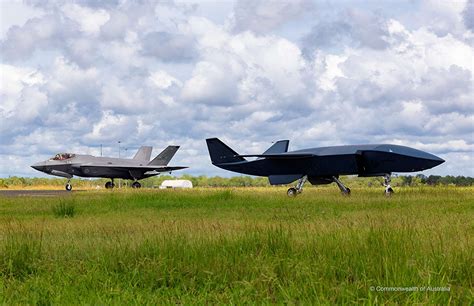
- Australia: Advancing the MQ-28A Ghost Bat with Boeing, which will undergo live-fire testing and may be exported to partners like Poland.
- India: In collaboration with NewSpace Research & Technologies, India is developing the N-CCAV “Abhimanyu” for its naval air arm. Simultaneously, HAL is working on the CATS Warrior drone for its Air Force.
This international push underscores a new strategic consensus: air dominance will be defined by intelligent, cost-effective, and integrated manned-unmanned fleets.
What Comes Next: Incremental Supremacy
The CCA program’s Increment 1 phase is expected to deliver between 100 to 150 drones, with significantly larger numbers anticipated through Increment 2 and beyond. The question remains whether the Air Force will downselect to a single drone model or maintain a mixed-fleet approach optimized for different missions.
Looking ahead, Increment 2 will likely feature drones with more advanced AI, longer endurance, deeper strike capabilities, and enhanced electronic warfare suites. While cost per unit may rise, the strategic advantages will exponentially increase, positioning the USAF for unmatched operational flexibility.
Conclusion: A Redefined Apex Predator
The F-22 Raptor, once the undisputed king of the skies, has now been reborn as a digital warfighter, capable of orchestrating a team of autonomous companions with surgical precision. This transformation, enabled by open-architecture systems, agile development, and strong industrial partnerships, marks the beginning of a new era in aerial combat.
With the CCA program accelerating and rival nations racing to develop similar capabilities, the integration of AI-enabled drones into manned operations is no longer speculative—it’s operational. And thanks to tests like this one, the United States Air Force is staking its claim to future air dominance with unmatched technological superiority and strategic foresight.
In this new battlespace, air superiority will no longer be dictated by numbers or even stealth alone—but by how well man and machine can fight as one.