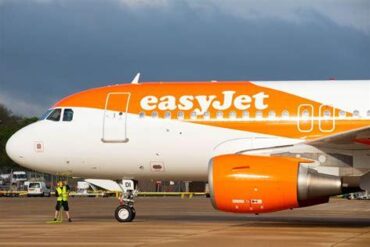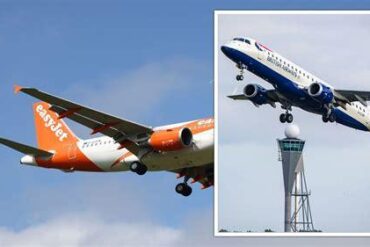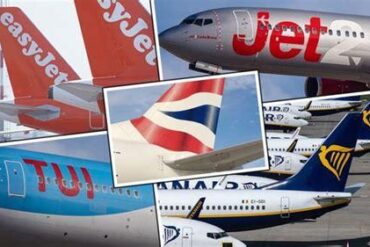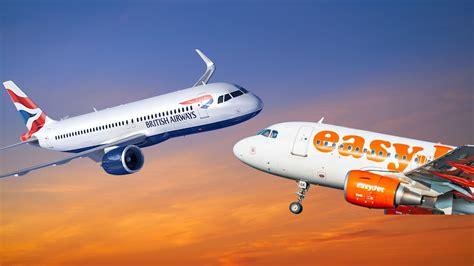
British aviation in 2026 is a tale of two philosophies colliding at 35,000 feet. On one side stands British Airways, the flag carrier built on heritage, global reach, and premium ambition. On the other is easyJet, the relentlessly efficient low-cost giant that has reshaped how Britons fly short-haul. Both airlines are massive, influential, and fiercely competitive, yet dominance depends on what part of the sky you choose to measure. Capacity, geography, frequency, and strategic intent all tell subtly different stories, and together they reveal how power in the UK skies is now distributed rather than concentrated.
A Battle of Business Models Shaping UK Aviation
British Airways operates with a legacy carrier mindset, anchored by its London hubs and reinforced by long-haul connectivity, alliances, and premium cabins. easyJet’s model is built around scale, simplicity, and accessibility, prioritizing point-to-point travel and high aircraft utilization. In recent years, these approaches have begun to blur. BA has stripped back frills on short-haul routes, while easyJet has invested heavily in operational resilience and customer experience. The rivalry is no longer about cheap versus premium; it is about who can best adapt to modern European travel demand.
Domestic UK Routes Reveal Structural Differences
Within the UK domestic market, the contrast between the two airlines is stark and revealing. British Airways remains resolutely London-centric, with every domestic route touching London Heathrow, Gatwick, or City. This strategy reinforces Heathrow’s role as a global hub, feeding long-haul services with high-yield passengers. In February 2026, BA schedules 3,697 domestic flights, averaging 166 seats per departure, with Heathrow–Glasgow emerging as its most frequent route at around ten daily rotations.
easyJet, by contrast, spreads its domestic capacity across the country. With 5,291 UK internal flights scheduled and a higher average capacity of 175 seats, the airline dominates regional connectivity. Routes like Bristol–Edinburgh highlight easyJet’s strength in non-London corridors, capturing demand that BA largely ignores. This decentralised network gives easyJet a practical advantage: it serves how people actually travel within the UK, not just how hubs prefer them to.
European Short-Haul: Where easyJet Sets the Pace
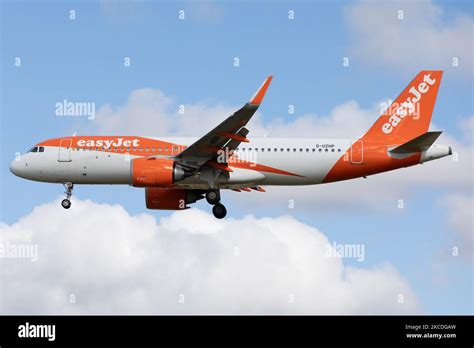
Across Europe, easyJet’s influence becomes even more pronounced. In February alone, the airline plans 16,084 intra-European flights, each carrying an average of 181 passengers. This sheer volume allows easyJet to dictate pricing dynamics on many leisure and business-heavy routes. Its presence at airports like London Gatwick and Luton ensures relentless frequency, a key factor for modern travelers who value flexibility as much as price.
British Airways remains formidable but slightly constrained. With 13,342 European flights and an average capacity closer to 170 seats, BA’s short-haul operation is shaped by its premium-heavy cabin layouts and slot restrictions at Heathrow. Destinations such as Geneva and Amsterdam are major battlegrounds, where BA offers high frequency from Heathrow while easyJet counters with multi-airport coverage and lower fares. The result is not a clear winner, but a market where easyJet clearly controls scale.
Geneva and Amsterdam: Microcosms of Competition
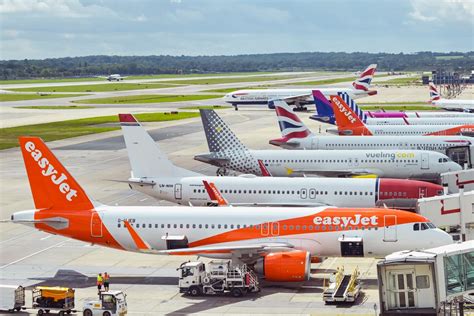
Geneva perfectly illustrates the rivalry’s complexity. easyJet operates dense schedules from both Gatwick and Luton, making the Swiss city its most served international destination. British Airways, however, leverages Heathrow’s premium demand, operating over 11 daily rotations on average. Amsterdam tells a similar story, with BA focusing on hub-to-hub traffic while easyJet spreads its capacity across multiple London airports. These parallel strategies coexist, but easyJet’s flexibility consistently captures a broader passenger base.
Long-Haul Power Shifts the Balance Back to British Airways
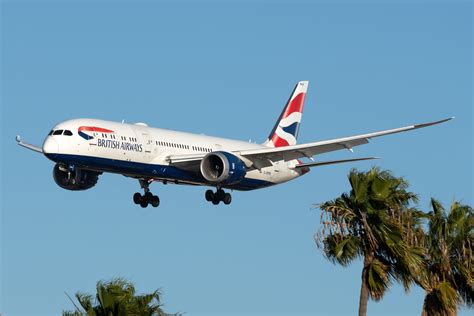
Beyond Europe, the equation changes dramatically. British Airways dominates long-haul flying, a domain easyJet cannot enter due to its all-narrowbody fleet. In February 2026, BA schedules 5,490 flights outside Europe, boasting an average of 272 seats per departure thanks to its widebody aircraft. Routes like London Heathrow–New York JFK, with nearly eight daily rotations, underline BA’s enduring transatlantic strength.
easyJet’s non-European network is limited to medium-haul leisure markets in North Africa and the Middle East, totaling 1,446 flights with an average of 185 seats. Routes such as Gatwick–Marrakech perform strongly, but they cannot match the strategic importance or revenue potential of BA’s global network. Long-haul remains the cornerstone of BA’s relevance as a world airline.
Passenger Experience and Brand Gravity in 2026
Brand perception still matters, and here the airlines diverge sharply. British Airways trades on trust, status, and global recognition, appealing to corporate travelers and long-haul leisure passengers alike. easyJet’s brand, meanwhile, is rooted in reliability and value, increasingly polished but unapologetically practical. In 2026, neither brand is universally superior; each dominates its chosen psychological space in the market.
Who Really Dominates the UK Skies?
Dominance depends on definition. If measured by short-haul capacity, domestic reach, and European frequency, easyJet clearly leads. If judged by global connectivity, long-haul power, and premium influence, British Airways remains unmatched. The UK skies are no longer ruled by a single champion but by two giants excelling in different altitudes of the same airspace. In 2026, supremacy is shared, and that balance is precisely what keeps British aviation competitive, dynamic, and relentlessly evolving.