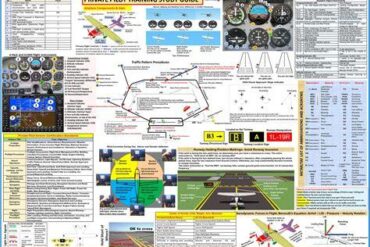
The FAA written test conversation on Reddit exposes a reality that many aspiring pilots experience but rarely admit publicly: even highly motivated students can fail the Private Pilot Knowledge Test despite feeling prepared. A candidate studied hard for two weeks, consistently scored above 85% on practice exams, and still earned a 69% on the real test. That single result triggered a flood of professional-level insights from pilots across every certification level, and those insights reveal exactly how the FAA written test can be mastered when approached with the right systems, the right timing, and the right mental discipline.
The FAA written is not simply a test of memory. It is a stress-loaded performance environment layered on top of imperfect questions, outdated concepts, and ambiguous grading. When we understand this, the exam stops being a mystery and starts becoming a predictable system that can be controlled, optimized, and ultimately beaten.
Why the FAA Written Test Fails Strong Students
The test environment is designed in a way that punishes surface-level familiarity. Many candidates rely on raw repetition of large question banks, believing that volume equals mastery. In reality, the exam punishes shallow repetition while rewarding targeted precision. The Reddit thread highlights a crucial idea: studying hard is not the same as studying smart. The smarter approach isolates weak knowledge domains and forces focused repetition only where performance is still fragile.
The FAA knowledge tests themselves are often flawed. Providers and experienced pilots note that some questions are graded incorrectly, others contain responses that are technically wrong, and several reference navigation technologies no longer in real-world use. This means candidates cannot rely purely on logic. They must blend real aviation understanding with realistic test behavior modeling. We are not just learning aviation; we are learning how this specific exam thinks.
Building a High-Performance FAA Written Study System
High-performing candidates create structured systems instead of random study sessions. The strongest method described in the reference material revolves around weak-area isolation. Rather than taking full-length practice exams repeatedly, the question banks are configured to serve only the topics where scores remain below 95%. These weak areas are then drilled until they are no longer weak.
We do not move forward until performance stabilizes. The standard set by experienced pilots is extremely clear: the test should not be scheduled until three consecutive practice exams score above 90%. This is not about perfectionism; it is about statistical insulation. When we cross that threshold repeatedly, the probability of success in the real FAA environment increases dramatically.
This strategy also respects cognitive science. Targeted retrieval practice strengthens memory far more effectively than passive rereading or random testing. The Reddit contributors are not just giving folk wisdom; they are describing techniques aligned with how the human brain builds durable knowledge under pressure.
The Real Role of Question Banks in FAA Written Test Success
Question banks are simultaneously the most powerful tool and the most dangerous trap. Sporty’s and King Schools are repeatedly praised for their structured learning and intelligent practice algorithms. Some candidates reported that nearly 95% of their real questions appeared almost verbatim from Sporty’s practice sets. Others experienced large deviations, with real exams focused heavily on flight operations rather than weather, charts, or weight and balance.
Sheppard Air represents a unique dynamic. For advanced ratings, it is widely respected for delivering higher scores than competitors. However, confusion persists around its Private Pilot offering. Many pilots confirm that Sheppard Air does not provide a full PPL course and instead links candidates to external resources such as AOPA and Sporty’s. The strategic takeaway is clear: there is no universally perfect bank for the private test, and overreliance on memorization without conceptual understanding creates vulnerability.
The strongest candidates combine question banks with FAA primary source materials. Mastery of the PHAK and FAR/AIM is consistently emphasized. When these foundations are solid, question banks become pattern-recognition tools rather than crutches.
Tactical Test-Day Methods That Increase Scores
Elite performers treat the test room as a controlled environment. Before answering any questions, they immediately draw critical reference tools on the provided scratch paper. The VOR orienter and the airspace triangle are recreated by memory to eliminate hesitation during navigation and airspace questions. This transforms complex visualization questions into mechanical lookups.
One of the most effective cognitive techniques described is treating each multiple-choice question as three true/false evaluations. Instead of hunting for the right answer, we systematically eliminate wrong answers. This reduces impulsive selection and cuts the probability of falling for “right-sounding” traps.
Another high-impact method is question confidence tracking. We mark each question with a simple symbol system: check marks for absolute certainty, dashes for moderate confidence, and an X for full guesses. Only the X questions are revisited. The moderate-confidence answers are left untouched to avoid self-sabotaging through overthinking. This technique dramatically improves final accuracy without increasing time pressure.
Psychological Control and Nerve Management in the FAA Written Test
The reference material makes it clear that anxiety is not a weakness; it is a signal. If we wake up on test day feeling nervous, restless, or fearful, we are simply not ready to perform at peak level. The elite standard is emotional neutrality. The exam should feel like an inconvenience, not a threat. This mindset shift alone can add multiple points to a final score.
Some candidates improved performance by abandoning marathon study sessions in favor of short, repeatable learning bursts. Small, consistent study windows aligned with reward cycles proved more effective than forcing six-hour mental endurance sessions. Flashcards, especially for VFR weather minima, turned idle time in lines and waiting rooms into high-value learning periods.
The key is not intensity. The key is consistency plus composure.
Understanding the Hidden Truth About FAA Written Test Quality
The FAA written test is not a perfect instrument. It contains outdated navigation concepts, inconsistent grading, and occasionally flawed logic. Experienced pilots openly acknowledge that some correct answers are marked wrong, and some wrong answers are treated as correct by the official scoring system. This means the test is partly about aviation knowledge and partly about learning the FAA’s internal logic.
However, the community is equally clear on one critical point: scoring a 69% is rarely caused solely by flawed questions. Knowledge gaps still exist, and those gaps must be closed. The weakness lies not in the student’s intelligence, but in the study strategy.
When we treat this exam as a system to be engineered instead of an obstacle to be feared, the failure becomes diagnostic data rather than a personal judgment.
Real-World Pilot Outcomes After FAA Written Test Failures
Several pilots openly shared their own early failures. One scored 68% on the Private Pilot written and later advanced into airline cockpits. Another struggled through low practice scores before achieving an 87% on the real test. These are not edge cases. They are common trajectories.
The aviation industry does not fixate on written test failures. Hiring departments care about long-term competence, not early stumbles. This reality removes the social fear surrounding failure and reframes it as a developmental step.
The practical message is powerful: a failed FAA written test does not define a career. Response quality does.
Strategic Framework for Passing the FAA Written Test with Authority
We treat the FAA written test not as a hurdle, but as a system that rewards deliberate structure. The best-performing framework combines:
- Weak-area targeting below 95% performance
- Consecutive 90%+ practice exam thresholds before scheduling
- Multi-source learning using PHAK, FAR/AIM, and question banks
- Scratch-paper visualization tools for airspace and navigation
- Confidence-based question tracking during the exam
This is not guesswork. It is a repeatable process built from the collective intelligence of pilots who have already walked the path.
Final Perspective on FAA Written Test Mastery
The FAA written test discussion reveals a simple truth: failure is not evidence of inability, it is evidence of inefficient strategy. When we shift from random effort to engineered preparation, results change dramatically. We stop fearing the test and start controlling it.
In aviation, precision matters. The FAA written test rewards those who treat learning like a flight plan, not a guessing game. When we apply these principles, the written exam stops being unpredictable and starts becoming inevitable.