Modern air travel is plagued by a deeply inefficient legacy: aircraft holding patterns—those frustrating, fuel-burning loops in the sky that delay arrivals and clutter congested airspace. But now, a revolutionary leap in aviation communication may finally bring an end to this outdated practice. In collaboration with United Airlines and key communication providers, Boeing has recently tested a groundbreaking technology based on the Internet Protocol Suite (IPS). This could redefine how planes interact with air traffic control and airline operations.
A New Era of Communication: IPS Takes Off
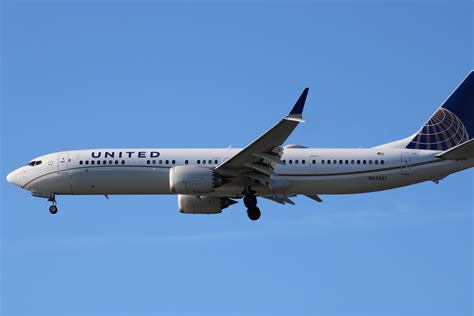
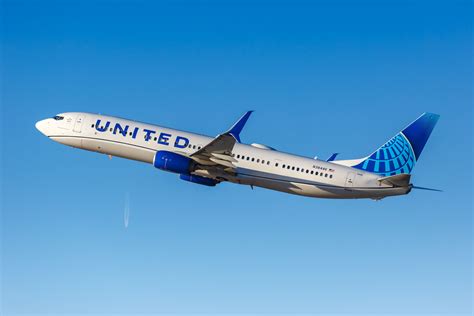
At the heart of this innovation is the Internet Protocol Suite, a multi-link, internet-based communication framework that transcends the limitations of traditional aviation communication systems. In a recent test using a United Airlines Boeing 737 MAX 8, Boeing’s ecoDemonstrator aircraft served as the proving ground for IPS in real-world flight conditions.
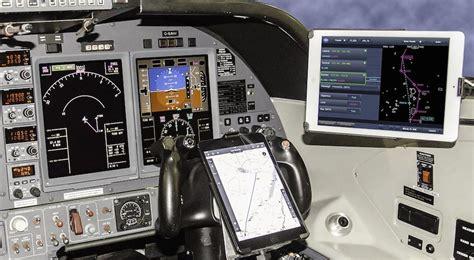
Unlike existing systems that struggle with bandwidth constraints and inconsistent connectivity, IPS offers high-speed, secure, and resilient communication between the flight deck, control towers, and airline operation centers. By enabling seamless data exchange, IPS aims to:
- Enhance flight efficiency by allowing controllers and pilots to make real-time adjustments.
- Reduce congestion in crowded skies and busy airports.
- Lower fuel burn and emissions, contributing to sustainability goals.
- Minimize delays by eliminating unnecessary holding patterns.
The Trajectory-Based Operations (TBO) Advantage
IPS isn’t just a communication protocol—it’s a key enabler of Trajectory-Based Operations (TBO), a paradigm shift in how air traffic is managed. TBO relies on the integration of four-dimensional flight data: latitude, longitude, altitude, and time. This 4D data model offers air traffic controllers a predictive and dynamic view of every aircraft’s intended path, enabling:
- Optimized airspace utilization
- Increased traffic throughput
- Higher operational predictability
TBO functions as the aviation equivalent of Waze or Google Maps, delivering real-time updates on optimal routing, expected delays, and airspace conditions. By preemptively adjusting flight paths, TBO can eliminate many causes of holding patterns before they arise.
Global Adoption Already Underway
This isn’t just a theoretical breakthrough. Airlines around the world are already beginning to adopt TBO-compatible systems. The Lufthansa Group has equipped its Airbus A320neo and A321neo fleets with ADS-C (Automatic Dependent Surveillance–Contract), which sends real-time flight profiles to controllers.
Meanwhile, Vietnam Airlines is actively leveraging the system to analyze and deploy more fuel-efficient routing. This has translated into measurable cost savings, reduced emissions, and increased customer satisfaction through more punctual flights.
In another notable application, Emirates has integrated TBO data with the IATA Turbulence Aware Platform, allowing pilots to receive accurate, real-time turbulence reports. By integrating this 4D data into their navigation systems, flight crews can dynamically adjust routes for smoother flights, enhancing passenger comfort and flight safety.
Cybersecurity, Bandwidth, and the Road Ahead
One of the biggest limitations of legacy aviation communication systems is the lack of bandwidth and vulnerability to interference. IPS addresses both. Built on internet-based infrastructure, it provides vastly superior data transmission capacity and is fortified with modern cybersecurity standards to protect critical flight data.
According to Boeing’s CTO Todd Criton, this marks a pivotal step: “Our collaboration with United Airlines and the industry team is a pivotal step towards improving the reliability and speed of communication between the flight deck and air traffic control to enable safer, more efficient flight for the flying public.”
The End of Holding Patterns?
The implications of fully adopting IPS and TBO are enormous. Holding patterns, long considered a necessary evil in aviation, could become an artifact of the past. As aircraft, airports, and air traffic control networks sync through real-time, high-bandwidth, secure communications, the entire global air traffic system could become more fluid, efficient, and predictable.
The skies of the future may not just be clearer—they may finally run on time. No more wasteful loops, no more unnecessary delays. Just precision, connectivity, and a smarter path forward.