Aircraft holding procedures represent a critical cornerstone of instrument flight rules (IFR) operations, especially during high-density air traffic, adverse weather conditions, or operational delays at destination airports. These procedures serve as structured, predictable ways for aircraft to remain airborne in a designated area until clearance for further routing or landing is available. Mastery of holding procedures is not only essential for pilots but also a vital tool for air traffic controllers to maintain safe and efficient flow in increasingly congested skies.
Understanding the Purpose of Aircraft Holding Patterns
A holding pattern is not merely a tool for delay — it is a precision maneuver conducted in controlled, protected airspace. The necessity for holding arises from a multitude of operational and environmental scenarios:
When thunderstorms loom over a terminal area, inbound aircraft may be required to hold until the weather dissipates or moves out of the flight path. These meteorological disruptions often evolve rapidly, enabling ATC to resume normal flow within a relatively short period.
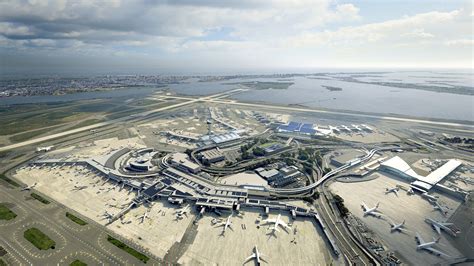
In high-traffic environments such as the New York TRACON, flow control measures frequently necessitate enroute or terminal area holding. With airspace stretched to capacity, holding allows aircraft to be safely sequenced into the arrival stream without exceeding airport or runway limitations.
During low visibility or ceiling conditions, separation minima are increased to ensure obstacle clearance and safety between aircraft, slowing down the arrival pipeline and creating temporary airborne backlogs.
Snowfall events often lead to runway closures for plowing, requiring airborne aircraft to hold until surfaces are cleared. The delay severity varies with the airport’s snow handling capability — a routine delay in Denver could result in extended waits at airports less experienced with winter operations, such as Dallas or Austin.
Lastly, ground emergencies or equipment failures at airports — like disabled aircraft on a single-runway facility — may render a destination temporarily unavailable, prompting holding or, if prolonged, rerouting or diversion.
Published and Non-Published Holding Patterns
Holding instructions fall under two broad categories: published and non-published (random) holds. Published holds are pre-defined and charted in IFR navigation documents such as approach plates, en-route charts, or standard terminal arrival routes (STARs). These are ideal from an operational standpoint, as they reduce radio transmission time and simplify pilot workload.
For instance, a clearance such as “Hold south of the Cedar Lake VOR as published” implies adherence to a predefined pattern with specific inbound/outbound courses, leg lengths, and turn directions.
In contrast, random holding patterns are improvised and dictated verbally by ATC. These typically include the following elements:
- Direction from the fix
- Radial or course
- Distance from the fix (e.g., DME)
- Turn direction (standard right or nonstandard left)
- Leg length (in time or miles)
- Expected further clearance time (EFC)
A typical instruction might read: “Hold west of East Texas VOR, 290 radial, 20 DME, left turns, 5-mile legs. Expect further clearance at 1230 Zulu.”
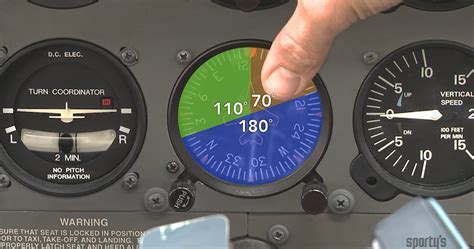
These random holds are most common in non-terminal airspace, at enroute waypoints or navigation aids, often due to dynamic in-flight needs such as spacing, sequencing, or weather deviations.
The Geometry of Protected Airspace in Holding
The integrity of holding patterns hinges on FAA TERPS (Terminal Instrument Procedures) criteria, which define the dimensions and obstacle clearance requirements of protected airspace. Each holding area is divided into two zones:
- Primary area, where full obstacle clearance (1,000 feet) is guaranteed
- Secondary area, which buffers the primary zone with a tapering clearance from 500 feet to zero at its outer edge
These zones are meticulously calculated using variables such as aircraft speed, altitude, slant-range distance, proximity to navaids, and angular displacement. Though the specific dimensions of each holding area may not be readily apparent to pilots, the assurance lies in the fact that all variables — including wind correction and ground speed changes — are built into the design margins.
This rigorous design standard enables safe operations even under maximal conditions, reinforcing the holding procedure’s role as a highly controlled airspace management tool.
Maximum Holding Speeds and Their Significance
To ensure aircraft remain within protected airspace during holding, the FAA has established maximum holding speeds based on altitude levels:
- At or below 6,000 feet MSL: 200 KIAS
- Between 6,001 and 14,000 feet MSL: 230 KIAS
- Above 14,000 feet MSL: 265 KIAS
If a published holding procedure demands a nonstandard speed, it will be annotated on the chart with a specific holding speed restriction. These limitations help prevent aircraft from exceeding the lateral and vertical confines of their holding airspace, especially during high-speed turns or in high-wind conditions.
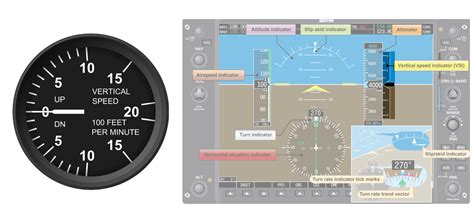
Aircraft unable to comply with standard speeds — such as larger jets at high weights or aircraft with operational limitations — must inform ATC in advance. Adjusting leg lengths and altitudes may also help mitigate airspace breaches due to high groundspeeds.
Holding Pattern Entry Procedures
There are three FAA-approved entry procedures into holding patterns: direct, parallel, and teardrop. These maneuvers are designed to transition an aircraft from its current route into the hold with minimal risk of airspace infringement.
- A direct entry involves a straightforward turn into the holding pattern upon reaching the fix.
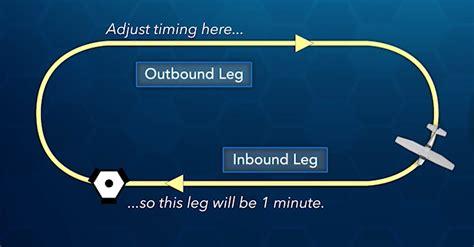
- A parallel entry requires crossing the fix, flying outbound for one minute on the reciprocal of the inbound course, followed by a turn back into the hold.
- A teardrop entry entails flying a course offset from the inbound track by 30 degrees for one minute, then turning into the pattern.
The choice of entry is influenced by the aircraft’s heading relative to the inbound leg of the holding pattern at the time the fix is crossed. Many modern FMS-equipped aircraft can compute and fly the optimal entry automatically, but knowledge of manual entries remains crucial, especially in loss-of-navigation scenarios.
Managing Holds Efficiently: Best Practices and Planning
When assigned a hold, pilots must balance fuel management, alternate planning, and real-time situational awareness. It’s critical to:
- Note the EFC time and monitor for updates
- Calculate fuel burn during holding legs to determine diversion thresholds
- Stay engaged with ATC for updates on traffic flow and weather
- Use cockpit timers to ensure leg timing accuracy (usually one minute inbound at or below 14,000 feet, one-and-a-half minutes above)
Flight management systems (FMS) and electronic flight bags (EFBs) have greatly improved holding situational awareness. With real-time mapping, speed trend vectors, and wind correction models, pilots can maintain exceptional hold precision, minimizing deviation and workload.
Conclusion: Holding Patterns as Precision Tools in Modern Aviation
Far from being mere airborne delays, aircraft holding procedures embody the synergy between human judgment and structured aviation protocols. Their design is a testament to decades of aeronautical engineering, airspace analysis, and operational refinement. Pilots who understand the intricacies of holding — from procedural entry to fuel planning — gain not only technical skill but also strategic foresight essential in complex operational environments.
In the ever-evolving landscape of air traffic, where automation and congestion intersect, mastering the holding pattern remains a defining capability of the well-rounded instrument pilot and a linchpin in maintaining the orderly and safe flow of air traffic worldwide.