The pitot-static system is a critical component of an aircraft’s instrumentation suite, governing vital readings such as airspeed, altitude, and vertical speed. A failure or blockage within this system can quickly lead to disorientation, misinterpretation of aircraft performance, and in worst-case scenarios, accidents. In this article, we explore the technical mechanisms, implications, and countermeasures associated with pitot-static blockages, equipping pilots and aviation professionals with the knowledge to identify and respond to failures promptly.
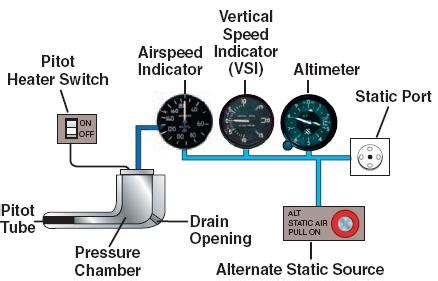
The Anatomy of the Pitot-Static System
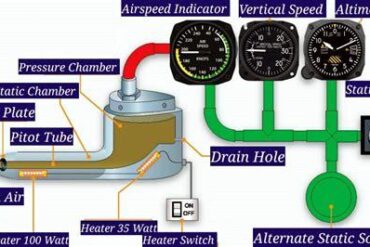
The pitot-static system consists of two distinct components:
- The pitot tube, which captures ram air pressure, directly feeding the airspeed indicator.
- The static ports, which sense atmospheric pressure and serve the altimeter, vertical speed indicator (VSI), and indirectly the airspeed indicator.
Each component plays a unique role in measuring parameters essential to controlled flight. While the pitot tube is exposed to airflow and measures dynamic pressure, the static ports provide the baseline static atmospheric pressure required to compute pressure differentials accurately.
Blockages in either system—especially during instrument meteorological conditions (IMC)—can lead to deceptive readings that misguide the pilot’s decision-making process.
Pitot Tube Blockages and Airspeed Misreadings
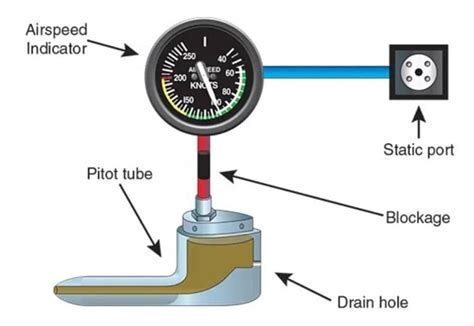
The airspeed indicator functions through a diaphragm mechanism. On one side is the ram air pressure from the pitot tube, and on the opposite, static pressure from the static port. The instrument interprets the pressure difference to display airspeed. When the pitot tube becomes blocked, ram pressure can no longer enter the system. If the drain hole remains open, the trapped pressure leaks out, and the airspeed indicator will rapidly fall to zero, mimicking the indication of a stationary aircraft.
However, if both the pitot tube and drain hole are obstructed, the system becomes sealed. The last recorded pressure remains trapped inside the diaphragm chamber. In this scenario:
- The airspeed indicator freezes at the value recorded just before the blockage.
- If the aircraft climbs, the static pressure decreases, while trapped ram pressure remains the same. This causes the airspeed indicator to display a falsely high speed.
- During a descent, the rising static pressure causes the indicator to read slower than actual airspeed.
This differential distortion introduces a hazardous misinterpretation of aircraft performance, especially during approach or maneuvering in reduced visibility.
Static Port Blockage: A Wider Instrument Impact
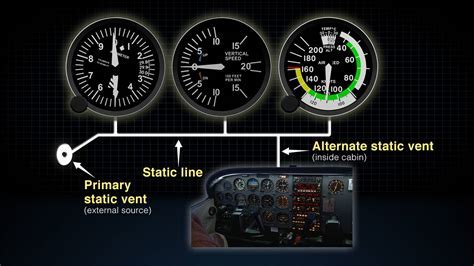
Unlike the pitot system, the static system feeds three essential instruments:
- Airspeed Indicator (ASI)
- Altimeter
- Vertical Speed Indicator (VSI)
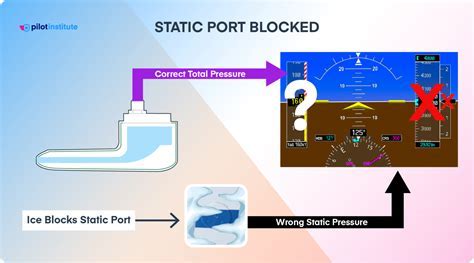
A static port blockage affects all three, resulting in complex instrument discrepancies. The altimeter relies on aneroid wafers to measure changes in static pressure. When static pressure is frozen due to a blockage:
- The altimeter remains locked at the altitude of blockage occurrence.
- The VSI shows zero feet per minute (FPM) regardless of actual vertical movement because no pressure differential occurs across the diaphragm’s calibrated leak.
Meanwhile, the airspeed indicator is compromised because the static pressure feeding it no longer adjusts to altitude. If the aircraft climbs, but the static pressure remains falsely high:
- The indicated airspeed underreports actual airspeed.
During descent:
- The indicated airspeed overstates true speed.
These misleading values can dangerously distort pilot perception, particularly during critical phases of flight such as approach or holding patterns.
Pitot-Static Blockages in Glass Cockpits vs. Analog Panels
Whether operating a traditional analog cockpit or a modern glass cockpit system, the manifestations of pitot-static failure remain fundamentally the same. However, the means of failure recognition may vary.
- In glass cockpits, instrument data may be integrated into a single display. This can cause multiple simultaneous anomalies on one screen, requiring the pilot to distinguish between source data and derived metrics.
- In round-dial systems, the pilot might more easily isolate anomalies by comparing instruments, especially when one behaves inconsistently.
Regardless of cockpit design, pilots must be proficient in diagnosing abnormal indications based on systemic knowledge, not just visual clues.
Recognizing Blockages in Flight
Identifying a blockage mid-flight demands immediate and accurate observation of instrument behavior:
- Sudden zeroing of the airspeed indicator may suggest pitot tube blockage.
- Discrepancies between altimeter and GPS altitude could point to static port obstruction.
- A non-responsive VSI despite an obvious climb or descent typically confirms a static blockage.
Visual flight conditions (VMC) allow for external reference points such as horizon line, attitude, and aircraft noise level to aid the diagnosis. However, under IMC, pilots must transition to partial panel flying and immediately implement troubleshooting procedures.
Emergency Responses and Best Practices
When a pitot-static failure occurs, swift, decisive action can prevent escalation. Standard protocols include:
- Activate pitot heat immediately to resolve ice-related blockages.
- Check circuit breakers to rule out instrument power failure.
- Switch to alternate static source if equipped. Many aircraft include an alternate static valve inside the cockpit that draws cabin pressure instead.
- Inform ATC of instrument failure (in accordance with FAR 91.183 and AIM 5-3-3). Controllers can assist with vectors, altitudes, and sequencing support.
- Rely on GPS-based altitude or data from EFBs (Electronic Flight Bags) to cross-check faulty altimeters.
- If in VMC, use known pitch and power settings to maintain safe flight profiles.
Safe return to ground is paramount. An early declaration and route to the nearest suitable airport can mean the difference between a manageable situation and an emergency.
Preventative Measures and Maintenance Protocols
To reduce the risk of in-flight blockages, consistent preventative maintenance is crucial:
- Regularly inspect pitot tubes and static ports for dirt, insects, and obstructions.
- Use covers when parked on the ramp, especially in areas prone to bugs or dust.
- Ensure drain holes are unobstructed during preflight checks.
- Verify pitot heat functionality during every preflight test.
Additionally, pilots should be trained to perform detailed preflight checks that include evaluating the sensor integrity, drain paths, and instrument responsiveness before departure.
Conclusion: Mastery of Systems Equals Mastery of Flight
The significance of understanding the pitot-static system cannot be overstated. Instrument reliability directly affects aircraft control and safety. A blocked pitot or static port can mimic mechanical failures, cause pilot confusion, and lead to unsafe flight conditions if not recognized early. Comprehensive knowledge, coupled with procedural discipline, ensures that pilots can react effectively, retain situational awareness, and maintain safety margins throughout the flight.
FAQs
What causes pitot-static blockages in flight?
Blockages are often caused by ice accumulation, insects, moisture, or debris obstructing the pitot tube or static ports. In-flight icing is a primary culprit, especially when pitot heat is not engaged in time. Parked aircraft may also accumulate contaminants if not properly covered.
How can I tell if my pitot tube is blocked?
A pitot tube blockage usually results in a zero airspeed indication if the drain hole is open. If both are blocked, the airspeed freezes at the last recorded speed. A sudden drop or inconsistency in airspeed, especially without changes in power or pitch, should trigger suspicion.
Can I still fly if my static port is blocked?
While flight is technically possible with a blocked static port, instrument indications will be inaccurate. Altitude, airspeed, and vertical speed readings become unreliable. Pilots should activate an alternate static source if available and rely on GPS-based altitude or external references in VMC.