When accelerating down the runway, many pilots—especially those in training—notice a distinct pull of the aircraft to the left side. This is not an anomaly, nor is it pilot error. Rather, it is the result of four specific aerodynamic forces collectively known as left-turning tendencies. These tendencies, though subtle in isolation, combine to create a powerful influence on aircraft behavior during takeoff and low-speed flight. Understanding them is essential to mastering aircraft control and maintaining precision throughout every phase of flight.
What Are Left-Turning Tendencies?
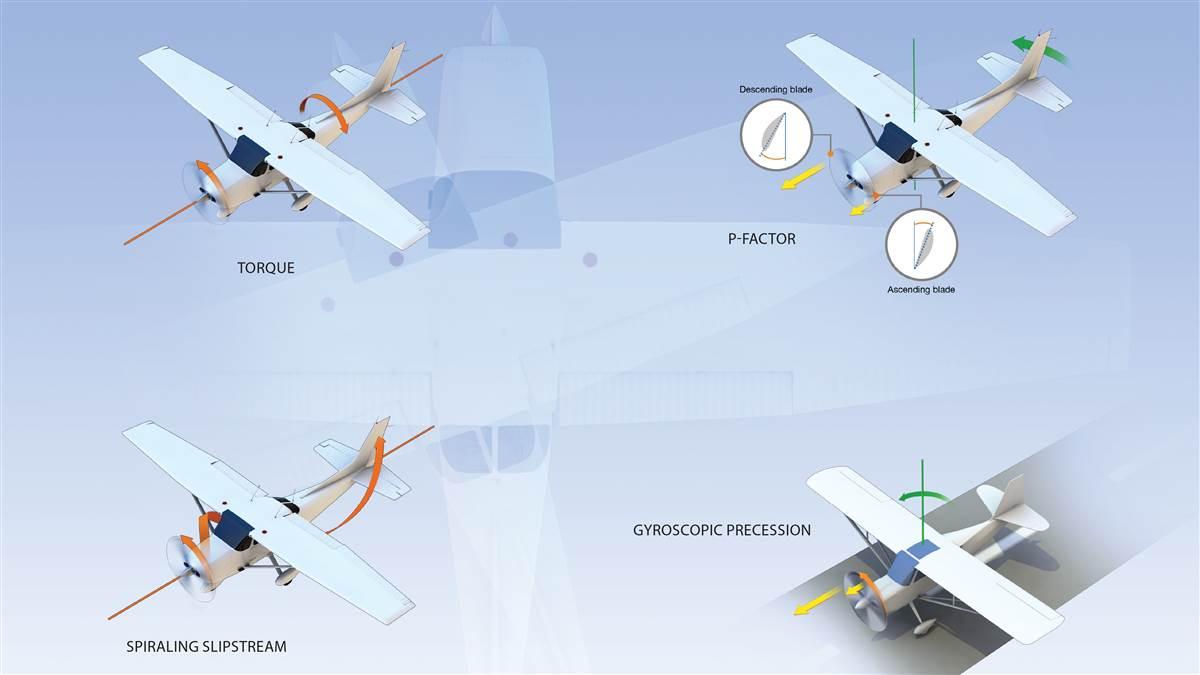
Left-turning tendencies are four distinct aerodynamic and mechanical phenomena that cause propeller-driven aircraft, particularly those with clockwise-rotating propellers (as seen from the cockpit), to yaw left. These effects become most noticeable during high power and low airspeed conditions, especially during takeoff rolls. The four tendencies include:
- Torque Reaction
- P-Factor (Asymmetric Thrust)
- Gyroscopic Precession
- Spiraling Slipstream
Each has a unique cause rooted in physics and aerodynamics, and they often act in unison, requiring calculated rudder input—most often to the right—for compensation.
Torque Reaction: Newton’s Legacy in Motion
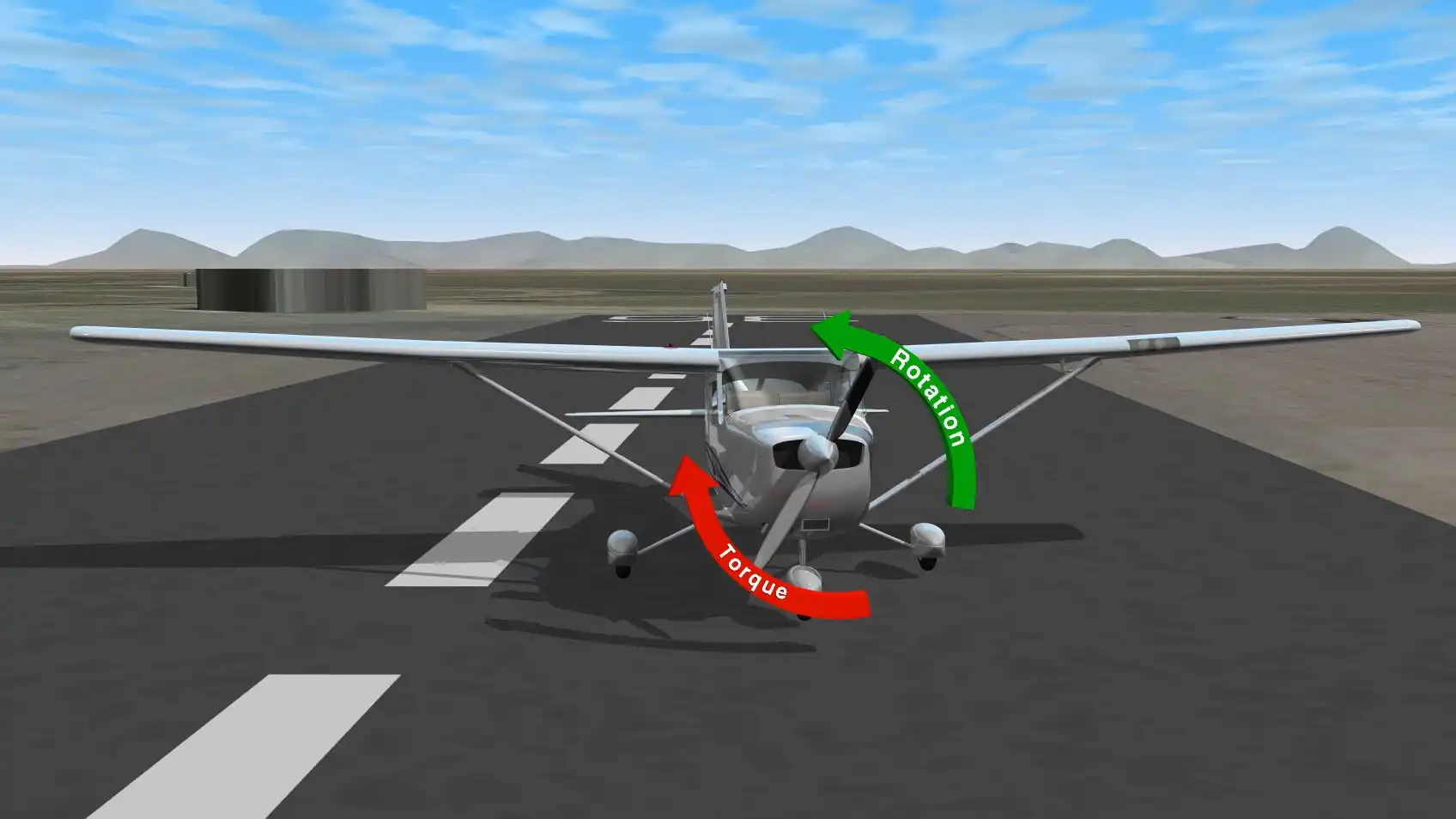
The principle of torque reaction stems directly from Newton’s Third Law: for every action, there is an equal and opposite reaction. In most Western-built aircraft, the propeller rotates clockwise when viewed from the cockpit. This rotational action causes an equal and opposite torque to act on the aircraft’s fuselage, attempting to rotate it counterclockwise, or to the left.
This is particularly influential during takeoff. As the engine spins up rapidly, the torque reaction pushes the left main landing gear more firmly onto the ground, increasing its frictional resistance relative to the right gear. This difference in resistance produces a yawing motion to the left.
This is not merely a theoretical effect—it is something every pilot must actively counteract using right rudder input to stay aligned with the runway centerline.
P-Factor: Asymmetric Propeller Loading and Yaw
P-Factor, or asymmetric propeller loading, arises when an aircraft is at a high angle-of-attack (AOA), which is typical during takeoff and climb-out. In these scenarios, the descending blade of the propeller (on the right side) meets the relative wind at a higher AOA than the ascending blade (on the left side).
This causes the descending blade to generate more thrust, effectively shifting the center of thrust to the right side of the propeller disc. The result? A yaw to the left due to this asymmetric thrust profile.
Tailwheel aircraft exhibit this effect more severely, especially during initial takeoff roll, as they naturally sit at higher AOAs until the tail lifts.
This effect intensifies at slower airspeeds, where there is less airflow over the rudder to resist the yawing force.
Gyroscopic Precession: Physics at 2,000 RPM
Although typically associated with tailwheel aircraft, gyroscopic precession is a profound contributor to left-turning tendencies. It occurs due to the gyroscopic properties of a spinning propeller, which acts like a gyroscope.
When the tail of a taildragger rises during takeoff, a forward force is applied to the top of the propeller disc. Due to gyroscopic precession, this force is felt 90 degrees ahead in the direction of rotation—on the right side of the disc. The resultant motion is a leftward yaw.
Gyroscopic effects are not as pronounced in tricycle gear aircraft since their pitch attitude changes less dramatically during takeoff. Nonetheless, pilots must remain mindful of this principle during sharp pitch transitions.
Spiraling Slipstream: The Invisible Corkscrew of Air
During high power, low-speed phases—like takeoff—the propeller produces a corkscrew-shaped slipstream that wraps around the fuselage. This spiraling slipstream eventually strikes the left side of the vertical stabilizer, pushing the tail to the right and causing the nose to yaw left.
Although difficult to measure, the effect of spiraling slipstream varies significantly between aircraft types depending on engine placement, propeller design, and tail configuration. It’s generally most impactful when the aircraft is accelerating but hasn’t yet reached an airspeed where the rudder is fully effective.
Why Right Rudder Is Non-Negotiable
The combined effect of these four tendencies means pilots must preemptively and continuously apply right rudder during the takeoff roll and initial climb to maintain runway alignment. Failure to do so can result in a dangerous drift off the runway centerline, compromised takeoff performance, and increased workload during critical flight phases.
This is not about overcorrecting—subtle, smooth, and timely rudder application ensures balanced flight and coordinated performance. Some aircraft even feature rudder trim systems or rudder boost mechanisms that assist the pilot in managing these yawing forces.
Aircraft Design and Left-Turning Severity
Not all aircraft experience left-turning tendencies to the same degree. Several factors influence how pronounced these effects are:
- Tailwheel vs. Tricycle Gear: Taildraggers often exhibit more dramatic P-Factor and gyroscopic effects due to their nose-high pitch angle during takeoff.
- Engine Power Output: High-horsepower aircraft amplify all four tendencies.
- Propeller Design: Larger diameter or more aggressive pitch propellers increase torque and P-Factor.
- Rudder Surface Area: A larger vertical stabilizer and rudder allow for easier correction.
Advanced aircraft often incorporate aerodynamic design solutions to help mitigate these forces, but in light aircraft, pilots must manually compensate using rudder technique and training.
Training and Muscle Memory: The Key to Mastery
Developing a feel for left-turning tendencies is a foundational part of flight training. Instructors emphasize anticipation and correction, encouraging students to apply right rudder proactively before significant yaw sets in.
Many simulator programs and flight training modules now include left-turning tendency exercises, helping students recognize and respond without delay. A well-trained pilot understands the source of the yaw and addresses it instinctively, maintaining coordinated flight from rotation through climb-out.
Beyond Takeoff: Other Phases Affected by Left-Turning Tendencies
While most pronounced during takeoff, these forces can also influence aircraft handling during other operations:
- Slow Flight and Climbs: P-Factor and spiraling slipstream continue to affect yaw.
- Go-Arounds: Sudden throttle application at low speed can cause abrupt yaw unless managed.
- Touch-and-Go Operations: Pilots must reapply rudder control quickly during transitions.
These scenarios demand vigilance, situational awareness, and refined rudder coordination to ensure safety and precision.
Conclusion: A Masterclass in Aircraft Control
Understanding and mastering left-turning tendencies is not optional—it is an integral part of becoming a proficient pilot. Each force—torque, P-Factor, gyroscopic precession, and spiraling slipstream—tells a story of physics acting on the airframe, each with specific causes and effects that influence flight behavior.
For pilots, the key is anticipation and consistent practice. By knowing what to expect and when to act, we can ensure not only smoother takeoffs but safer, more coordinated flight in every phase. Whether flying a Cessna 172 or transitioning into more powerful tailwheel aircraft, managing these aerodynamic forces is one of the clearest marks of true airmanship.