For those of us navigating the skies—whether in a student cockpit or at the helm of a commercial airliner—understanding the nuanced relationship between stalling speed and the critical angle of attack (AoA) is essential to safe and proficient flying. These concepts are often mischaracterized as interchangeable, but in truth, they represent two fundamentally distinct aerodynamic phenomena that intersect only under specific conditions. Let’s explore this complex relationship in depth, cutting through myths and assumptions that persist even among experienced aviators.
What Is the Critical Angle of Attack?
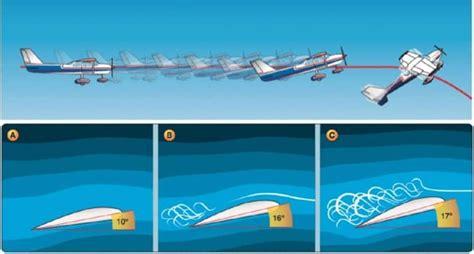
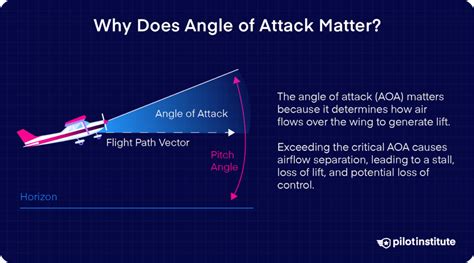
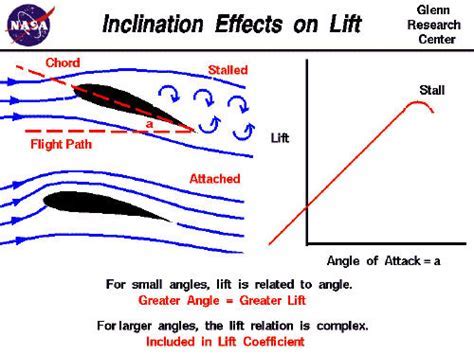
The critical angle of attack is the maximum angle between the wing’s chord line and the relative wind at which the wing can still produce lift. Beyond this angle, airflow separates from the upper surface of the airfoil, causing a sharp reduction in lift and resulting in an aerodynamic stall.
It’s crucial to understand that this critical AoA is a fixed characteristic of the wing’s design—it does not change with airspeed, weight, power setting, or altitude. Most general aviation airfoils stall at a critical angle somewhere around 15 to 18 degrees, though the exact value depends on the airfoil’s geometry.
The Myth of a Fixed Stall Speed
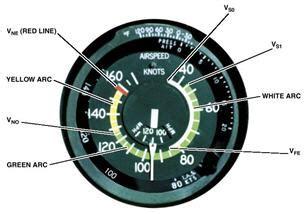
We often refer to a specific stall speed (Vs)—the minimum steady flight speed at which the aircraft is controllable. Pilots may recall this number from flight manuals or cockpit airspeed indicators marked with white and green arcs. However, stall speed is not a fixed value. It’s a variable that reflects the conditions under which the wing reaches the critical angle of attack.
Stall speed increases or decreases depending on several flight parameters:
- Weight: A heavier aircraft requires more lift, necessitating a higher angle of attack at a given speed, thus reaching the critical AoA sooner.
- Load Factor: During a turn or pull-up maneuver, the load factor increases. A 60° banked turn, for example, imposes a 2G load, which raises stall speed by about 41%.
- Center of Gravity (CG): A forward CG requires more tail-down force, increasing the effective angle of attack on the wing.
- Configuration: Deploying flaps changes the wing’s camber, reducing the critical AoA and, thus, reducing stall speed.
The Stall Doesn’t Care About Speed Alone
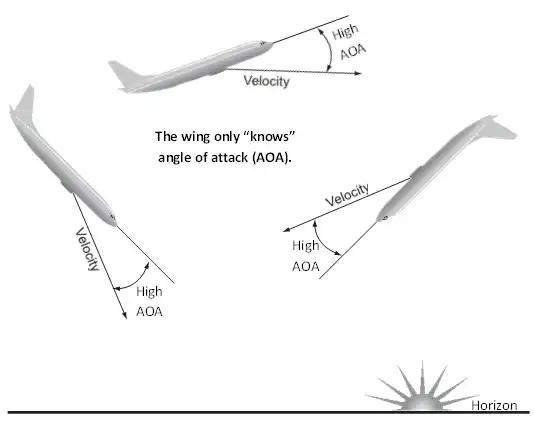
One of the most misunderstood truths is this: an aircraft can stall at any airspeed if the critical angle of attack is exceeded. This fact becomes clear in high-speed maneuvering scenarios. Consider an aircraft in a steep dive followed by a sharp pitch-up. Despite the high airspeed, the rapid increase in AoA can exceed the critical angle, leading to an accelerated stall.
This phenomenon debunks the simplistic equation: slow = stall. While flying slowly can indeed result in a stall due to the high AoA required to maintain lift, it’s the angle, not the speed, that triggers the stall.
How Do AoA and Speed Work Together?
The key relationship lies in the generation of lift. Lift depends on both airspeed and angle of attack. As speed decreases, the wing must operate at a higher AoA to generate the same amount of lift. Eventually, the AoA increases to the point where the wing reaches its critical limit—this is the point of stall.
In 1G, straight-and-level flight, this interaction is relatively predictable, and the stall speed corresponds to the AoA needed to balance the aircraft’s weight. But once you enter a maneuver involving load factor—such as a turn, climb, or descent—this simple relationship no longer applies.
Accelerated Stalls and Load Factor
An accelerated stall occurs when an aircraft stalls at a speed higher than its published 1G stall speed due to an increased load factor. This happens often during steep turns or abrupt control inputs. For example, in a 60-degree banked turn:
- The load factor becomes 2G.
- The stall speed increases by √2 (approximately 41%).
- The wing stalls not because of insufficient speed, but because the angle of attack required to support twice the weight exceeds the critical value.
This means a light aircraft with a 50-knot stall speed in level flight could stall at over 70 knots in a steep coordinated turn.
Why Power Setting Doesn’t Save You
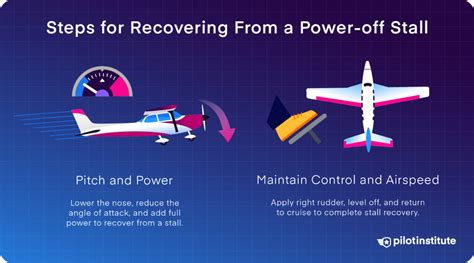
While increased power can delay a stall by introducing more airflow over the wing or tailplane and altering pitch attitude, it does not prevent exceeding the critical AoA. In fact, adding power while maintaining excessive pitch can create a false sense of security. This is why stall training includes both power-on and power-off stall recovery procedures—because the stall mechanism is independent of thrust.
Power simply adjusts the aircraft’s energy state and climb rate, not its susceptibility to an aerodynamic stall.
Misconceptions That Mislead New Pilots
One common misconception is associating slow flight directly with stall. While flying slowly does increase your proximity to the critical AoA, slow flight itself is not a stall. In fact, aircraft are routinely operated in slow flight during approaches and landings. The problem arises when pilots attempt to maintain altitude or execute turns at these low speeds by increasing pitch rather than adding power or reducing the load factor.
Equally dangerous is the belief that stall speed is a fixed and reliable threshold. This thinking ignores the dynamic nature of aircraft weight, CG position, and flight maneuvers.
Practical Takeaways for Real-World Flying
To fly safely and effectively, we must internalize these core truths:
- Stall occurs due to exceeding the critical angle of attack, not simply due to flying slowly.
- Stall speed is not a constant value—it increases with weight and load factor.
- You can stall at high speeds under the right aerodynamic conditions.
- AoA awareness is more valuable than airspeed monitoring in stall avoidance.
- Understanding aircraft configuration and energy management is key to stall prevention.
Modern Tools: AoA Indicators and Flight Envelope Protection
Advanced aircraft today often include angle of attack indicators or flight envelope protection systems that warn pilots before they approach critical AoA. These systems are particularly helpful in high-performance or complex aircraft, where subtle changes in pitch and configuration can bring the aircraft close to stall even during apparently stable flight.

Final Thoughts
In aviation, clarity of understanding is paramount. The critical angle of attack defines the upper limit of usable lift, while stall speed describes the airspeed at which, in specific conditions, that angle is typically exceeded. When viewed through this lens, we can appreciate that stalls are aerodynamic events, not merely performance metrics.
Mastering this distinction is not just an academic exercise—it’s a vital part of every pilot’s safety toolkit. And in the cockpit, knowing when you’re flying near the edge of your wing’s aerodynamic capabilities can mean the difference between control and catastrophe.