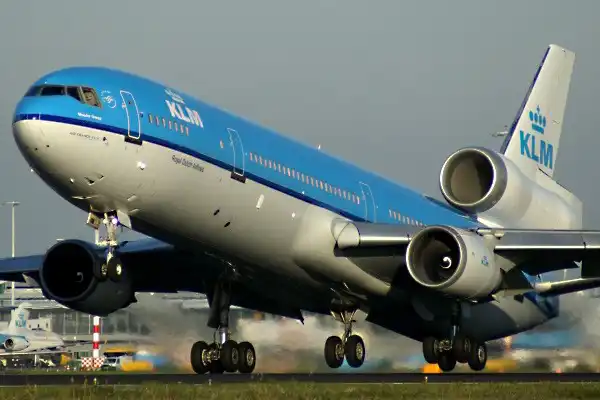
The McDonnell Douglas MD-11 occupies a strange and fascinating niche in commercial aviation history. It arrived late enough to benefit from digital avionics and aerodynamic refinement, yet early enough to retain a configuration that has now almost vanished from the skies: the widebody trijet. To many observers, the most visually arresting feature of the MD-11 is its tail-mounted third engine, perched neatly beneath the vertical stabilizer. That placement alone invites questions, myths, and confident-sounding misconceptions. One of the most persistent is deceptively simple: does the MD-11’s tail engine actually have a fan, or is it something closer to a turbojet relic?
The short answer is yes, it absolutely has a fan. The long answer is far more interesting, because it opens a window into how engineers balanced aerodynamics, efficiency, maintainability, and structural constraints at the very end of the trijet era. The MD-11’s tail engine is not an oddball exception but a fully modern high-bypass turbofan, engineered to behave as similarly as possible to the two engines hanging under the wings. The way McDonnell Douglas achieved that similarity, without resorting to the complex ducting seen on earlier trijets, is where the story becomes worth telling.
Unlike many aviation myths, this one did not arise from ignorance but from visual intuition. When people look at the MD-11 from the ground, they see an intake embedded in the tail rather than a large, exposed nacelle. That visual subtlety can trick the brain into assuming something exotic is happening inside. In reality, the airflow path is refreshingly straightforward, and that simplicity was not accidental.
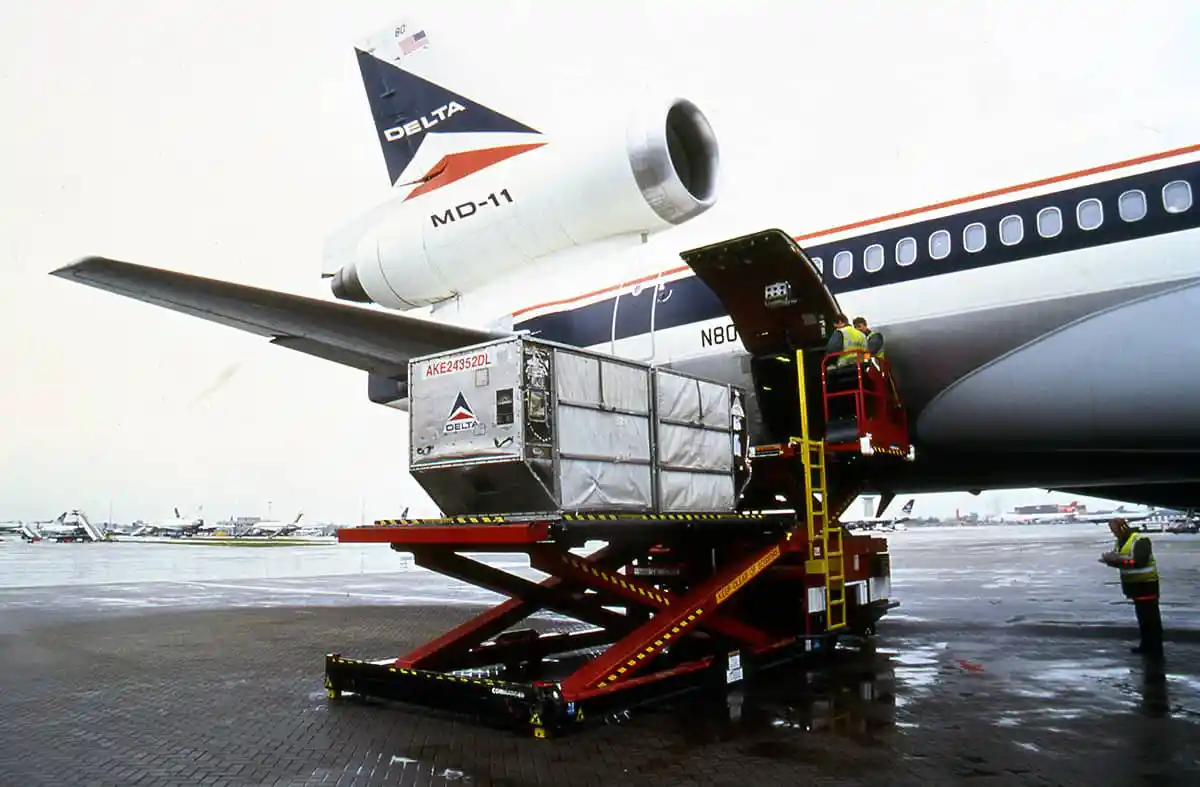
Does the MD-11’s Tail Engine Really Use a Fan?
The MD-11’s tail engine is a General Electric CF6-80C2, the same engine family used on its wing stations. This alone should end the debate, because the CF6-80C2 is a classic turbofan, not a turbojet. A turbofan produces most of its thrust by accelerating a large mass of air around the engine core rather than blasting a smaller mass at extremely high speed. That front fan stage is essential to the engine’s efficiency, noise reduction, and fuel economy at subsonic cruise speeds.
In the MD-11’s tail installation, the fan sits just behind the intake, drawing air from an opening located immediately ahead of the vertical stabilizer. The airflow path from intake to fan is only slightly curved and notably short. This matters more than it might seem. Every bend, twist, or extension in an intake duct introduces pressure losses and airflow distortion, both of which reduce engine efficiency and can complicate compressor behavior. By keeping the duct short and nearly straight, McDonnell Douglas ensured that the tail engine behaved almost identically to the wing-mounted engines from an aerodynamic standpoint.
That design choice also simplified maintenance. A shorter duct means fewer inspection points, less structural complexity, and easier access during heavy checks. For an aircraft intended to fly long-haul routes with high utilization, those details translate directly into lower operating costs and higher dispatch reliability. The MD-11’s tail engine was not a compromise solution; it was engineered to be boringly consistent with the rest of the propulsion system, and in aviation, boring is often the highest compliment.
Why the MD-11 Avoided the S-Duct Altogether
Older trijets trained the aviation world to expect something called an S-duct in the tail. Aircraft like the Lockheed L-1011 TriStar and the Boeing 727 used a serpentine intake duct shaped like a stretched letter “S,” routing air from an intake near the base of the fin down into an engine buried deep within the fuselage. The MD-11 and its predecessor, the DC-10, famously rejected this approach.
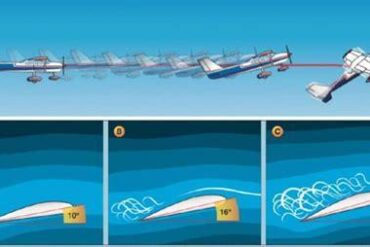
The reason was not conservatism but confidence. An S-duct offers real advantages, particularly in drag reduction. By burying most of the engine inside the fuselage, designers can reduce external nacelle area and achieve a measurable aerodynamic gain, often quoted in the range of 2 to 4 percent drag reduction. However, those gains come at a price. S-ducts introduce complex airflow patterns, including boundary layer separation and uneven pressure distribution at the compressor face. These effects can degrade engine efficiency and complicate stability margins, especially during high-angle-of-attack conditions.
McDonnell Douglas took a different path. Both the DC-10 and the MD-11 feature exceptionally tall vertical stabilizers and internal structures that allow the intake, fan, and compressor to align more directly than on earlier designs. This geometry made a short, gently curved duct possible, eliminating the need for an S-shaped airflow path. The result was a tail engine that delivered predictable performance, reduced distortion, and simpler certification.
In hindsight, this decision looks prescient. While S-ducts remain useful in specialized applications, particularly where radar signature reduction is critical, they have disappeared entirely from modern commercial airliner design. The MD-11’s tail engine configuration now reads less like a transitional compromise and more like an endpoint of practical trijet evolution.
The DC-10 Connection and Shared Engineering DNA
The MD-11 did not appear in a vacuum. It was a direct descendant of the McDonnell Douglas DC-10, and nowhere is that lineage clearer than in the tail engine architecture. The DC-10 also used a fan-equipped turbofan in its rear position, fed by a relatively straight and short duct. The MD-11 refined rather than reinvented this concept.
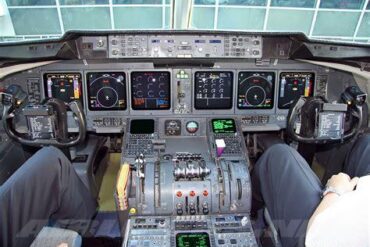
What changed was the surrounding aircraft. The MD-11 featured a longer fuselage, recontoured winglets, refined aerodynamics, and a significantly smaller horizontal stabilizer. That smaller tailplane reduced drag but also reduced natural pitch stability, forcing engineers to compensate with software rather than aluminum. The Longitudinal Stability Augmentation System (LSAS) became a core part of the aircraft’s handling qualities, subtly trimming control inputs to keep the aircraft behaving as expected.
Fuel ballast stored in the tail further adjusted the center of gravity, a decision that once again brought the tail engine area into the spotlight. Yet through all these changes, the philosophy behind the rear engine remained consistent. It was meant to act like the other two engines, not like a special case demanding unique procedures or performance calculations.

Understanding What a Fan Actually Does in a Jet Engine
Much of the confusion surrounding the MD-11’s tail engine comes from a hazy understanding of what a fan actually is. In a turbofan, the fan is the large, multi-bladed rotating assembly at the front of the engine. It splits incoming air into two streams. One stream enters the core, where it is compressed, mixed with fuel, and ignited. The other stream bypasses the core entirely, flowing around it and recombining with the exhaust at the rear.
This bypass airflow produces most of the thrust while remaining cooler and slower than the core exhaust. That combination dramatically improves fuel efficiency and reduces noise, which is why every modern commercial airliner relies on turbofans. The MD-11’s tail engine follows this same principle. The fan is there, it is doing real work, and it is responsible for the aircraft meeting the noise and emissions standards of its era.
If the MD-11’s tail engine were a turbojet, it would be louder, thirstier, and far less acceptable at major airports. Its continued service with cargo operators into the 2020s is proof that its propulsion technology was never archaic.
Commercial Jets That Truly Flew Without Fans
To appreciate how normal the MD-11’s tail engine really is, it helps to look at aircraft that genuinely did not have fans. Early jetliners such as the de Havilland Comet and the Boeing 707-120 relied on turbojets, where all incoming air passed through the engine core. These designs made sense at the dawn of the jet age, when materials, aerodynamics, and combustion science were still catching up with ambition.
Turbojets excel at very high speeds and altitudes but perform poorly in subsonic cruise, the regime where commercial airliners spend most of their lives. They are inefficient, deafeningly loud by modern standards, and environmentally unacceptable today. The Comet attempted to mitigate noise with baffles and heavy soundproofing, but the underlying physics could not be escaped.
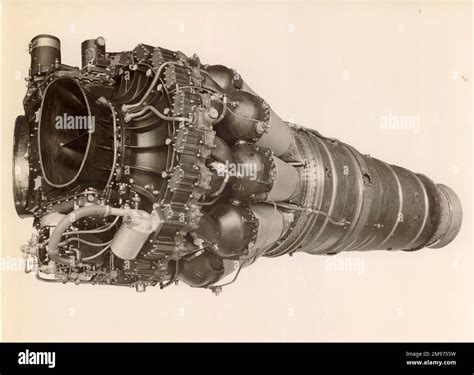
The most famous late example of a fanless airliner was Concorde. Its Rolls-Royce/Snecma Olympus 593 engines were turbojets with afterburners, chosen specifically because turbofans generate enormous drag at supersonic speeds. Concorde sacrificed efficiency and noise compliance for Mach 2 performance, a tradeoff that only made sense for a very narrow market. When Concorde retired, so did the turbojet’s role in commercial passenger aviation.
Why S-Ducts Survive Outside Commercial Airliners
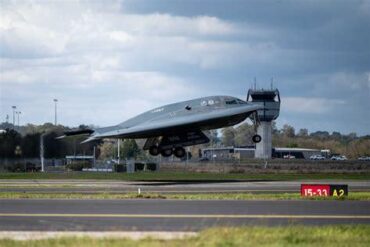
Although S-ducts vanished from airliners, they never truly died. Military aircraft, particularly stealth fighters, continue to use them because an S-shaped intake blocks a direct line of sight to the engine’s compressor face. Since the spinning compressor blades are a powerful radar reflector, hiding them significantly reduces radar cross-section.
The Lockheed Martin F-22 Raptor uses carefully designed S-ducts to balance stealth with high-speed performance. In the business jet world, trijets like the Dassault Falcon 900 and 7X employ S-ducts to package engines efficiently while preserving aerodynamic cleanliness. These aircraft operate under very different constraints from widebody airliners, where ease of maintenance, predictable airflow, and certification simplicity dominate design decisions.
The MD-11 Program in Context
When the MD-11 program launched in 1986, McDonnell Douglas envisioned it as a next-generation widebody capable of competing head-on with emerging twinjets like the Boeing 777 and Airbus A330. The aircraft introduced advanced avionics, reduced crew requirements, and aerodynamic refinements that promised improved efficiency over the DC-10.
Reality proved harsher. The MD-11 struggled to meet its original range and fuel burn targets, eroding airline confidence at exactly the wrong moment. As twin-engine reliability improved and regulatory constraints eased, the economic rationale for a trijet weakened. Boeing’s acquisition of McDonnell Douglas in 1997 sealed the program’s fate, and production ended in 2000 after just 200 aircraft.
Yet in cargo service, the MD-11 found a second life. Its robust structure, generous payload capability, and three-engine redundancy appealed to operators like FedEx and UPS. The very tail engine that sparked so much curiosity became part of what made the aircraft resilient and versatile in demanding freight operations.

The End of the Trijet and the Clarity of the Answer
The gradual retirement of the MD-11 marks the closing chapter of the trijet era. As these aircraft leave service, the questions surrounding their design become less about operational relevance and more about historical understanding. The idea that the MD-11’s tail engine might lack a fan belongs firmly in the category of myths born from visual misinterpretation.
The truth is simpler and more elegant. The MD-11’s tail engine is a fully modern turbofan, complete with a fan, optimized through a short and efficient intake duct rather than an S-shaped compromise. It represents a design philosophy that valued consistency, reliability, and aerodynamic sanity at a time when aviation was transitioning toward the twinjet dominance seen today.
In that sense, the MD-11’s tail engine is not a curiosity but a quiet demonstration of mature engineering. It did not need to be exotic to be effective. It only needed to work, predictably and efficiently, every time the throttles were advanced.