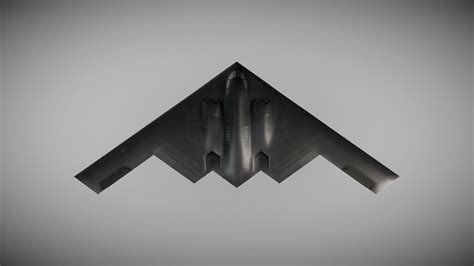
The Northrop B-2 Spirit remains one of the most technically fascinating aircraft ever built, not because of a single stealth trick, but because nearly every line, contour, material, and airflow path on the bomber was engineered to defeat detection. Among its most important and least understood features are the aircraft’s S-shaped serpentine engine ducts, a design element that quietly performs one of the hardest tasks in military aviation: hiding enormous jet engines from both radar systems and infrared sensors.
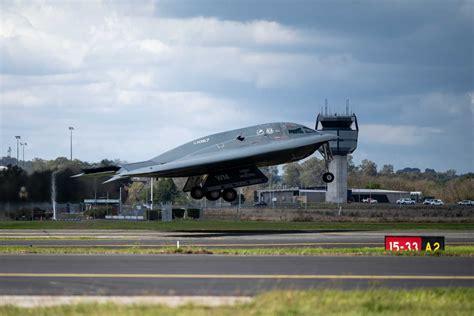
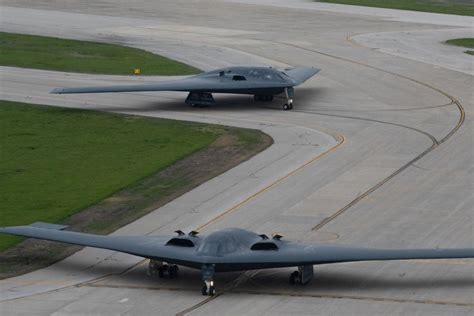
To casual observers, the B-2 looks almost impossibly clean. There are no vertical tails, no protruding engine nacelles, and very few visible openings. That smooth flying-wing profile was never about aesthetics. It was about survival inside heavily defended airspace filled with radar networks, infrared search-and-track systems, and modern heat-seeking missiles capable of detecting tiny thermal signatures from many miles away.
The bomber’s serpentine ducts became one of the defining engineering breakthroughs that allowed the aircraft to penetrate enemy defenses. While radar absorbent coatings and the flying-wing shape usually dominate discussions about stealth, the hidden inlet system buried inside the B-2 is just as critical. Those curved internal pathways conceal the aircraft’s engine compressor faces, diffuse thermal emissions, and help manage airflow in ways that dramatically reduce detectability.
The result is a bomber designed not simply to evade radar, but to become extraordinarily difficult to track across multiple spectrums simultaneously.
The B-2’s stealth is not one technology. It is a layered system of deception.
After decades of classified development, that philosophy continues directly into the newer B-21 Raider, which refines the same concepts with even more advanced inlet geometry, engine integration, and infrared suppression techniques.
Why Jet Engines Are A Stealth Aircraft’s Biggest Problem
Jet engines are among the most detectable components on any aircraft. They generate tremendous heat, produce highly reflective metallic surfaces, and create exhaust plumes visible to both radar and infrared sensors. Even if an aircraft’s outer skin is carefully shaped to scatter radar waves away from enemy receivers, exposed engine components can instantly compromise the design.
The most dangerous feature inside a jet engine is the compressor face. Radar waves entering a straight intake duct bounce directly off the spinning compressor blades, producing an exceptionally bright radar return. Engineers often describe the compressor face as a “radar mirror” because of how effectively it reflects electromagnetic energy back toward hostile sensors.
This creates a major problem for stealth aircraft. Even if the airframe itself is difficult to detect, a conventional engine inlet can effectively announce the aircraft’s location.
Infrared detection creates another layer of vulnerability. Modern heat-seeking missiles do not merely chase giant exhaust flames anymore. Advanced seekers analyze thermal contrasts, engine hotspots, heated surfaces, and even subtle aerodynamic friction along the aircraft skin. Sophisticated infrared search-and-track systems can passively monitor the sky without emitting radar signals at all, making them difficult to detect and counter.
For a stealth bomber expected to penetrate advanced air defense networks, reducing radar visibility alone would never be enough.
That realization shaped the B-2’s revolutionary engine integration strategy.
The Engineering Purpose Behind The B-2’s S-Shaped Engine Ducts
The B-2 Spirit’s engine ducts are curved in a carefully calculated serpentine pattern that prevents a direct line of sight into the engines. Radar waves entering the intake cannot travel straight toward the compressor faces because the duct bends block the reflection path.
This single design decision dramatically reduces radar cross-section.
The concept sounds deceptively simple. In reality, it created one of the most difficult aerodynamic engineering challenges of the Cold War era. Jet engines require extremely stable, smooth airflow to operate efficiently. Curving intake ducts introduces turbulence, pressure distortion, and uneven airflow patterns that can reduce performance or even cause compressor stalls.
Designing an inlet that both concealed the engines and maintained reliable airflow required extraordinary computational analysis and wind tunnel testing.
The B-2’s buried engines sit deep inside the wing structure, with the serpentine ducts feeding air inward through carefully blended inlets. The ducts themselves are lined with radar absorbent materials, further reducing reflected radar energy before waves can penetrate deeper into the aircraft.
The curves inside the ducts also help obscure thermal hotspots. Because observers cannot directly see the hottest engine components, infrared emissions become harder to isolate and track.
The ducts therefore perform two stealth functions simultaneously:
- Reducing radar reflections from engine components
- Limiting direct visibility of internal heat sources
That dual-purpose capability made the S-duct configuration one of the defining features of modern stealth aviation.
How The B-2 Spirit Reduces Infrared Signature Beyond The Ducts
The serpentine ducts are only one part of the B-2’s infrared suppression strategy. Northrop engineers designed the entire aircraft around thermal management principles intended to reduce detection from below, behind, and even from long-range overhead sensors.
One of the bomber’s most distinctive choices was placing the engines on top of the aircraft instead of underneath the wings like conventional bombers. This positioning naturally shields hot exhaust areas from ground-based observers and surface-launched infrared missiles.
The exhaust system itself is equally unusual. Instead of concentrated circular exhaust nozzles, the B-2 spreads engine exhaust across flattened trenches integrated into the upper rear wing surface. This wide, shallow configuration disperses hot gases over a broader area, reducing peak temperatures and lowering infrared contrast.
Mixing cooler ambient air with hot exhaust gases further decreases thermal intensity. By the time the exhaust exits the aircraft, temperatures are substantially reduced compared to conventional fighter engines.
The B-2 also avoids afterburners entirely. Afterburners dramatically increase infrared visibility because they inject fuel directly into exhaust streams to generate additional thrust. While useful for high-speed combat aircraft, afterburners are catastrophic for stealth.
Instead, the B-2 uses four General Electric F118-GE-100 non-afterburning turbofan engines producing roughly 17,300 pounds of thrust each. These engines prioritize efficiency and thermal control over raw speed.
The bomber’s subsonic operating profile contributes to stealth as well. Supersonic flight increases skin friction heating, creating additional infrared signatures across the airframe. By remaining subsonic, the B-2 minimizes aerodynamic heating during penetration missions.
Even paint and surface coatings play a role. Low-emissivity materials help suppress thermal radiation from exposed surfaces, making the aircraft more difficult for infrared systems to distinguish against the surrounding atmosphere.
Every element contributes to the same objective: reduce detectable heat wherever possible.
Stealth Is About More Than Simply Disappearing
Popular culture often treats stealth aircraft as invisible machines, but real-world stealth is far more nuanced. The goal is not total invisibility. The goal is delaying detection long enough to survive and complete the mission.
Radar cross-section varies depending on viewing angle, radar frequency, maintenance quality, weather conditions, and sensor sophistication. A stealth bomber might appear tiny from one aspect while becoming more visible from another.
Infrared suppression works similarly. Aircraft can never fully eliminate heat generation. Instead, stealth engineering focuses on reducing thermal contrast and disrupting clean targeting solutions.
Electronic warfare becomes another essential layer. Modern stealth aircraft rely heavily on emission control, passive sensors, and networked targeting systems to avoid revealing their own positions. Active radar transmissions can expose an aircraft even if its physical design remains stealthy.
The B-2 therefore combines multiple survivability systems simultaneously:
- Shape-based radar reduction
- Radar absorbent materials
- Infrared suppression
- Electronic warfare
- Emissions control
- High-altitude flight profiles
- Precision mission planning
The S-shaped ducts fit directly into this layered philosophy.
They are not magical invisibility tunnels.
They are carefully engineered contributors to a much larger survivability ecosystem.
Why S-Shaped Ducts Became Standard On Modern Stealth Aircraft
When the B-2 entered service in 1997, serpentine engine ducts represented cutting-edge stealth engineering. Today, they are practically mandatory for fifth-generation and next-generation stealth aircraft.
The F-22 Raptor, F-35 Lightning II, Chengdu J-20, and B-21 Raider all incorporate variations of the same concept because the underlying physics remain unavoidable. Exposed compressor faces still create dangerous radar reflections. Hidden engines still improve survivability.
Each newer aircraft generation has refined the idea further.
The F-22 integrates deeply buried engine inlets combined with radar blockers and advanced inlet shaping. The F-35 uses diverterless supersonic inlets that combine airflow control with stealth shaping. China’s J-20 similarly employs serpentine ducts to conceal engine components from frontal radar exposure.
But the B-21 Raider appears to push the concept to a new level.
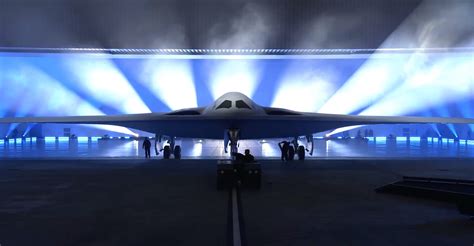
Available imagery suggests the Raider uses significantly thinner, more blended inlet geometries integrated almost seamlessly into the wing root area. The inlets appear shallower and more refined than those on the B-2, indicating major advances in airflow modeling and computational fluid dynamics.
The Raider’s design reflects decades of improvements in:
- Computer simulation
- Radar modeling
- Thermal analysis
- Composite materials
- Engine efficiency
- Airflow management
The aircraft demonstrates how stealth design has evolved from visible geometric compromises toward increasingly smooth and integrated solutions.
How Advanced Computing Changed Stealth Engine Design
One major limitation facing the B-2 during development involved airflow distortion inside the serpentine ducts. Engineers worried that highly curved inlets could destabilize advanced high-bypass engines.
As a result, the B-2 adopted relatively low-bypass F118 engines that tolerated inlet distortion more effectively.
The B-21 Raider appears to overcome this historical constraint.
Reports indicate the Raider may use advanced Pratt & Whitney PW9000-derived engines featuring substantially higher bypass ratios. Higher-bypass turbofans are typically more fuel efficient and produce cooler exhaust streams, both highly desirable characteristics for stealth bombers.
Historically, integrating such engines behind stealthy S-ducts would have been extremely risky.
Modern computational fluid dynamics changed the equation.
Advanced CFD modeling allows engineers to simulate airflow behavior with extraordinary precision, identifying turbulence patterns, pressure irregularities, and distortion zones long before physical prototypes are built. Designers can optimize inlet curvature, airflow mixing, and pressure recovery in ways that were impossible during the B-2 program of the 1980s.
This technological leap enables the B-21 to combine stealth shaping with higher-efficiency propulsion systems.
The benefits are substantial:
- Cooler exhaust temperatures
- Lower infrared signature
- Improved fuel economy
- Greater range
- Reduced thermomechanical stress
- Simpler engine integration
The Raider reportedly achieves these advantages using only two engines instead of the B-2’s four, simplifying maintenance while improving operational efficiency.
The Strategic Importance Of Infrared Suppression In Modern Warfare
Infrared stealth is becoming increasingly important because air defense technology continues evolving rapidly. Modern military networks combine radar systems, passive infrared sensors, data fusion platforms, satellites, and artificial intelligence-assisted target tracking.
An aircraft that defeats radar but glows brightly in infrared may still become vulnerable.
This is especially relevant in future conflicts involving peer adversaries equipped with layered integrated air defense systems. Long-range infrared search-and-track systems are proliferating across advanced fighter aircraft and ground-based defenses because they offer passive detection capability without broadcasting radar emissions.
The United States Air Force understands this challenge clearly.
Recent conflicts demonstrated that stealth bombers remain uniquely valuable during the opening phases of air campaigns when enemy air defenses remain intact. Once air superiority is established, less stealthy bombers can operate more freely.
Against advanced adversaries, however, achieving uncontested air dominance may become extraordinarily difficult.
That reality explains the growing emphasis on aircraft like the B-21 Raider. These bombers are designed not merely to launch stand-off weapons from safe distances, but to penetrate deeply defended airspace and strike high-value targets directly.
Survivability inside those environments depends heavily on suppressing every detectable signature possible.
Radar reduction alone is no longer enough.
Thermal management, electronic warfare integration, passive sensing, and low-observable propulsion systems are now equally essential parts of stealth warfare.
The B-2’s S-shaped engine ducts may look like a relatively small design detail from the outside, but they represent one of the foundational principles behind modern stealth aviation. They embody the idea that survivability comes from controlling visibility across every sensor domain simultaneously.
Even decades after the Spirit first flew, its hidden inlet design continues influencing the future of strategic bomber engineering. The B-21 Raider may feature more advanced materials, better engines, improved computing power, and refined stealth shaping, but the core logic remains remarkably similar.
Hide the engines.
Control the heat.
Deny the enemy a clean target.
That philosophy helped transform the B-2 Spirit into one of the most survivable bombers ever created, and it continues shaping the next generation of stealth aircraft preparing for the contested battlefields of the future.