Modern aviation runs on a delicate balance of engineering precision, global logistics, and relentless scheduling discipline. When a single technical issue ripples through that system, the consequences can ground aircraft, disrupt passengers, and drain millions from airline balance sheets. The ongoing Pratt & Whitney engine recall crisis has become one of the most disruptive technical challenges facing airlines in recent years, forcing carriers across the globe to rethink how they manage fleets, maintenance cycles, and operational resilience.
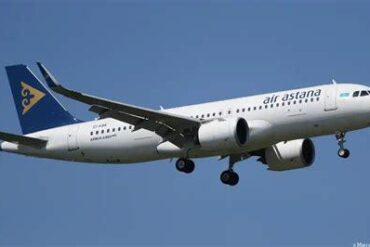
For Air Astana, Kazakhstan’s flag carrier, the problem became especially tangible during the 2025 operating year. The airline reported that unscheduled engine removals (UERs) tied to Pratt & Whitney engines forced aircraft out of service during the busiest travel periods. At one point, 13 aircraft were grounded simultaneously, a costly interruption during peak demand. Engine replacements and related operational disruptions totaled $42.3 million, a striking figure that illustrates how a technical issue in one component can ripple through an entire airline’s business model.
Yet the real story is not just about disruption. It is about adaptation. Air Astana has quietly built a strategic operational playbook designed to reduce the damage caused by global engine shortages, turning a reactive maintenance crisis into a carefully managed capacity strategy.
The result is a fascinating case study in how airlines survive — and sometimes thrive — during systemic industry disruptions.
The Global Engine Recall That Shook Airlines
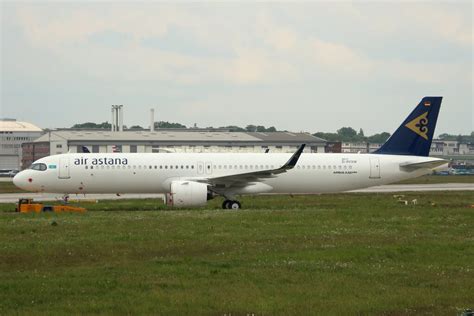
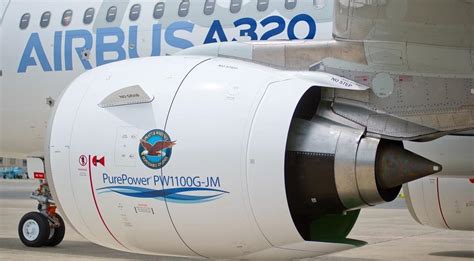
The Pratt & Whitney engine situation has evolved into a system-wide challenge affecting airlines worldwide. Certain engines used on the Airbus A320neo family require inspections and repairs due to manufacturing concerns. Because these engines power thousands of aircraft globally, the inspection campaign has created a severe bottleneck in maintenance facilities.
For airlines, the mathematics of the problem is brutal. Each grounded aircraft represents lost revenue, while demand for flights continues to surge as global travel rebounds. When aircraft cannot fly, airlines must either reduce schedules, lease replacement aircraft, or absorb the financial hit.
Air Astana experienced all three pressures simultaneously. During its financial results presentation for 2025, CEO Peter Foster described the issue as an operational constraint that limited the airline’s growth and pushed costs upward. The challenge compressed the margin between revenue and operational expenses as grounded aircraft reduced capacity while fixed costs remained.
Yet even under pressure, the airline demonstrated notable resilience. Air Astana Group revenue climbed 11% to $1.4 billion, a sign that demand remained strong and that operational adjustments helped preserve much of the airline’s network strength.
Profit after tax declined to $13.6 million, reflecting the cost of disruptions, but the airline still remained profitable — a result many carriers struggling with engine shortages would envy.
Dynamic Capacity Management: A Smarter Way to Use Engines
The most intriguing element of Air Astana’s response is a concept known internally as Dynamic Capacity Management. In simple terms, the airline deliberately rotates engine usage to preserve reliability during the busiest travel periods.
Instead of operating every aircraft at maximum utilization year-round, the airline strategically “rests” engines during lower demand periods. By reducing stress on certain engines earlier in the year, the airline ensures they remain available when passenger demand peaks during summer travel seasons.
This strategy reflects a broader truth about aviation operations: aircraft engines behave less like simple mechanical tools and more like biological systems that accumulate wear over time. Maintenance cycles depend not only on hours flown but also on operational intensity and thermal stress.
By treating engine usage as a strategic resource rather than a simple scheduling variable, Air Astana has managed to stretch operational availability while waiting for repair slots.
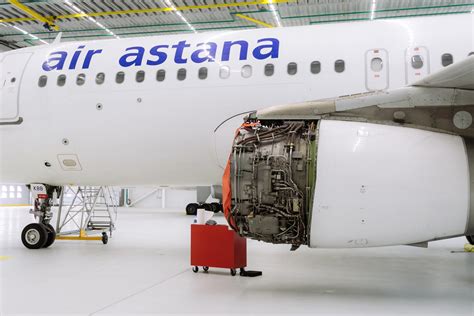
Another key component of the strategy involves building a reserve of spare engines. The airline currently leases 13 backup engines, allowing technicians to swap powerplants quickly when inspections or maintenance issues arise. Rapid engine replacement reduces the time aircraft remain grounded, restoring valuable flight capacity.
Leasing Older Aircraft to Keep the Network Alive
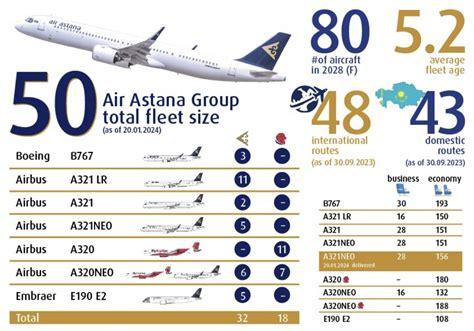
Another clever tactical move involved bringing in older Airbus A320 family aircraft that are powered by different engines. These earlier “CEO” models are not affected by the Pratt & Whitney inspection campaign, making them valuable stopgap solutions.
Air Astana leased five additional A320 aircraft, using them to maintain routes that might otherwise have faced cancellation. While older aircraft may not offer the same fuel efficiency as newer A320neo jets, their availability provided operational flexibility during a period when newer aircraft were periodically grounded.
This approach highlights a fascinating paradox in aviation technology. New aircraft models promise dramatic efficiency gains, but technological complexity can sometimes create vulnerabilities when issues arise. Older aircraft, though less efficient, often provide reliability and independence from emerging technical risks.
By mixing new and older aircraft strategically, airlines can create fleet redundancy, reducing the chance that a single engineering problem will cripple operations.
Maintenance Expertise Becomes a Competitive Advantage
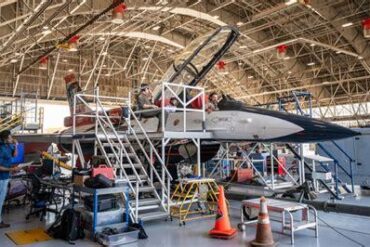
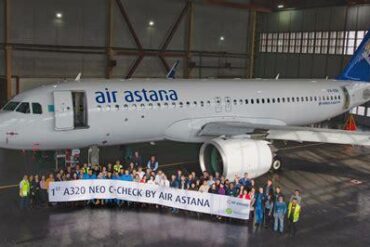
Operational survival during an engine crisis also depends on technical capability. Air Astana’s Maintenance, Repair, and Overhaul (MRO) teams have significantly expanded their experience with engine swaps and inspections.
Since January 2024, the airline’s technicians have completed more than 208 engine replacements, dramatically increasing their efficiency in handling these complex procedures.
Each engine change involves careful alignment, systems checks, fuel connections, and software calibration. Completing these tasks quickly and safely requires specialized training and logistical coordination. As technicians gain experience, turnaround times shrink, allowing aircraft to return to service faster.
In this way, a crisis inadvertently accelerated the airline’s technical competence, transforming maintenance teams into a strategic asset rather than simply a cost center.
Signs of Relief: Maintenance Slots Are Increasing
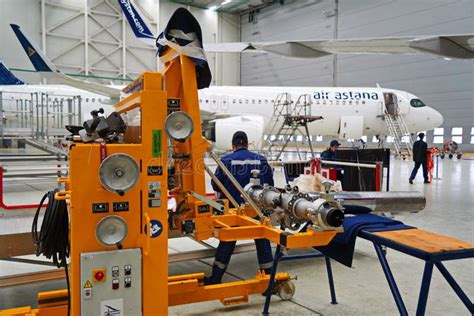
The good news for airlines is that the global maintenance pipeline is gradually improving. Pratt & Whitney has begun expanding engine inspection capacity, increasing the number of available repair slots at engine overhaul facilities.
Air Astana expects as many engine maintenance slots in the first half of 2026 as it had during the entire year of 2025. This acceleration could significantly reduce the backlog of grounded aircraft across the industry.
However, full recovery will take time. Air Astana anticipates that the ripple effects of the engine issue may continue affecting operations until 2028. Aviation maintenance operates on long cycles, and clearing the backlog of inspections and repairs across thousands of engines cannot happen overnight.
Still, the trend suggests gradual stabilization rather than indefinite disruption.
The Next Chapter: Boeing 787 Dreamliner Arrivals
While managing engine challenges in its narrowbody fleet, Air Astana is also preparing for a major fleet expansion on the long-haul side.
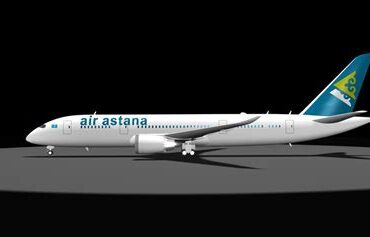
The airline is set to receive its first Boeing 787 Dreamliner aircraft in 2026, marking a significant milestone nearly 15 years after placing its initial order in 2012. Two aircraft are expected to arrive by the end of the year, followed by a third in early 2027.
These aircraft will replace the airline’s aging Boeing 767 fleet, bringing improvements in fuel efficiency, passenger comfort, and range capability.
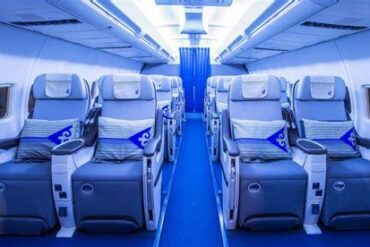
The new 787-9 configuration will feature 30 business-class seats located between the first two cabin doors, an intentional design choice to create a unified premium cabin space. Behind it, 273 economy seats will serve the growing demand for international travel across Asia, Europe, and the Middle East.
Initially, the Dreamliners will replicate the airline’s existing Boeing 767 routes. Over time, however, they may enable further expansion into new long-haul markets, potentially stretching the airline’s network both eastward and westward.
Geopolitical complications still shape these ambitions. The closure of Russian airspace to many airlines has complicated route planning, limiting the feasibility of ultra-long routes such as direct flights to the United States without payload restrictions.
A Case Study in Aviation Resilience
Air Astana’s experience reveals a deeper truth about the aviation industry. Airlines do not simply operate aircraft; they operate complex adaptive systems where engineering reliability, operational strategy, and financial discipline intersect.
A $42 million engine challenge could easily have crippled growth or forced network reductions. Instead, through fleet leasing, engine rotation strategies, technical expertise, and careful capacity planning, Air Astana transformed a crisis into a manageable constraint.
In the unpredictable ecosystem of global aviation, survival often depends less on avoiding problems and more on how intelligently those problems are managed.