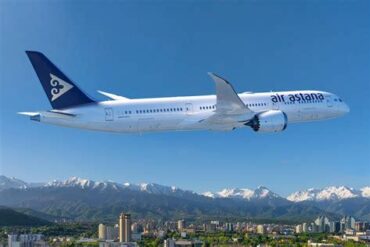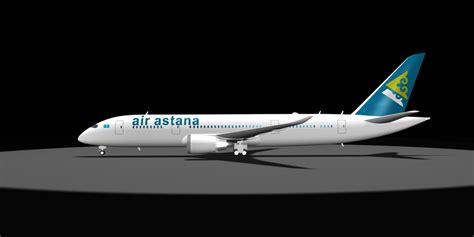
Air Astana has taken a decisive step toward reshaping Central Asia’s long-haul aviation landscape by finalizing an order for up to 18 Boeing 787-9 Dreamliners. The agreement, initially unveiled in late 2025 and now formally locked in as of February 2026, signals the Kazakh flag carrier’s determination to transform itself from a strong regional operator into a formidable intercontinental player linking Central Asia with Asia, Europe, and North America.
The numbers tell a nuanced story. The headline figure—“up to 18 aircraft”—includes five firm orders, five options, and five purchase rights under the latest agreement, in addition to three previously arranged 787-9s that will be delivered via lessors. In practical terms, Air Astana has firm commitments for eight Dreamliners, with flexibility to expand that total significantly over the next decade. It is an ambitious but measured strategy, balancing growth with long-term financial prudence.
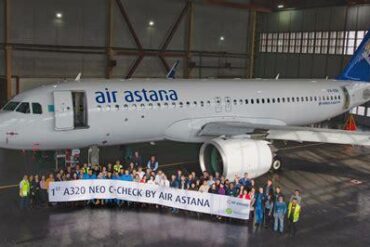
Air Astana’s current fleet of nearly 35 aircraft already reflects a modern philosophy. The airline operates Airbus A320 family jets, A321neos, A321LRs, and some of the world’s youngest passenger Boeing 767s. The Dreamliner order represents the natural evolution of that fleet strategy—replacing aging widebodies while unlocking new ultra-long-haul opportunities.
A Carefully Structured Dreamliner Commitment
The finalized agreement underscores disciplined expansion rather than speculative growth. Of the newly confirmed tranche, only five aircraft are firm orders, scheduled for delivery between 2032 and 2035. The remaining options and purchase rights provide flexibility, allowing the airline to scale capacity in response to demand, market stability, and geopolitical developments.
This measured approach is particularly relevant given the volatile dynamics that often shape long-haul aviation—fuel prices, currency fluctuations, and shifting passenger flows across Eurasia. By locking in delivery slots years in advance, Air Astana secures production positions for one of the world’s most in-demand widebody aircraft while preserving strategic optionality.
Meanwhile, the three leased 787-9s arriving between late 2026 and 2028 will mark the airline’s true entry into the Dreamliner era. These initial aircraft are expected to replace the Boeing 767 fleet, introducing improved fuel efficiency, extended range, and a significantly upgraded passenger experience.
Why the Boeing 787-9 Is Central to Air Astana’s Strategy
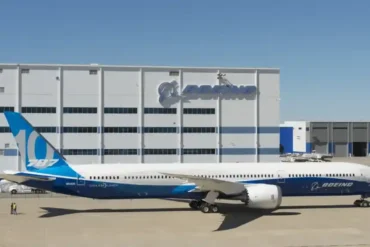
The Boeing 787-9 is widely regarded as one of the most efficient and versatile long-haul aircraft in service today. Built primarily from carbon-fiber composites, it delivers reduced fuel burn and lower maintenance costs compared to older-generation widebodies. For an airline based in Kazakhstan—a geographically vast nation positioned between Europe and Asia—range flexibility is not optional; it is foundational.
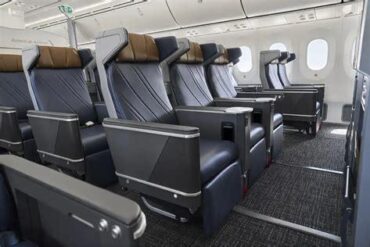
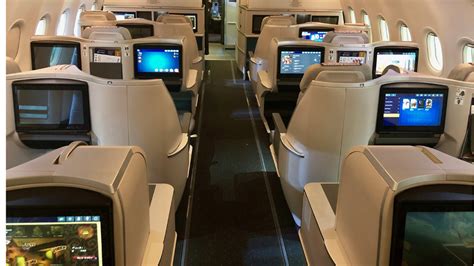
Configured with 303 seats, Air Astana’s 787-9s will likely feature a modern multi-class layout designed to appeal to premium business travelers as well as leisure passengers. The Dreamliner’s cabin environment—higher humidity, lower cabin altitude, larger windows, and advanced noise reduction—enhances long-haul comfort, an increasingly critical factor in competitive transcontinental markets.
From Almaty or Astana, the 787-9 can comfortably reach major European capitals, deep into East Asia, and potentially North American gateways. That capability transforms Kazakhstan from a peripheral aviation market into a potential Eurasian transit hub, positioned strategically between East and West.
Central Asia’s Quiet Aviation Renaissance
Air Astana’s order does not exist in isolation. The broader Central Asian region has entered an unexpectedly dynamic phase in aviation development. Carriers such as Uzbekistan Airways and Somon Air have also announced fleet modernization plans, reflecting growing economic integration and increased passenger demand across the region.
What distinguishes Air Astana is operational maturity. The airline has cultivated a reputation for strong reliability, modern fleet management, and consistent onboard service standards. Financially, it has demonstrated resilience in a market often characterized by volatility. These fundamentals provide credibility to its long-haul ambitions.
CEO Peter Foster has framed the Dreamliner program as a cornerstone of the airline’s next decade, emphasizing improved service capabilities and global connectivity. His outlook aligns with a broader strategic thesis: Central Asia is no longer merely a flyover zone between larger markets—it is emerging as a bridge in its own right.
Replacing the 767s and Expanding Beyond
The initial trio of 787-9s will primarily serve as replacement aircraft for the Boeing 767 fleet, which, while relatively young compared to global averages, still belongs to an earlier generation of widebody design. Transitioning to the Dreamliner enhances fuel efficiency and sustainability while improving passenger perception.
Beyond replacement, the additional aircraft—should options and purchase rights convert into firm orders—will support genuine route expansion. Potential markets include secondary European cities, deeper penetration into East and Southeast Asia, and carefully selected North American destinations. Each new route strengthens Kazakhstan’s connectivity and positions Air Astana as a credible alternative to Gulf and Turkish transit hubs.
Alliance Prospects and Competitive Positioning
One notable gap in Central Asian aviation is the absence of a regional carrier within a major global alliance. Air Astana’s operational profile and network strategy could make it an attractive candidate for alliance membership or expanded bilateral partnerships. Enhanced loyalty integrations would strengthen premium traffic flows and maximize the commercial value of long-haul expansion.
For now, the airline’s independent strategy emphasizes fleet modernization and measured growth. The Dreamliner order represents both confidence and caution—confidence in Central Asia’s future as an aviation crossroads, and caution in structuring growth through phased commitments rather than aggressive overextension.
A Defining Decade Ahead
Air Astana’s commitment to up to 18 Boeing 787-9 Dreamliners signals a transformative decade ahead. With eight aircraft effectively secured and the remainder positioned as scalable growth options, the airline is constructing a long-haul blueprint grounded in realism rather than spectacle.
The first Dreamliner deliveries in 2026 will mark the visible beginning of this evolution. The larger wave, arriving in the 2030s, could redefine Kazakhstan’s role in global air travel. In an industry where ambition often outruns execution, Air Astana’s approach stands out for its balance—methodical, strategic, and quietly bold.
Central Asia’s aviation narrative is accelerating, and the Dreamliner is set to become its most recognizable symbol in the skies.