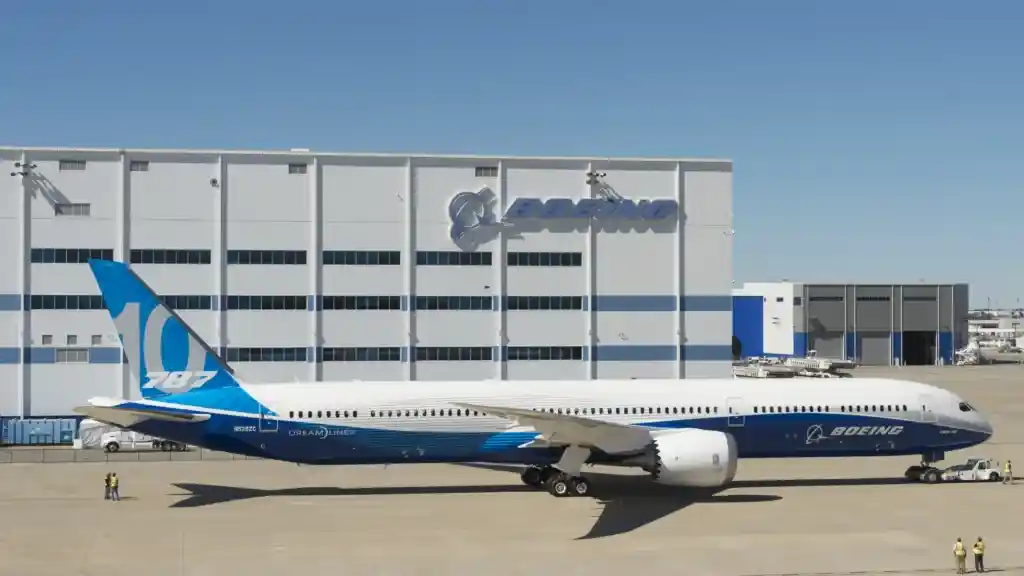
Delta Air Lines is reportedly in advanced stages of finalizing a significant widebody aircraft order with Boeing, with growing indications that the 787-10 Dreamliner is the leading candidate. If confirmed, the deal would mark a pivotal shift in Delta’s long-haul strategy, reinforcing the airline’s commitment to a diversified and modernized widebody fleet. As the airline prepares to phase out its aging Boeing 767-300ER aircraft, the 787-10 emerges as a logical successor, tailored for medium-to-long haul, high-demand international routes.
Delta’s Widebody Renewal Strategy Accelerates
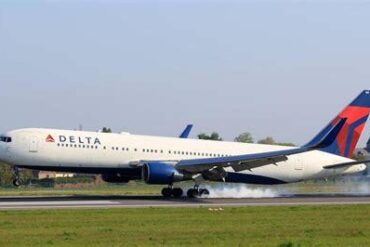
The forthcoming deal is part of Delta’s broader strategy to rejuvenate its long-haul capabilities and enhance fleet efficiency. During the Q4 2023 earnings call, Delta’s leadership clearly outlined its intentions to retire the Boeing 767-300ER fleet by 2030, with most of the long-haul international routes transitioning to newer aircraft by 2028. This decision underscores the airline’s recognition of the operational limitations and escalating maintenance costs associated with the aging 767 platform.
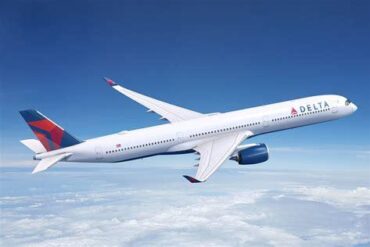
Currently, Delta’s widebody operations are dominated by Airbus aircraft. Its fleet includes 38 Airbus A350-900s, 36 Airbus A330neos, 31 Airbus A330-300s, and 11 A330-200s. In January 2024, Delta doubled down on this strategy with a firm order for 20 Airbus A350-1000s, and options for an additional 20 units, with deliveries expected to commence in 2026. However, according to aviation analyst JonNYC, actual deliveries may not begin until early 2027, potentially leaving a capability gap in Delta’s international network — a gap the Boeing 787-10 could be well-suited to fill.
Why the Boeing 787-10 Makes Sense for Delta
Though still unconfirmed, the rationale behind Delta’s reported interest in the Boeing 787-10 is grounded in both operational pragmatism and strategic foresight. While the 787-10 lacks the ultra-long-range capability of its 787-9 and 787-8 counterparts, its 336-seat capacity in a two-class layout and range of 6,330 nautical miles (11,730 km) make it ideal for transatlantic and high-volume international routes. Potential use cases within Delta’s network include flagship services such as New York (JFK) to London Heathrow (LHR) and Atlanta (ATL) to Paris Charles de Gaulle (CDG).
Importantly, the move would also serve as a strategic diversification of Delta’s widebody supplier base. With current long-haul operations heavily reliant on Airbus, incorporating Boeing’s 787-10 would mitigate risks tied to production delays or supply chain disruptions from a single manufacturer. It also echoes past comments by insiders that it was never realistic for Delta to operate an all-Airbus widebody fleet.
Comparative Specifications of the Boeing 787 Family
When examining the 787 family in context, the 787-10 stands out as the largest but shortest-ranged variant:
| Variant | Range (nm / km) | Capacity (Two-Class) | Engines |
|---|---|---|---|
| 787-8 | 7,305 nm / 13,530 km | 248 | GEnx-1B / Trent 1000 |
| 787-9 | 7,565 nm / 14,010 km | 296 | GEnx-1B / Trent 1000 |
| 787-10 | 6,330 nm / 11,730 km | 336 | GEnx-1B / Trent 1000 |
While range is often the dominant criterion in widebody selection, Delta’s international network, particularly on transatlantic and South American routes, aligns well with the 787-10’s range envelope. Furthermore, the aircraft’s larger seating capacity supports Delta’s goals to increase yield per flight on high-demand sectors.
Market Context: 787-10’s Understated Success
The Boeing 787-10 has not achieved the same market penetration as its 787-8 and 787-9 siblings. Currently, only 118 Boeing 787-10s are in active service, according to ch-aviation data. Major operators include Singapore Airlines, KLM Royal Dutch Airlines, Etihad Airways, United Airlines, EVA Air, and British Airways. Despite its limited adoption, the 787-10 has proven its value in markets where frequency, passenger density, and cost-efficiency outweigh ultra-long-range performance.
The aircraft measures 224 feet (68.3 meters) in length, with a wingspan of 197 feet (60.1 meters) and a height of 55 feet 4 inches (16.9 meters). It is powered by the highly efficient GEnx-1B or Rolls-Royce Trent 1000 engines, both offering advanced fuel efficiency and reduced maintenance downtime. From a passenger perspective, the Dreamliner series is renowned for its lower cabin altitude, increased humidity, larger windows, and quieter interior, all of which contribute to a superior in-flight experience — a growing point of differentiation in premium long-haul travel.
Potential Impact on Delta’s Route Network
If the Boeing 787-10 order is finalized, the aircraft could significantly reshape Delta’s global network. The aircraft’s capabilities make it a strong candidate for routes currently served by the 767-300ER, particularly those that don’t justify the range or operating costs of an A350-1000. This includes transatlantic flights, South America services, and select Asia-Pacific routes such as Japan and Korea from West Coast hubs.
Additionally, the high-capacity configuration of the 787-10 could enable Delta to consolidate frequencies on certain high-demand city pairs, reducing per-seat operating costs while maintaining market share. The aircraft’s modern systems and fuel efficiency also align with Delta’s sustainability goals, contributing to lower CO2 emissions per passenger kilometer.
Supplier Diversification and Long-Term Flexibility
The potential 787-10 order highlights a long-standing strategy among legacy carriers: balancing aircraft orders between Airbus and Boeing to maintain leverage in future negotiations and reduce exposure to manufacturer-specific issues. Delta has previously demonstrated this dual-supplier approach across its narrowbody and widebody orders. By integrating Boeing’s Dreamliner into its existing widebody mix, Delta would reinforce this strategic flexibility, while also ensuring that pilot training, maintenance infrastructure, and logistics are diversified across OEMs.
Moreover, the addition of the 787-10 could position Delta to nimbly respond to market shifts, such as international demand recovery, increased competition on key global routes, and volatility in fuel prices. With the Dreamliner’s proven fuel burn advantages and strong dispatch reliability, Delta would gain a powerful tool to enhance both profitability and operational resilience.
Conclusion: A Calculated Bet With Strategic Upside
While the rumored Boeing 787-10 order by Delta Air Lines remains unofficial, the move appears increasingly likely — and strategically sound. As Delta enters a critical phase in its long-haul transformation, the Dreamliner represents a compelling solution to bridge the gap between capacity growth, fleet renewal, and operational diversification. Beyond just numbers, this potential deal reflects Delta’s calculated bet on flexibility, sustainability, and supplier balance — hallmarks of a legacy carrier preparing for its next era of global dominance.
As the industry awaits formal confirmation, all signs indicate that Delta’s transoceanic ambitions may soon be soaring aboard the Boeing 787-10 Dreamliner — a sleek, efficient, and purpose-built aircraft ready to anchor the airline’s next decade of long-haul excellence.