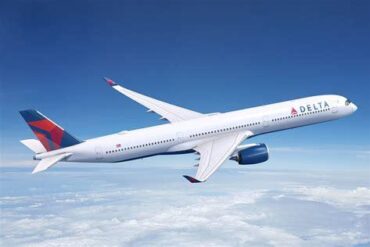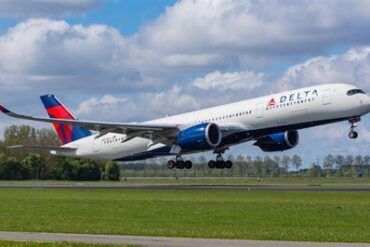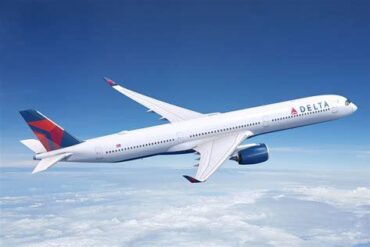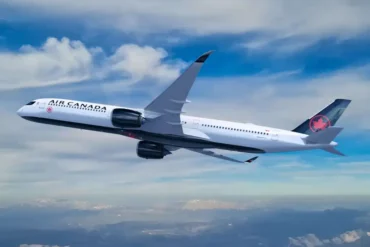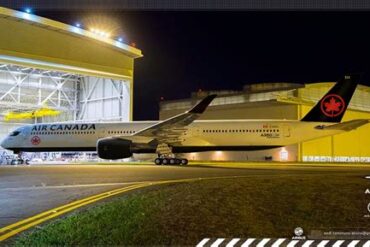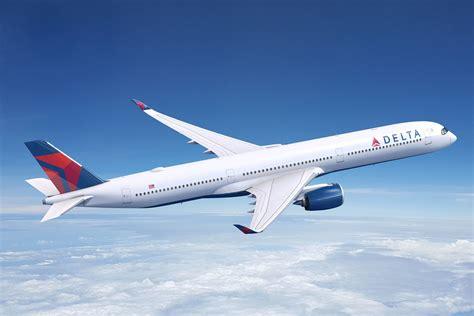
Delta’s decision to order the Airbus A350-1000 was not a whimsical fleet upgrade or a vanity purchase. It was a calculated, high-stakes move rooted in economics, operational logic, passenger experience, and geopolitics. When Delta Air Lines committed to the largest variant of the A350 family, it signaled more than a fleet refresh—it revealed how one of America’s most disciplined carriers intends to dominate premium long-haul markets for the next two decades.
The A350-1000 is not merely a stretched version of the A350-900 already flying in Delta colors. It is a different animal altogether—longer, heavier, more powerful, and built for serious intercontinental muscle. With nearly 9,000 nautical miles of range and a maximum takeoff weight of 322 tons, this jet is engineered for global reach. For Delta, that means flexibility across the Pacific, Atlantic, and deep into emerging high-yield corridors.
At first glance, skeptics wondered why Delta needed such a large twinjet. The answer becomes clear when examining the airline’s broader strategy: premium density, fleet simplification, and calculated upgauging. Delta is not chasing volume for the sake of size. It is aligning capacity with profitable demand, particularly in premium cabins where margins are strongest.
The Strategic Logic Behind Delta’s Airbus A350-1000 Bet
Delta’s order for 20 A350-1000s in 2024, with options for 20 more, fits neatly into a long-term fleet evolution plan. By the end of the decade, Delta expects to operate more than 60 A350-family aircraft. That level of fleet concentration is not accidental—it is operational leverage.
The A350-1000 replaces aging Boeing 767-300ER aircraft that have served reliably for decades but are no longer competitive in fuel efficiency, maintenance economics, or passenger appeal. Retiring these older widebodies creates a cascading upgauge effect. Smaller aircraft are replaced by larger, more efficient ones, increasing seat count and premium capacity without adding new frequencies.
This approach reduces per-seat costs while maximizing revenue potential. In airline economics, cost per available seat mile (CASM) is king. Larger aircraft that burn proportionally less fuel per seat allow Delta to expand margins even in volatile fuel markets.
The A350-1000 burns roughly 25% less fuel than the four-engine aircraft it replaces. Its carbon-fiber reinforced polymer structure—comprising over two-thirds of the airframe—makes it lighter, corrosion-resistant, and less susceptible to fatigue compared to traditional aluminum designs. That means fewer inspection hours and longer maintenance intervals. Efficiency is not marketing fluff here; it is measurable engineering.
Fleet Commonality: The Airbus Advantage
Delta’s growing reliance on Airbus is strategic, not sentimental. Operating both the A350-900 and A350-1000 provides significant training and maintenance advantages. Pilots can transition between variants with minimal additional instruction due to cockpit commonality. Maintenance crews benefit from standardized systems. Spare parts logistics become simpler.
Fleet simplification is not glamorous, but it saves millions annually.
By consolidating around Airbus widebodies—including the A330neo and A350 family—Delta reduces operational friction. The airline has nearly 300 narrowbodies and 50 widebodies on order, many of them Airbus models. Commonality enhances flexibility during seasonal demand swings. Aircraft can be reassigned between routes without complex retraining or infrastructure shifts.
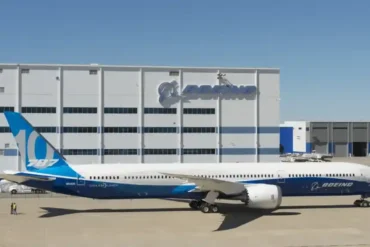
Meanwhile, Boeing’s delayed Boeing 777X program remained stuck in certification limbo. Originally slated for 2020 entry into service, the aircraft’s timeline has slipped toward 2027 due to engine complications with the GE9X and regulatory scrutiny. Delta was not willing to wait.
Airlines operate on long planning horizons. Waiting years for an uncertified aircraft means sacrificing competitive ground. The A350-1000 offered immediate availability, proven performance, and technological maturity.
Premium Density: Where the Real Money Lives
The A350-1000 is Delta’s future flagship. That word matters. Flagships are not simply about capacity; they define brand perception in high-value international markets.
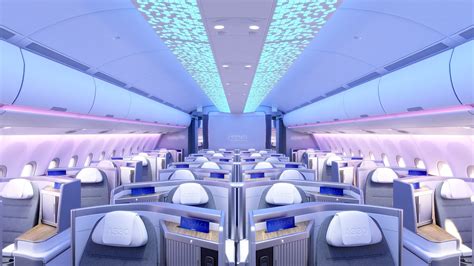
The aircraft will feature an expanded premium cabin layout, including Delta One Suites, Delta Premium Select, and an enhanced Main Cabin experience. Compared to the retiring 767 fleet, the A350-1000 offers roughly 15% more premium seating. That shift is deliberate.
Long-haul profitability increasingly hinges on premium revenue. Corporate contracts, high-net-worth leisure travelers, and long-distance passengers seeking comfort generate disproportionate margins. Increasing premium seat count without ballooning operating costs is a powerful equation.
The Airspace cabin design also elevates the passenger experience. Higher ceilings, larger overhead bins, improved cabin pressurization, and customizable LED lighting reduce fatigue on ultra-long flights. The Rolls-Royce Trent XWB engines operate with remarkable quietness, making the cabin notably serene compared to previous-generation jets.
Delta Studio offers over 1,000 hours of complimentary entertainment, paired with fast Wi-Fi and curated culinary programs. These features may sound incremental, but in competitive long-haul markets—Tokyo, Sydney, Dubai—experience differentiates carriers as much as schedule.
Range and Network Power: Unlocking New Markets
With a range approaching 9,000 nautical miles, the A350-1000 allows Delta to expand deep into Asia, Australia, and the Middle East without payload penalties. Ultra-long-haul routes demand aircraft that can carry full passenger loads and cargo simultaneously. The -1000 variant delivers both.
Cargo capacity often goes overlooked in passenger aircraft discussions. Yet belly freight revenue can significantly boost route profitability. The larger fuselage of the A350-1000 increases cargo volume, enhancing yields on high-demand trade lanes.
In practical terms, the aircraft supports Delta’s global hubs in Atlanta, Detroit, Minneapolis, Seattle, and New York. It allows the airline to consolidate traffic onto fewer, more efficient frequencies while preserving capacity growth.
Many carriers discovered during the pandemic that flexibility is survival. The A350-1000 can operate ultra-long sectors but remains economically viable on medium-haul international routes during downturns. That elasticity is priceless in uncertain economic cycles.
Why Not the Boeing 777X? Timing and Scale
The 777X is undeniably impressive. It will be the largest twinjet ever built once certified. But larger is not always better.
Delta’s network does not require a 400-plus-seat behemoth for most routes. The A350-1000 typically seats between 375 and 400 passengers in a three-class configuration—right in the sweet spot for Delta’s hub-and-spoke model.
The 777X’s prolonged delays introduced risk. Fleet planning is a chess game played years in advance. Choosing a platform still entangled in certification challenges would have introduced unnecessary uncertainty.
Moreover, the “big three” U.S. carriers have shown limited appetite for aircraft of the 777X’s scale. Many routes simply cannot sustain that density year-round. The A350-1000 strikes a balance between size and efficiency.
Trade Turbulence: Tariffs and Political Headwinds
Delta’s A350-1000 strategy did not unfold in a vacuum. Trade tensions complicated delivery timelines. Tariffs on European aircraft temporarily threatened to inflate acquisition costs by as much as 20%. Delta made clear it would not absorb such costs.
During the period of tariff uncertainty under President Donald Trump, Delta paused certain Airbus deliveries. Airbus leadership, including CEO Guillaume Faury, signaled potential retaliatory measures if trade barriers persisted.
Federal courts eventually ruled many of the tariffs unlawful, restoring stability to civil aerospace trade. The resolution protected Delta’s long-term fleet economics and reinforced the interconnected nature of global aviation manufacturing.
Airlines operate across borders; so do aircraft supply chains. Political volatility adds risk layers to fleet strategy. Delta’s cautious approach demonstrated financial discipline rather than hesitation.
Engineering Excellence: What Makes the A350-1000 Special
Beyond strategy lies hardware. The A350-1000’s wing is a masterpiece of aerodynamic optimization. Its high-aspect-ratio design and curved sharklets reduce induced drag. Droop-nose devices improve low-speed performance during takeoff and landing.
The single-piece 32-meter upper wing cover, made from composite material, enhances structural integrity while reducing weight. This is not cosmetic innovation—it translates directly into fuel savings.
Maximum fuel capacity of 168,300 liters supports its extended range. Cruising at Mach 0.85, the aircraft balances speed with efficiency. Its corrosion-resistant composite fuselage reduces long-term maintenance burdens.
In an era where regulators, investors, and passengers scrutinize emissions metrics, the A350-1000 delivers lower CO₂ per seat than many legacy widebodies. Environmental performance is not simply a compliance issue; it shapes corporate reputation and investor relations.
Delta’s Long Game: Premium Global Carrier
The A350-1000 order aligns with Delta’s transformation into a premium-focused global airline. Over the past decade, the carrier has deliberately distanced itself from bare-bones competition. Instead, it invests in lounges, onboard service, cabin upgrades, and reliability.
Operating the largest A350 variant reinforces that positioning. It signals confidence in sustained international demand and a belief that premium long-haul travel remains resilient even amid economic fluctuations.
Fleet strategy is destiny in aviation. Aircraft orders lock airlines into multi-decade trajectories. By choosing the A350-1000, Delta effectively chose efficiency over brute size, flexibility over spectacle, and immediate reliability over delayed promises.
The world of long-haul aviation is shifting. Four-engine giants are fading. Twin-engine efficiency rules the skies. Delta’s embrace of the A350-1000 places it firmly at the forefront of that evolution.
In the end, the question is not why Delta ordered the largest Airbus A350 variant. The real question is why it wouldn’t.