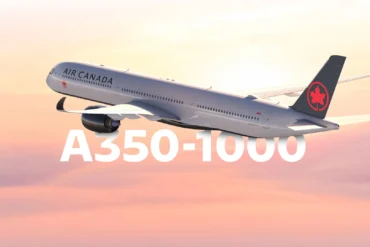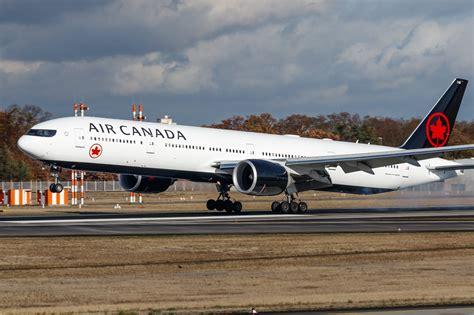
Air Canada is entering a decisive new era—one defined not by incremental upgrades, but by a bold rethinking of what its global network can achieve. The airline’s firm order for eight Airbus A350-1000 aircraft is far more than a fleet renewal decision. It is a calculated move to transcend the physical and economic constraints that have long defined ultra-long-haul flying, particularly those imposed by its aging fleet of Boeing 777-300ER jets.
For years, the 777-300ER served as the backbone of Air Canada’s long-haul dominance. It delivered scale, range, and reliability at a time when global connectivity was expanding rapidly. But aviation evolves relentlessly, and the demands of modern passengers—combined with rising operational costs—have forced airlines to rethink their strategies. The A350-1000 emerges not just as a replacement, but as a fundamentally different machine engineered for a new era of aviation.
The implications of this transition stretch far beyond aircraft specifications. It reshapes how Canada connects to the world, unlocking routes that were once operationally impossible or commercially unviable. It allows Air Canada to compete more aggressively in premium markets, while simultaneously reducing environmental impact and operational complexity. In short, this is not just a fleet upgrade—it is a redefinition of possibility.
Why the Boeing 777-300ER Reached Its Limits
For nearly two decades, the Boeing 777-300ER symbolized Air Canada’s long-haul ambitions. Its immense size and powerful engines made it a formidable player on transpacific and transatlantic routes. Yet even aviation icons face the inevitability of technological obsolescence.
The limitations of the 777-300ER are not rooted in failure, but in physics and progress. As flight durations push beyond 14–15 hours, the aircraft encounters a critical challenge: fuel weight begins to erode payload capacity. Every additional mile requires exponentially more fuel, which in turn reduces the number of passengers or cargo the aircraft can carry.
This creates a paradox. The aircraft is capable of flying long distances, but not with a full, revenue-generating load. For airlines, that translates into lost profitability or operational compromises such as:
- Blocking seats to reduce weight
- Limiting cargo capacity
- Introducing technical fuel stops
These constraints become especially problematic for routes originating in Canada, where geography demands extreme range. Flights to Southeast Asia, Oceania, and parts of Africa stretch the 777’s capabilities to their limits, often turning what should be premium routes into logistical challenges.
Meanwhile, the aircraft’s age—averaging over 16 years in Air Canada’s fleet—introduces additional pressures. Maintenance costs rise, fuel efficiency lags behind newer designs, and environmental performance falls short of increasingly stringent standards.
The result is clear: the 777-300ER, while still reliable, no longer aligns with the demands of ultra-long-haul aviation in the 2020s and beyond.
The Airbus A350-1000: Engineering a New Range Frontier
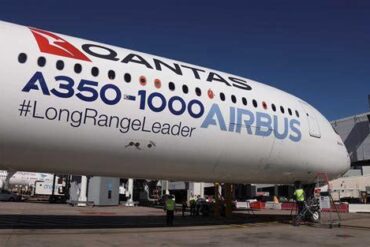
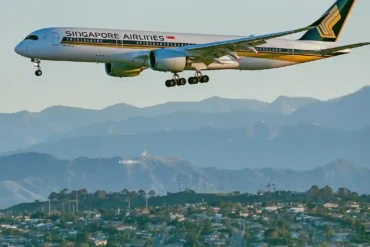
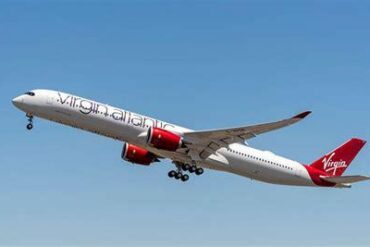
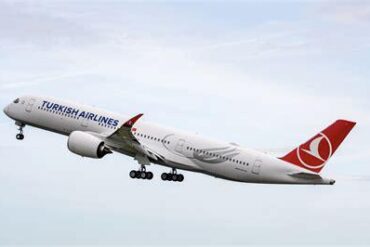
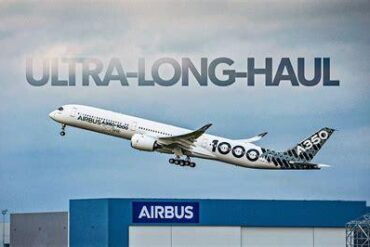
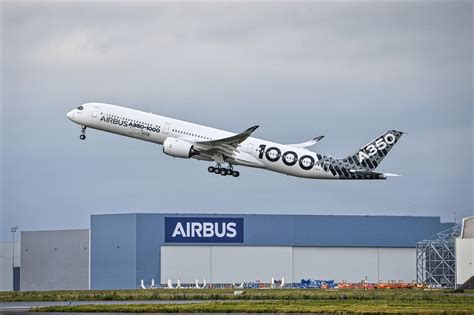
The arrival of the Airbus A350-1000 changes the equation entirely. Designed from a clean sheet with ultra-long-haul missions in mind, it delivers a combination of range, efficiency, and payload capability that redefines what is operationally possible.
At the heart of its advantage lies a dramatic increase in range—up to 9,000 nautical miles. This represents a leap of more than 1,600 nautical miles over the 777-300ER, a difference that transforms route planning from constrained to expansive.
But range alone does not tell the full story. The A350-1000 achieves this performance through a sophisticated blend of aerodynamic refinement and advanced materials. Approximately 70% of its structure is made from composites, significantly reducing weight while enhancing strength and durability.
This lighter airframe works in harmony with the aircraft’s advanced wing design, which optimizes lift-to-drag ratio. The result is an aircraft that requires less fuel to travel farther distances—an essential advantage for ultra-long-haul operations.
Where the 777 relies on brute force, the A350 relies on efficiency. And in modern aviation, efficiency is the ultimate competitive edge.
Routes Once Impossible Now Within Reach
Perhaps the most exciting aspect of Air Canada’s A350-1000 acquisition lies in the routes it enables. For years, certain city pairs have existed as tantalizing possibilities—routes with strong demand but insurmountable operational barriers.
The A350-1000 turns these ambitions into reality.
Consider Toronto to Sydney, a route spanning over 8,400 nautical miles. For the 777-300ER, this journey is simply not feasible nonstop with a full payload. The A350-1000, however, can operate it without compromise, carrying both passengers and cargo efficiently.
Similarly, Montreal to Singapore—a critical link between North America and Southeast Asia—has long been constrained by payload restrictions. With the new Airbus flagship, those limitations disappear, allowing Air Canada to fully capitalize on premium demand.
Even routes that are technically possible today, such as Vancouver to Delhi, stand to benefit. Seasonal restrictions and weight limitations can be eliminated, enabling consistent, year-round service.
These capabilities unlock a new strategic advantage: true point-to-point connectivity. Instead of routing passengers through congested hubs like Los Angeles or Hong Kong, Air Canada can offer direct flights that save time and enhance the travel experience.
For business travelers, this is transformative. For the airline, it is a gateway to higher yields and stronger market positioning.
The Economics of Efficiency: Fuel, Cost, and Sustainability
Behind the excitement of new routes lies a more fundamental driver: economics. The A350-1000 delivers approximately 25% lower fuel burn per seat compared to the 777-300ER, a figure that has profound implications for profitability.
Fuel remains one of the largest expenses for any airline. Reducing consumption by a quarter translates into millions of dollars in annual savings, particularly on long-haul routes where fuel costs dominate operating budgets.
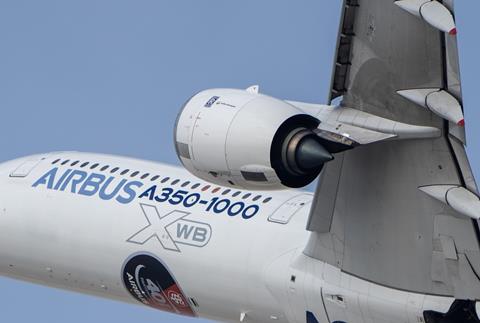
This efficiency is powered by the Rolls-Royce Trent XWB-97 engine, widely regarded as one of the most advanced large turbofans in service. Unlike the older GE90-115B engines on the 777, which prioritize raw thrust, the Trent XWB-97 focuses on optimized fuel efficiency and reduced emissions.
Its high bypass ratio and advanced materials allow it to deliver the necessary power while consuming significantly less fuel. The result is an engine that aligns perfectly with the demands of modern aviation: lower costs, lower emissions, and higher reliability.
In an era where sustainability is no longer optional, this matters. Airlines face increasing pressure from regulators, investors, and passengers to reduce their environmental footprint. The A350-1000 positions Air Canada as a leader in this transition, enabling growth without proportionally increasing emissions.
Passenger Experience: Redefining Ultra-Long-Haul Comfort
Ultra-long-haul travel is as much a human challenge as it is an engineering one. Flying for 17 or 18 hours places significant strain on the body, making passenger comfort a critical factor in route success.
The A350-1000 addresses this with a suite of innovations designed to enhance well-being. One of the most significant improvements is cabin pressurization. The aircraft maintains a cabin altitude of approximately 6,000 feet, compared to 8,000 feet on older aircraft.
This seemingly small difference has a measurable impact. Higher oxygen levels reduce fatigue, headaches, and dehydration, allowing passengers to arrive feeling more refreshed.
Humidity is another key factor. Traditional aluminum fuselages limit how much moisture can be retained in the cabin air, leading to the dry conditions many travelers associate with long flights. The A350’s composite structure allows for higher humidity levels, improving comfort significantly.
The cabin itself is also more spacious and visually open. Wider cabins, higher ceilings, and larger windows create an environment that feels less confined—an important psychological factor during extended journeys.
Together, these features transform ultra-long-haul travel from an endurance test into a more manageable, even pleasant experience. For Air Canada, this is not just about comfort—it is about ensuring that passengers choose their flights over competitors.
Network Synergy: The Airbus Ecosystem Advantage
The A350-1000 does not operate in isolation. It forms part of a broader strategic shift toward an Airbus-centric fleet, working alongside aircraft like the A321XLR to create a highly flexible network.
In this model, smaller aircraft feed passengers from secondary cities into major hubs such as Toronto, Vancouver, and Montreal. From there, the A350-1000 carries them across continents in a single, seamless journey.
This integration offers several advantages. It reduces reliance on partner airlines and foreign hubs, increases control over the passenger experience, and improves operational efficiency.
Passengers benefit from smoother connections, consistent cabin standards, and shorter overall travel times. For Air Canada, the result is a network that is both more resilient and more competitive.
A Strategic Shift That Redefines Canadian Aviation
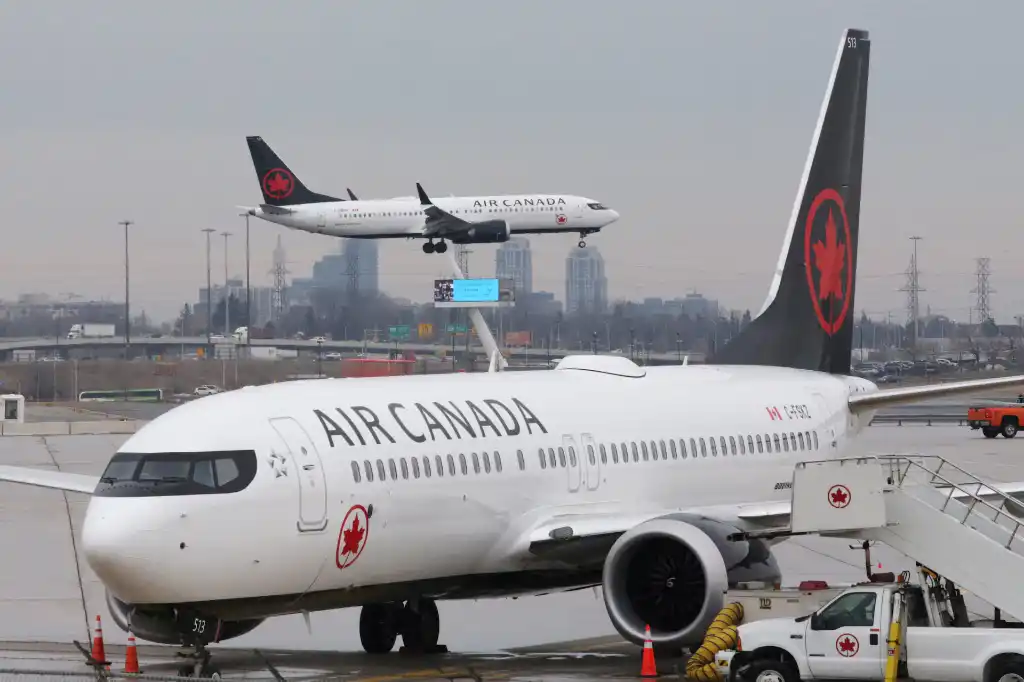
The introduction of the Airbus A350-1000 marks a turning point not just for Air Canada, but for Canadian aviation as a whole. It positions the country as a true global crossroads, capable of connecting distant regions without compromise.
This shift reflects a broader industry trend toward ultra-long-haul flying, where technological advancements enable airlines to bypass traditional hubs and connect cities directly. It is a model that prioritizes efficiency, convenience, and premium demand.
For Air Canada, the stakes are high—but so is the potential reward. By embracing the capabilities of the A350-1000, the airline is not merely keeping pace with competitors; it is setting the stage for a new level of global connectivity.
As the first aircraft enters service in the coming years, it will carry more than passengers. It will carry the ambitions of a carrier determined to push beyond the limits of geography and redefine what is possible in modern aviation.