Emirates has spent decades doing something most airlines only talk about: turning ultra-long-haul flying into a profitable, repeatable business model. From Dubai, the airline connects almost every inhabited continent with nonstop flights that regularly push beyond 14, 15, and even 16 hours. This is not incidental. It is the result of deliberate fleet planning, geographic advantage, and an obsession with scale, efficiency, and passenger experience.
That long-haul identity now faces a moment of transition. The Boeing 777-300ER fleet, once the backbone of Emirates’ network, is aging. The Airbus A380, iconic and passenger-loved, is no longer in production and increasingly difficult to justify on anything other than the densest routes. Meanwhile, the long-promised Boeing 777X remains delayed, forcing Emirates to look for credible alternatives that can preserve its ultra-long-range dominance without sacrificing economics or brand standards.
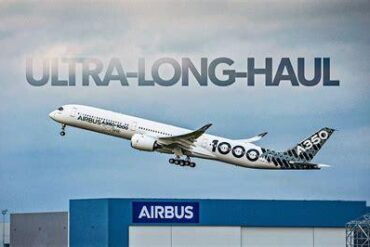
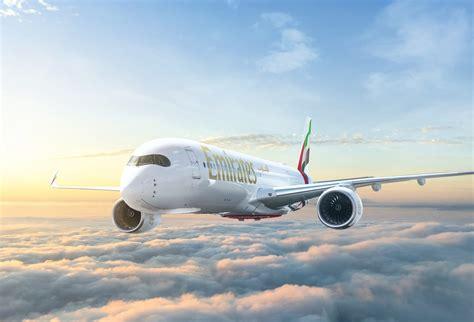
This is where the Airbus A350-1000 enters the picture. More than just another widebody option, the aircraft represents a modern interpretation of what long-haul flying should look like in the 2020s and beyond. For Emirates, the A350-1000 is not a stopgap. It is a strategic tool that aligns closely with how the airline flies, how it earns revenue, and how it intends to compete in a world where efficiency and comfort are inseparable.
The importance of the A350-1000 becomes clearer when viewed through the lens of Emirates’ operational reality rather than raw specifications. This aircraft is designed to thrive on exactly the kind of missions Emirates flies every day: long, demanding routes flown at high weights, often from hot environments, carrying a mix of premium and economy passengers over vast distances.
Airbus’ Long-Range Philosophy and Why It Fits Emirates So Well
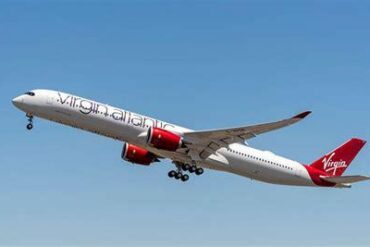
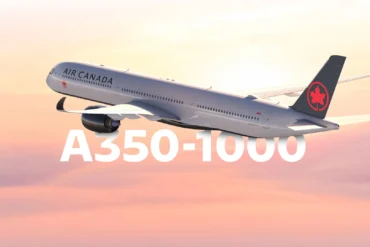
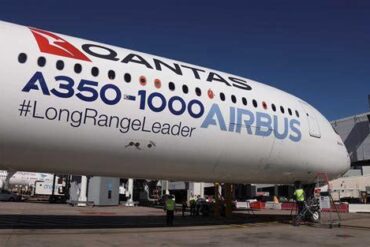
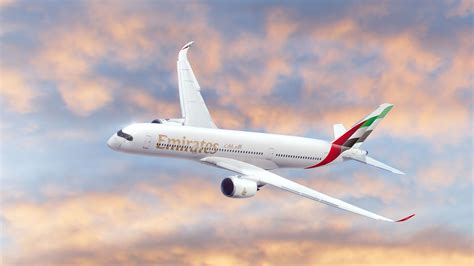
Airbus often refers to the A350 family as the industry’s long-range leader, a phrase that can sound like marketing shorthand until it is examined in operational terms. The A350-1000 sits at the upper end of the twin-engine widebody market, intentionally designed to replace older four-engine and large twin-engine aircraft on missions once considered extreme.
With a range approaching 8,700 nautical miles, the A350-1000 comfortably covers routes that define Emirates’ network, from Dubai to the Americas, Australasia, and deep into Asia-Pacific. What makes this range meaningful is not just distance, but payload capability. Emirates rarely flies lightly loaded aircraft. The airline depends on strong premium demand, high economy volumes, and belly cargo revenue. The A350-1000’s ability to carry passengers and cargo efficiently over ultra-long distances directly supports that revenue mix.
Aerodynamically, the aircraft is optimized for cruise efficiency at high weights. Its composite fuselage and wings reduce structural weight, while advanced wing design improves lift-to-drag ratios on long sectors. These design choices translate into lower fuel burn per seat, a critical metric for flights that can last well over half a day. On routes where fuel is the single largest operating cost, incremental efficiency gains quickly become decisive advantages.
Powering the A350-1000 are the Rolls-Royce Trent XWB-97 engines, developed specifically for this variant’s higher thrust requirements. For an airline operating out of Dubai’s hot climate, engine performance margins matter. High temperatures reduce air density, increasing takeoff distances and stressing powerplants. The A350-1000’s engines are engineered to deliver the thrust required for long-range departures under these demanding conditions.
Emirates has publicly expressed concerns about engine durability and maintenance intervals, particularly when compared with the smaller A350-900’s Trent XWB-84. That caution reflects Emirates’ operational discipline rather than rejection. The airline’s willingness to revisit the A350-1000 once performance meets expectations underscores how closely the aircraft aligns with its needs.
Emirates’ Ultra-Long-Haul Network and Growing Fleet Pressure
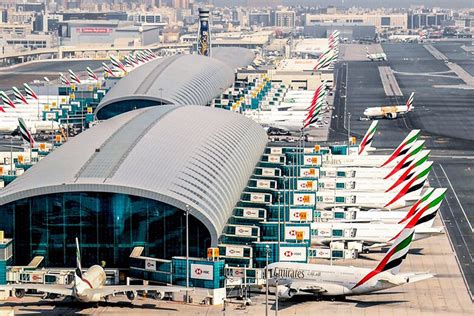
Dubai’s geographic position is both a gift and a constraint. It allows Emirates to connect Europe, Africa, Asia, and the Americas efficiently, but many of those connections require extremely long nonstop flights. Emirates has built its global reputation on serving these city pairs directly, avoiding intermediate stops and offering passengers time savings that justify premium fares.
For years, the Boeing 777-300ER and Airbus A380 made this strategy possible. The 777-300ER provided range and reliability, while the A380 delivered unmatched capacity on high-density trunk routes. Today, both fleets are approaching a turning point. The 777-300ER’s fuel efficiency no longer matches that of newer designs, and maintenance costs rise as aircraft age. The A380, while still effective on select routes, lacks the flexibility demanded by changing market conditions.
The prolonged delays affecting the Boeing 777-9 have intensified this pressure. Emirates planned the 777X as a cornerstone of its next-generation long-haul fleet, but certification timelines continue to slip. This uncertainty forces the airline to consider aircraft that can assume long-range roles sooner, without compromising scale or performance.
The A350-1000 addresses this gap with a capacity profile that sits neatly between the A350-900 and the largest widebodies in Emirates’ fleet. It allows the airline to deploy substantial capacity on ultra-long routes without committing to the sheer size of an A380 or waiting indefinitely for the 777X.
The Strategic Role of the Airbus A350-900 as a Foundation
Understanding the appeal of the A350-1000 requires examining the success of the A350-900 within Emirates’ fleet. The airline has already committed heavily to this variant, deploying it across a wide range of long-haul and ultra-long-haul routes. The A350-900 introduced Emirates to a new level of fuel efficiency, cabin comfort, and operational flexibility.
Configured with modern three-class cabins, the A350-900 allows Emirates to right-size capacity on routes where an A380 would be excessive and a 777-300ER inefficient. It excels on long-thin routes, secondary cities, and markets with strong premium demand but lower overall volume. Importantly, it also provides a testbed for Emirates’ long-range ambitions within the A350 family.
Emirates has explored ultra-long-range missions with the A350-900, including services that approach the limits of commercial endurance. These evaluations demonstrate the airline’s confidence in the platform’s range and efficiency. They also reveal where the A350-1000 becomes relevant: when demand exceeds what the -900 can economically support, but does not justify an A380.
The success of the A350-900 lowers the barrier to introducing the A350-1000. Shared systems, common pilot type ratings, and maintenance synergies reduce complexity. For an airline built on fleet commonality and scale, these advantages matter as much as raw performance.
How the A350-1000 Complements Rather Than Replaces Existing Aircraft
The A350-1000 is not designed to replace the A350-900 or the A380 outright. Its strength lies in complementarity. With approximately 40 to 60 additional seats over the A350-900 in typical configurations, the aircraft fills a capacity gap that currently forces Emirates to choose between over- or under-deploying capacity.
On ultra-long routes with consistently high demand, the A350-1000 offers a compelling alternative to older widebodies. It delivers near-A380 levels of per-seat efficiency on a smaller footprint, reducing risk while preserving revenue potential. On routes where demand fluctuates seasonally, it offers flexibility that a very large aircraft cannot.
Operationally, the A350-1000 benefits from commonality across the A350 family. Pilot training transitions are minimal, spare parts inventories can be streamlined, and maintenance procedures standardized. These efficiencies support Emirates’ preference for operating large sub-fleets rather than small numbers of specialized aircraft.
From a network planning perspective, the A350-1000 enables more precise matching of aircraft to route economics. That precision becomes increasingly valuable as fuel prices fluctuate and environmental pressures intensify.
Economics and Efficiency on Flights That Stretch the Clock
Ultra-long-haul flights magnify every inefficiency. A small increase in fuel burn becomes a major cost when multiplied across 16 or 17 hours of flight. Crew utilization, maintenance reliability, and performance margins all become more critical as stage lengths increase.
The A350-1000 was engineered with these realities in mind. Compared with older widebodies like the 777-300ER, it can deliver fuel burn reductions of up to 25%, depending on configuration and mission profile. On Emirates’ longest routes, those savings translate directly into improved margins or the ability to price more competitively without eroding profitability.
Lower fuel burn also reduces carbon emissions, supporting regulatory compliance and sustainability goals. As environmental scrutiny intensifies, aircraft that combine long range with efficiency gain strategic importance. The A350-1000 positions Emirates to meet these expectations without abandoning its ultra-long-haul identity.
Reliability is equally important. Long flights leave little room for technical disruptions, as delays cascade through crew schedules and aircraft rotations. The A350-1000’s modern systems architecture and predictive maintenance capabilities reduce the likelihood of unscheduled events, supporting operational resilience across Emirates’ global network.
Passenger Comfort as a Competitive Weapon
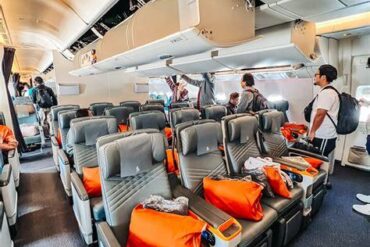
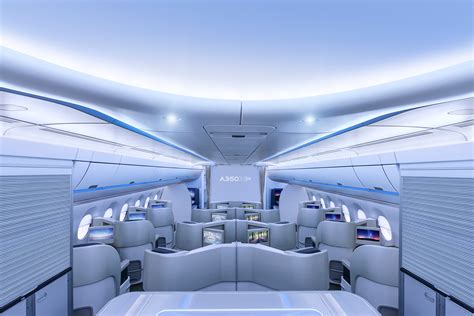
Emirates’ brand is built as much on experience as on connectivity. On flights that last half a day or more, passenger comfort becomes a decisive differentiator. The A350-1000’s cabin environment is specifically optimized for long-duration travel.
The Airbus Airspace cabin features a lower cabin altitude, higher humidity, and reduced noise levels compared with older aircraft. These elements help mitigate fatigue, dehydration, and jet lag, improving passenger well-being on ultra-long sectors. For premium passengers, these benefits reinforce Emirates’ positioning as a carrier that prioritizes comfort without compromise.
The wider cabin cross-section allows flexible interior layouts, supporting spacious business class suites, competitive premium economy seating, and generous galley space. Improved crew rest areas enhance service quality by ensuring well-rested cabin crews on the world’s longest flights.
For Emirates, these attributes are not optional. They are essential to maintaining pricing power and loyalty in a highly competitive long-haul market.
Strategic Timing and the Road Ahead
Fleet decisions are as much about timing as technology. The A350-1000’s relevance to Emirates has grown as external pressures converge. Continued 777X delays, aging fleets, environmental expectations, and evolving passenger preferences all point toward the need for efficient, flexible long-range aircraft.
Industry reports suggest Emirates is considering a substantial order of A350-1000s, potentially positioning the type as a core element of its future ultra-long-haul fleet. Such a move would provide certainty during a period of manufacturer uncertainty, while preserving Emirates’ ability to fly far, fly efficiently, and fly at scale.
The A350-1000 aligns closely with Emirates’ historical strategy: connecting distant markets nonstop, maximizing efficiency, and delivering a premium experience across every cabin. As the airline looks toward the next decade, this aircraft represents not a compromise, but a continuation of a long-haul philosophy refined over decades.
In the evolving landscape of global aviation, the Airbus A350-1000 stands out as an aircraft uniquely suited to Emirates’ ambitions, making it a near-perfect match for the airline’s most demanding routes and its long-term vision.