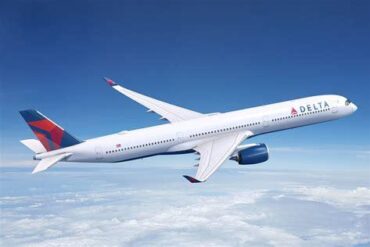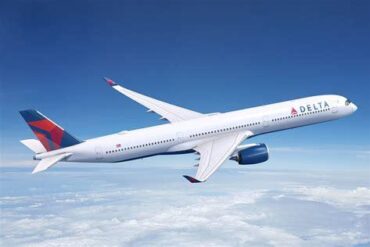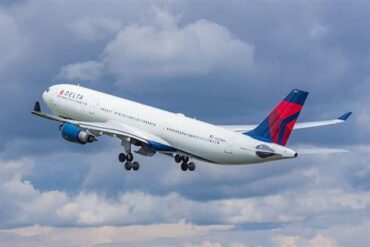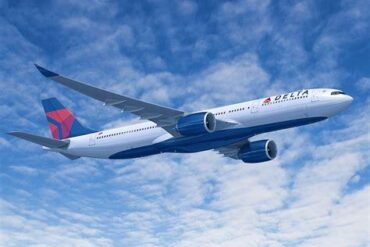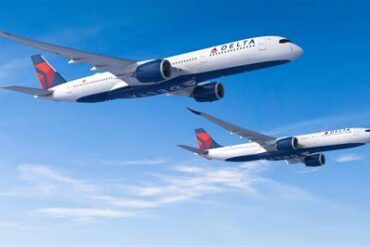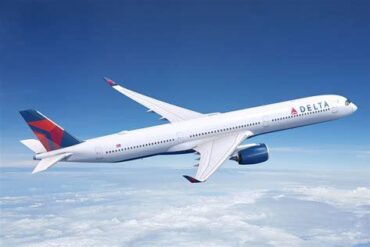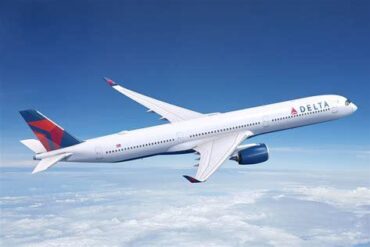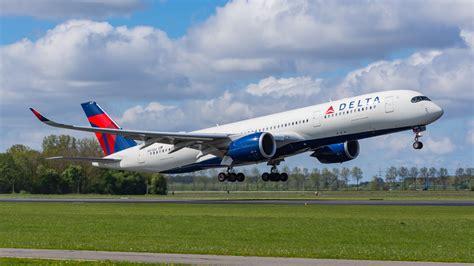
Delta Air Lines has built one of the most distinctive long-haul fleet strategies among major global carriers. While many airlines diversify between manufacturers, Delta has deliberately concentrated its modern widebody fleet around Airbus aircraft, creating a tightly integrated platform centered on the Airbus A350 and Airbus A330neo families. This strategy is not accidental. It reflects a calculated approach to operational efficiency, passenger experience, and long-range network expansion.
In an era where airlines must carefully balance operating costs with passenger expectations, Delta’s Airbus-centric strategy offers a powerful combination of range, reliability, and standardization. The airline is currently operating A350-900s and A330-900neos, while preparing to introduce the larger Airbus A350-1000 beginning in 2026. Together, these aircraft create a layered widebody system capable of serving everything from ultra-long-haul Pacific routes to high-density transatlantic corridors.
Rather than competing aircraft types, the A350 and A330 are complementary tools, each filling a specific role within Delta’s global network. This synergy allows the airline to deploy capacity precisely where it is needed while maintaining a consistent onboard product for travelers.
A Strategic Shift Toward Airbus Widebody Aircraft
Delta’s current fleet philosophy took shape during a turbulent period for the aviation industry. In 2016, the airline made a bold decision: canceling its inherited Boeing 787 orders following the merger with Northwest Airlines. At the time, many observers expected Delta to eventually return to Boeing for its next generation of widebody aircraft.
Instead, the airline doubled down on Airbus.
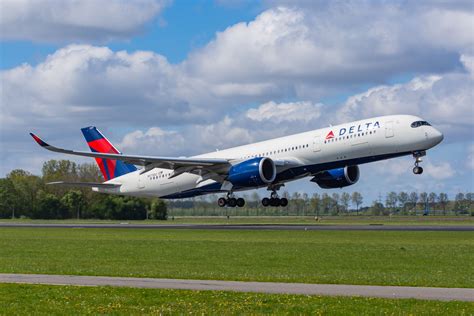
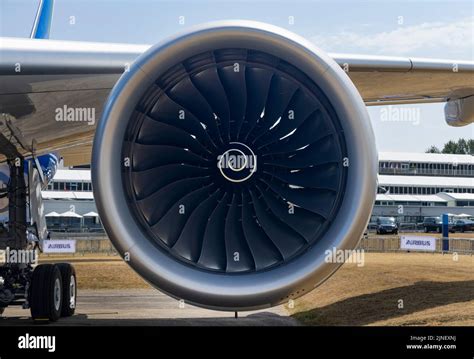
The introduction of the Airbus A350-900 in 2017 marked the beginning of a new chapter in Delta’s long-haul operations. Designed as one of the most advanced commercial aircraft in the world, the A350 introduced carbon-fiber composite construction, ultra-efficient Rolls-Royce Trent XWB engines, and exceptional long-range capability.
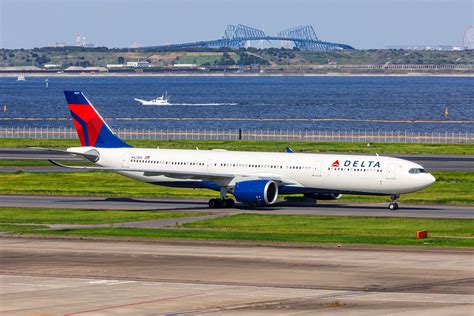
Soon after, Delta expanded its commitment by ordering the Airbus A330-900neo, a modernized version of the highly successful A330 platform. While the A330neo does not incorporate as many new structural innovations as the A350, it delivers remarkable fuel efficiency and lower acquisition costs, making it ideal for medium-to-long-haul routes.
Today, Delta stands apart from other US carriers. United Airlines and American Airlines remain heavily dependent on Boeing widebody fleets, while Delta operates one of the largest Airbus long-haul fleets in North America.
The airline has gone even further with recent orders. By the late 2020s, Delta expects to operate nearly 80 Airbus A350s and more than 50 A330neos, creating one of the most uniform and technologically advanced widebody fleets in the industry.
Operational Synergy Between the A350 and A330neo
One of the most powerful advantages of Delta’s fleet strategy lies in cockpit and systems commonality between the A350 and A330 families. Airbus designed both aircraft with nearly identical flight decks, allowing pilots to transition between the two types with minimal additional training.
For an airline, that similarity translates into real economic benefits.
Pilot scheduling becomes dramatically more flexible when crews can operate multiple aircraft types. Instead of maintaining separate pools of pilots for each aircraft family, Delta can move pilots between the A330neo and A350 fleets with relative ease, maximizing utilization while reducing training costs.
The benefits extend beyond the cockpit. Delta’s massive maintenance division, Delta TechOps, gains efficiency by maintaining aircraft that share major systems architecture and components.
Key operational advantages include:
- Common Rolls-Royce Trent engine families
- Similar avionics and flight control systems
- Shared maintenance procedures
- Standardized spare parts inventories
For airlines operating dozens of widebody aircraft, this kind of standardization significantly reduces long-term operating costs.
It also improves reliability. When technicians understand a system deeply across multiple aircraft types, troubleshooting becomes faster and more effective.
In simple terms, Delta’s widebody fleet functions like a unified ecosystem rather than a collection of unrelated aircraft models.
A Consistent Passenger Experience Across Long-Haul Flights
Operational efficiency is only part of the story. Delta’s Airbus strategy also focuses heavily on delivering a consistent premium experience for passengers.
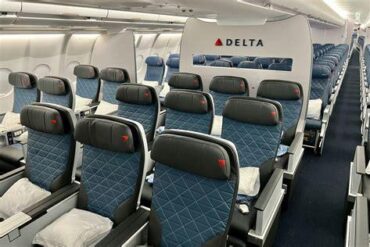
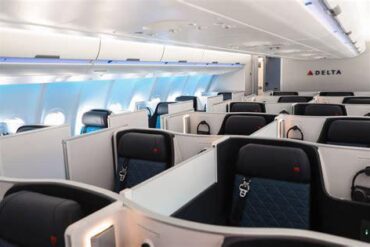
Both the A350 and A330neo feature Airbus’ Airspace cabin design, which emphasizes space, lighting, and comfort during long flights. While cabin layouts vary slightly depending on the aircraft, the overall experience remains remarkably consistent.
Key passenger features include:
- Delta One Suites with sliding privacy doors
- Delta Premium Select premium economy seating
- Large 4K seatback entertainment screens
- Bluetooth audio connectivity
- High-speed onboard Wi-Fi
- Customizable LED mood lighting
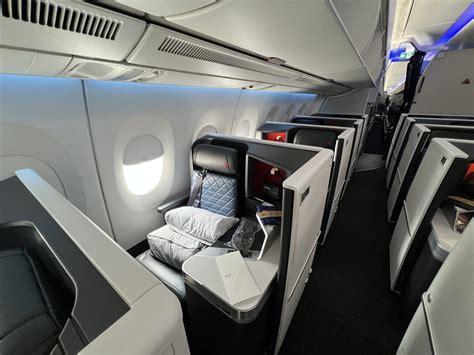
The environmental improvements inside these aircraft also play a major role in passenger comfort. Airbus engineered both aircraft families to maintain lower cabin altitude and higher humidity levels compared with older widebodies.
Traditional aircraft typically simulate a cabin altitude of around 8,000 feet. The A350 reduces this to roughly 6,000 feet, which significantly decreases passenger fatigue during ultra-long-haul flights.
The result is subtle but powerful: travelers arrive less dehydrated, less fatigued, and more comfortable after flights that may last 12 to 16 hours.
For Delta, which markets itself as a premium airline within the United States, this consistent onboard experience reinforces the brand across global routes.
Why Delta Avoided the Boeing 777X
While Delta invested heavily in Airbus widebodies, Boeing has struggled to secure a place in the airline’s long-term strategy.
The Boeing 777X, designed as the successor to the highly successful 777-300ER, has faced repeated certification delays and development challenges. Originally expected to enter service in the early 2020s, the aircraft is now running more than five years behind schedule.
For an airline planning fleet expansion years in advance, uncertainty carries real risk.
Delta’s leadership determined that the 777X was simply too large and too delayed to fit its network requirements. The aircraft’s massive seating capacity makes it ideal for extremely high-density global hubs such as Dubai or Doha, but it does not align as well with Delta’s diversified route network.
Meanwhile, Airbus was able to deliver aircraft that already met Delta’s needs.
The A350-900 offered exceptional range and efficiency, while the upcoming A350-1000 provides additional capacity without the enormous size of the 777X.
To Boeing’s credit, the 787 Dreamliner has proven itself as one of the most reliable widebody aircraft of the past decade. Recognizing this success, Delta finally placed its first order for the 787 in 2026, marking a partial return to Boeing after years of Airbus dominance.
Even with that order, however, Airbus remains the cornerstone of Delta’s long-haul fleet.
Expanding the Global Network
Delta’s modern Airbus widebodies are not just replacing older aircraft—they are unlocking entirely new routes.
Long-range efficiency allows the airline to launch nonstop flights that would have been economically impossible with previous-generation jets.
One striking example is the planned Atlanta to Riyadh nonstop service launching in 2026. This route connects the largest hub in the United States Southeast directly to Saudi Arabia, a market that previously required multiple connections.
Across the Atlantic, Delta is preparing its largest European schedule ever, with nearly thirty destinations.
New additions include:
- Malta
- Olbia in Sardinia
- Nice on the French Riviera
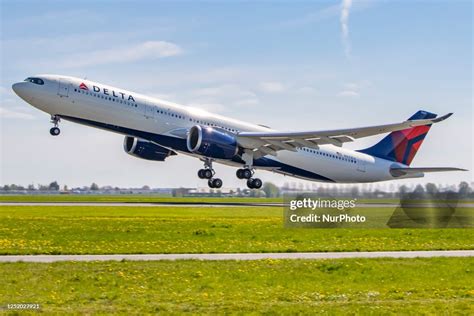
These destinations illustrate how the A330neo excels on medium-range transatlantic routes, where its operating costs are lower than larger aircraft.
At the same time, the A350 handles longer or higher-demand routes, such as major intercontinental corridors linking North America with Asia.
This dual-aircraft strategy gives Delta enormous flexibility when planning seasonal schedules and adjusting capacity.
A Strategic Pivot Toward the Pacific
While Europe remains a key market, Delta’s long-term growth strategy is increasingly focused on Asia-Pacific routes.
The Pacific presents unique challenges for airlines. Distances are enormous, weather patterns are complex, and demand often fluctuates with global economic trends.
Aircraft like the A350-900 are ideally suited for these missions. With one of the longest ranges of any commercial airliner, the aircraft can operate ultra-long-haul routes while maintaining excellent fuel efficiency.
Delta is gradually transitioning most of its transpacific flights to A350 service, strengthening its brand presence in Asia.
Recent network developments highlight this shift.
Flights between Los Angeles and Hong Kong have resumed, while Seattle has become a growing Asian gateway with service to Taipei and other regional destinations.
Another important development is the expansion of the Los Angeles to Melbourne route, which will soon operate daily due to strong demand.
These routes demonstrate how modern widebodies enable airlines to rethink global connectivity. Cities that once required multiple connections can now be linked directly with efficient twin-engine aircraft.
The Arrival of the Airbus A350-1000
Delta’s next major fleet milestone will arrive in 2026 with the introduction of the Airbus A350-1000.
This stretched variant of the A350 offers greater passenger capacity and improved economics on ultra-long routes. For Delta, it will become the flagship aircraft of its long-haul fleet.
The A350-1000 is expected to feature an even higher proportion of premium seating, reflecting the airline’s strategy of prioritizing high-yield passengers on the longest flights.
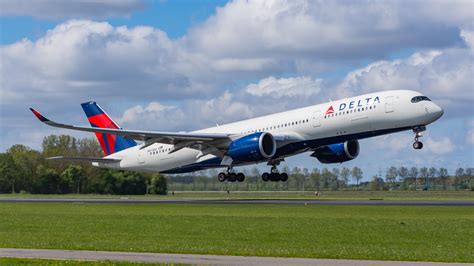
Flights exceeding 15 hours require a different cabin strategy. Premium seating not only generates higher revenue but also improves passenger comfort on journeys that span continents and oceans.
Delta is reportedly evaluating routes to Singapore and Manila, which could become viable once the A350-1000 enters service.
These destinations represent the next stage of the airline’s Pacific expansion.
Scaling Capacity with Precision
The beauty of Delta’s Airbus fleet lies in how neatly each aircraft type fits into a specific operational role.
The A330neo handles mid-range long-haul missions, particularly across the Atlantic and to leisure destinations such as Hawaii and the Caribbean.
The A350-900 dominates long-range international routes, especially across the Pacific where range and efficiency are essential.
The A350-1000 will handle the longest and most premium-focused flights, where additional capacity and premium seating generate maximum revenue.
Together, these aircraft create a flexible and scalable widebody system.
Rather than relying on a single aircraft size for every route, Delta can match capacity precisely to market demand, minimizing wasted seats while maximizing profitability.
The Future of Delta’s Long-Haul Fleet
Delta’s Airbus widebody strategy represents more than a fleet decision—it reflects a long-term philosophy about global aviation.
Modern airlines succeed when they combine operational efficiency, passenger comfort, and network flexibility. The A350 and A330neo families deliver exactly that balance.
By standardizing around these aircraft, Delta has created a long-haul fleet capable of adapting to shifting global demand, whether that demand emerges in Europe, the Middle East, or across the vast Pacific.
As new A350-1000s arrive and international travel continues to rebound, Delta’s Airbus widebody fleet will remain the backbone of its global ambitions, connecting North America with more destinations than ever before while delivering one of the most consistent premium travel experiences in the industry.