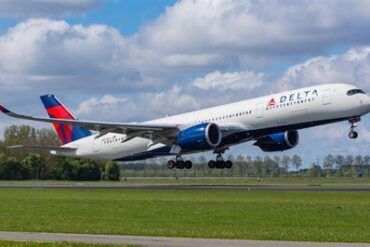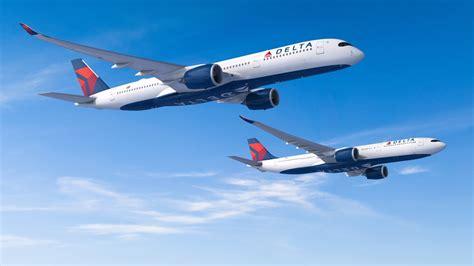
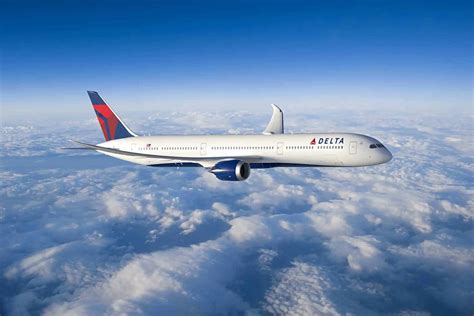
Delta Air Lines has spent much of the past decade emerging as Airbus’ most prominent airline partner in the United States. With major commitments to the Airbus A330neo and Airbus A350 families, the Atlanta-based carrier appeared to be steadily moving toward an Airbus-centric future for its long-haul operations. Yet Delta’s decision to order 30 Boeing 787-10 Dreamliners, alongside options for 30 more, reveals a more nuanced strategy. Rather than placing all of its long-haul ambitions in the hands of a single manufacturer, Delta is constructing a diversified fleet designed around flexibility, capacity growth, operational resilience, and long-term profitability.
The move surprised many aviation observers because Delta had largely favored Airbus during recent fleet competitions. However, the Dreamliner order demonstrates that the airline’s future is not about choosing Airbus or Boeing. Instead, it is about deploying the right aircraft for the right mission while maintaining leverage with both manufacturers and positioning the airline for decades of international expansion.
Delta’s Airbus-Focused Widebody Transformation
Over the last several years, Delta has relied heavily on Airbus aircraft to modernize its long-haul fleet. The airline invested extensively in the Airbus A330-900neo and Airbus A350-900, aircraft that brought substantial improvements in fuel efficiency, passenger comfort, and operating economics compared with older jets.
The retirement of aging aircraft became increasingly important as Delta sought to improve profitability on international routes. Older Boeing 767 variants, particularly the 767-300ER fleet, were becoming less competitive due to higher maintenance costs and lower fuel efficiency. The Airbus A330-900 emerged as the preferred replacement, providing significantly greater capacity while reducing operating costs per seat.
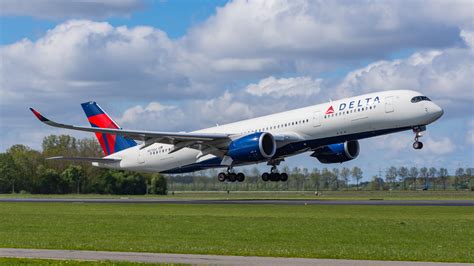
At the same time, the Airbus A350-900 became Delta’s flagship long-haul aircraft. Its exceptional range and performance allowed the carrier to strengthen its presence on demanding international routes, particularly across the Pacific where efficiency and payload capabilities are critical.
For a period, Delta’s strategy appeared straightforward: expand with Airbus and gradually phase out older Boeing widebodies.
Yet the airline’s long-term planning revealed a more complex reality.
After all, no single aircraft family can perfectly address every route, market, and growth opportunity within a global network as large as Delta’s.
Why The Boeing 787-10 Suddenly Became Attractive
The Boeing 787-10 occupies a unique position in the widebody market. While sharing the same advanced technology platform as the 787-8 and 787-9, the 787-10 offers substantially higher passenger capacity.
For Delta, that characteristic is particularly valuable.
The airline is increasingly focused on upgauging routes. Rather than simply adding frequencies, Delta often prefers operating larger aircraft to maximize revenue while controlling costs. This strategy works especially well on major transatlantic routes where demand continues to grow and airport slot constraints often limit expansion opportunities.
The 787-10 provides Delta with a larger aircraft than the A330-900 while maintaining impressive fuel efficiency. That extra capacity enables the airline to carry more passengers on established routes without significantly increasing operating costs.
This creates a cascading effect throughout the network. Routes currently operated by A330-900 aircraft can be upgraded to the larger 787-10. Those A330neos can then be redeployed to new destinations or growing markets. Similarly, some routes currently requiring A350 capacity may be served by the 787-10, freeing A350s for ultra-long-haul expansion.
In essence, the Dreamliner order is less about replacing Airbus aircraft and more about creating additional strategic flexibility.
The End Of The Boeing 767 Era
One of the biggest drivers behind Delta’s fleet planning is the inevitable retirement of its aging Boeing 767 fleet.
For decades, the Boeing 767 served as a cornerstone of Delta’s international operations. The aircraft provided the ideal balance of range, capacity, and economics for numerous transatlantic markets. However, time eventually catches every aircraft type.
The Boeing 767-300ER fleet is approaching the end of its practical service life. Maintenance costs continue to rise, while modern aircraft deliver substantially better fuel efficiency and passenger amenities.
Delta has already identified the Airbus A330-900 as the primary successor to the 767-300ER. However, the carrier’s broader fleet renewal strategy extends beyond simply replacing one aircraft with another.
The airline is simultaneously preparing for the eventual retirement of its Boeing 767-400ER fleet and older Airbus A330-200 and A330-300 aircraft. By introducing the Boeing 787-10 alongside additional Airbus orders, Delta gains multiple pathways for replacing these aircraft throughout the 2030s.
Instead of facing a single massive replacement cycle, the airline can gradually transition capacity across several modern aircraft families.
The Power Of Dual Sourcing
A key reason Delta is not committing exclusively to Airbus lies in a strategy known as dual sourcing.
Major airlines often maintain relationships with multiple aircraft manufacturers rather than relying entirely on one supplier. This approach offers significant advantages beyond simple fleet diversity.
When airlines purchase aircraft from both Airbus and Boeing, they maintain competitive pressure between manufacturers. This frequently results in better pricing, more attractive financing terms, and improved support agreements.
Equally important, dual sourcing reduces risk.
Aircraft programs occasionally face production delays, certification issues, engine problems, or supply chain disruptions. If an airline depends entirely on one manufacturer, those challenges can significantly impact growth plans.
By maintaining strong relationships with both Airbus and Boeing, Delta insulates itself against such disruptions.
The strategy has become increasingly relevant in recent years as global aerospace supply chains have experienced repeated challenges affecting aircraft deliveries.
For a carrier the size of Delta, preserving flexibility is often more valuable than achieving complete fleet standardization.
Delta TechOps And The Hidden Value Of The Dreamliner Deal
The Boeing 787 order is about more than aircraft.
Behind the scenes, Delta operates one of the world’s largest airline maintenance organizations through Delta TechOps. This division generates substantial revenue by providing maintenance, repair, and overhaul services to airlines around the globe.
The selection of General Electric’s GEnx engines for the 787-10 introduces an important new business opportunity.
Historically, Delta’s modern Airbus widebody fleet has relied heavily on Rolls-Royce powerplants, including the Trent 7000 and Trent XWB families. The addition of the GEnx expands Delta TechOps’ capabilities and customer base.
As more airlines operate GEnx-powered aircraft worldwide, Delta gains access to a larger maintenance market. Overhaul agreements often produce significant long-term revenue streams that extend far beyond the initial aircraft purchase.
This means the Dreamliner acquisition creates value not only in passenger operations but also within Delta’s highly profitable maintenance business.
From a strategic perspective, that additional revenue potential makes the Boeing order even more attractive.
A Future Built Around Three Widebody Families
Unlike competitors that are aggressively consolidating around fewer aircraft types, Delta appears comfortable operating three major widebody families.
Its future fleet is expected to revolve around:
- Airbus A330-900neo
- Airbus A350-900
- Airbus A350-1000
- Boeing 787-10
This structure provides a broad range of capacity and performance options.
The A330-900 serves as a versatile aircraft for transatlantic and medium-to-long-haul markets. The 787-10 occupies a larger-capacity niche ideal for high-demand international routes. The A350-900 delivers outstanding long-range performance, while the A350-1000 offers increased capacity for premium and high-volume markets.
Rather than forcing every route into a limited number of aircraft categories, Delta is creating a fleet capable of matching aircraft size and performance more precisely to market demand.
Why Delta Still Prefers The A350 For Pacific Routes
Despite ordering the Boeing 787-10, Delta continues to view the Airbus A350 as its primary aircraft for transpacific operations.
The reason largely comes down to range and operational capability.
Pacific routes often involve extreme distances, challenging weather conditions, and significant payload requirements. In these environments, the A350’s capabilities provide a clear advantage.
The Airbus A350-900 has consistently demonstrated exceptional efficiency on ultra-long-haul missions. Meanwhile, the larger A350-1000 will further strengthen Delta’s ability to operate its most demanding international routes.
As a result, the airline is unlikely to use the 787-10 extensively on Pacific services.
Instead, the Dreamliner will primarily support routes across the Atlantic and to South America, where its capacity and economics align particularly well with Delta’s network objectives.
This division of responsibilities allows each aircraft type to operate within the environments where it performs best.
How Delta Differs From American And United
Delta’s strategy stands in sharp contrast to those pursued by its two largest U.S. competitors.
United Airlines has embraced the Boeing 787 family on a massive scale. Through multiple orders and option exercises, the airline is building one of the largest Dreamliner fleets in the world. United intends to use both the 787-9 and 787-10 as primary replacements for older Boeing 767 and 777 aircraft.
American Airlines has also invested heavily in the Dreamliner family. Although its order activity has been more conservative than United’s, the airline’s long-haul future remains deeply tied to the Boeing 787 platform.
Both airlines are moving toward greater standardization around Boeing widebodies.
Delta, however, is pursuing a different path.
Instead of selecting one dominant aircraft family, it is deliberately balancing Airbus and Boeing products to maximize flexibility. The airline appears less concerned with achieving the lowest possible training or maintenance complexity and more focused on ensuring that every major route has the most suitable aircraft available.
That distinction reflects Delta’s broader corporate philosophy, which often prioritizes operational optimization over industry trends.
The Long-Term Vision Behind Delta’s Widebody Fleet
The addition of the Boeing 787-10 does not signal a retreat from Airbus. In fact, Delta has simultaneously reinforced its commitment to the A330neo and A350 programs through additional orders and options.
What the Dreamliner purchase truly represents is diversification.
Delta recognizes that the future of long-haul aviation will require flexibility amid uncertain economic conditions, fluctuating demand patterns, evolving technology, and ongoing supply chain challenges.
By combining the Airbus A330-900, Airbus A350-900, Airbus A350-1000, and Boeing 787-10, the airline gains access to a highly adaptable portfolio of aircraft capable of serving nearly every international market in its network.
Rather than betting its future entirely on Airbus or Boeing, Delta is building a fleet strategy designed to extract the strengths of both manufacturers. The result is a long-haul roadmap focused not on loyalty to a particular aircraft builder, but on capacity growth, operational resilience, revenue generation, and sustained global expansion. As the airline enters the next decade of fleet renewal, that balanced approach may prove to be one of the most strategically significant decisions in modern commercial aviation.