Aspiring pilots searching for a fast track to the flight deck at Delta Air Lines are increasingly drawn to the newly launched Delta Propel Flight Academy in partnership with Skyborne Airline Academy. Promising a Qualified Job Offer (CJO), $20,000 in financial sponsorship, and a 52-week program costing $84,000, this route appears to offer an expedited and affordable pathway to the majors. However, behind the attractive packaging lies a complex and often misunderstood system of commitments, timelines, and contingencies that deserve close scrutiny.

What the Program Promises – and What It Doesn’t
The official narrative paints the Propel–Skyborne route as a streamlined and efficient journey from zero to Delta’s flight deck. According to Delta, successful candidates:
- Are eligible to receive up to $20,000 in support.
- Have their student loan interest paid (via select lenders).
- Are offered employment as a Certified Flight Instructor (CFI) at Skyborne upon completing certifications.
- Progress toward a Delta class date within 42 months or less after fulfilling Propel milestones.
What often gets overlooked, however, is that this CJO is not extended at the beginning. As clarified by Delta’s website, CJOs are available “as early as PPL completion”, but not before. Entry into the Propel program itself only comes after earning the Private Pilot License (PPL), and acceptance is not guaranteed. Furthermore, employment as a Skyborne CFI—despite being a key stepping stone in the program—is not guaranteed either.
Community Insights: Praise, Caution, and Contradictions
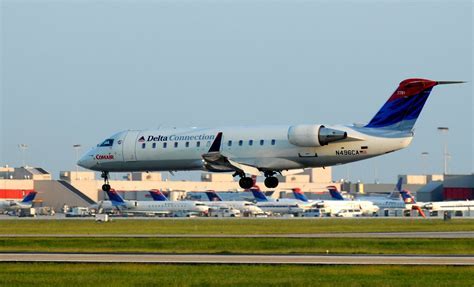
The aviation community, especially on forums like r/flying, offers a mixture of enthusiasm, realism, and strong caution about Propel–Skyborne. Several experienced ATP-rated pilots expressed deep skepticism about the program’s long-term value. A recurring critique centers on the “seat lock” risk—an obligation to fly for a Delta regional partner for up to 3.5 years (42 months), potentially delaying advancement compared to peers who take more flexible routes.
One veteran pilot summed it up sharply: “If it sounds too good to be true… you’ll be seat-locked at a regional.” While some users defend Propel’s structure, emphasizing that pilots are often being called up in less than 24 months, others stress that market shifts or Delta’s discretion could delay these transitions indefinitely.
There is also a critical distinction between the original Propel University path—which does not involve financial assistance and thus imposes fewer contractual obligations—and the Skyborne-specific route, where financial aid and bonuses may come with strings attached.
Financial Strings: The True Cost of Sponsorship
The $20,000 sponsorship has triggered significant debate. While it lowers the upfront cost, it likely comes with payback clauses or restrictions. One pilot noted that if you leave the program prematurely, you may owe the full amount back. This transforms what initially appears to be financial aid into a potential liability. Another pointed out that the CFI position at Skyborne is not automatic, and those who don’t receive it might be left seeking other employment paths, further complicating their training and financial trajectory.
Additional concerns revolve around the loan interest support Delta claims to offer. Despite appearing generous, the details on how and when Delta pays this interest—or under what lender conditions—remain murky. As one user put it: “Don’t ask Delta. Ask a lawyer.” That advice was echoed by many who urged prospective applicants to have contracts reviewed by employment law specialists—ideally those familiar with pilot programs—to fully understand exit clauses and repayment scenarios.
Application Challenges and Selection Pitfalls
Applying to the Propel Academy is far from straightforward. Several applicants shared experiences of unexpected rejections despite meeting standard criteria. For instance, one user with a PPL, a four-year degree, and a first-class medical was rejected after Delta requested the final two pages of his logbook. When he disclosed that his PPL took around 90 hours due to rescheduled checkrides, his application was denied without clear explanation.
This highlights a controversial yet critical point: hour caps on PPL completion. While Skyborne reportedly advises a maximum of 70 hours, some users cited contractual caps as low as 54 hours. Those exceeding this limit may be disqualified from Propel referral, even if their skills are otherwise solid. This can leave candidates in limbo—accepted into Skyborne but ineligible for Propel, undermining the financial and career promises that drew them in.
Comparing Competing Programs: JetBlue Gateway and United Aviate
To evaluate Propel’s true value, it’s essential to contrast it with similar offerings:
JetBlue Gateway Select
- CJO offered upfront (for both CFI position at CAE and later JetBlue).
- More expensive than Propel by over $20,000.
- Criticized for training delays, backlog of flight time, and a reputation for logistical issues at CAE Phoenix.
- Heavy reliance on Airbus aircraft, with many red-eye routes and limited route flexibility.
- Longer potential wait for upgrade or transition due to fleet limitations and low union leverage.
United Aviate Academy
- Requires PPL before entry, like Propel.
- Long wait times for start dates—sometimes 18+ months.
- Solid link to United but doesn’t offer sponsorship comparable to Propel.
Many applicants evaluating all three tend to favor Delta Propel due to superior QOL, equipment diversity, and legacy carrier status. However, it is also clear that Propel–Skyborne may move more quickly, with faster interviews, shorter wait times, and earlier class dates—if accepted.
Real-World Timelines and Turnaround Realities
In the initial stages of the Propel–Skyborne partnership, responses and interviews were reported to happen quickly. One user reported:
- Application submitted with resume.
- Received response within days.
- Requested documents: passport and final logbook pages.
- Approved for online assessments within hours of submission.
However, after the interview stage, timelines become less predictable. Several applicants said they were told that acceptance notifications for June classes wouldn’t arrive until mid-May, leaving barely two weeks for relocation, financing, and logistics. This delay could be strategic—to keep early class sizes small—or simply a result of organizational growing pains. Regardless, it highlights the need for candidates to remain agile and flexible.
Navigating the Legal and Logistical Landscape
Despite the marketing optimism, Delta retains full discretion over key elements of Propel. As explicitly stated in their materials:
“Successful Propel pilots will be placed in the next New Hire Indoctrination class at Delta after flying with a Delta Connection carrier for 42 months or less… [and] meeting all the requirements.”
This vague language introduces room for interpretation. For example, the term “successful” leaves Delta room to filter candidates based on soft factors such as fit, behavior, and company need. As some pilots point out, even with a CJO, Delta can later cite “market conditions” to delay or rescind advancement.
Furthermore, interviews are described as non-negotiable. “Take it or leave it” is how one experienced pilot characterized the posture. You aren’t negotiating terms; you’re accepting them—and the contract is legally binding. That’s precisely why several forum users urged caution, suggesting potential applicants document everything, screen record interviews if allowed, and seek legal guidance prior to commitment.
Final Thoughts: Is the Propel–Skyborne Route Worth It?
There’s no universal answer. For some, the Propel Flight Academy could offer a clear, structured pathway into the flight deck of a legacy carrier. The reputation of Delta, the financial aid, and the training environment of Skyborne may outweigh the risks.
For others—especially those wary of contractual limitations, uncertain exit paths, or the possibility of being stuck at a regional for years—the risks may outweigh the benefits. In some cases, traditional flight training, followed by climbing the regional ladder independently, might yield faster and more flexible results.
What remains crystal clear is that this program, while marketed as a golden opportunity, is not a shortcut. It’s a commitment, and one that must be entered into with eyes wide open. Delta’s Propel–Skyborne partnership may serve as an ideal route for the right candidate—but only after a full understanding of the legal, financial, and career implications.
For applicants just entering the aviation world, education, preparation, and diligent due diligence are the best copilots you can have.