Airline alliances have transformed the way global aviation operates. While most travelers recognize alliance logos on boarding passes or enjoy reciprocal lounge access and frequent flyer perks, few understand the complex process that determines which airlines are allowed to join these exclusive partnerships. Among the world’s three major airline alliances, oneworld follows one of the most selective membership models, where airlines cannot simply submit an application and wait for approval.
Instead, every new member begins its journey with an invitation—a carefully considered decision made collectively by existing alliance members. From there, the airline embarks on an intensive integration process that can take years to complete before passengers experience the full benefits of alliance membership.
Rather than being an administrative formality, joining oneworld represents one of the aviation industry’s most demanding commercial and operational transformations, requiring extensive coordination across technology, customer service, airport operations, loyalty programs, and corporate strategy.
The recent invitation extended to Philippine Airlines has once again highlighted how this process actually works and why becoming part of oneworld is far more complicated than most travelers imagine.
Why Airline Alliances Continue to Shape Global Aviation
Global airline alliances exist because no single airline can realistically serve every destination around the world. Even the largest international carriers operate within geographical, regulatory, and fleet limitations. Alliances bridge those gaps by allowing member airlines to cooperate across multiple areas of their businesses while remaining independent companies.
For passengers, these partnerships create a much smoother travel experience. Travelers can purchase tickets involving multiple airlines under a single itinerary, transfer baggage between connecting flights, earn and redeem frequent flyer miles across numerous carriers, access airport lounges worldwide, and receive priority services regardless of which alliance member operates each flight.
For airlines, alliances significantly expand market reach without requiring costly investments in additional aircraft or entirely new route networks. Instead of launching flights into every possible destination, carriers can rely on trusted alliance partners to complete customer journeys while maintaining consistent service standards.
This collaborative model has become one of the defining characteristics of modern international aviation, allowing airlines to compete globally despite operating primarily within regional strengths.
Joining oneworld Begins With an Invitation, Not an Application
One of the biggest misconceptions surrounding airline alliances is the belief that airlines submit formal membership applications.
The reality is fundamentally different.
Unlike many commercial organizations, oneworld does not operate an open application system. Airlines cannot simply complete paperwork, pay membership fees, and await approval. Instead, membership begins only after existing alliance members determine that a particular airline would strengthen the alliance’s network and overall value proposition.
This makes the recruitment process highly selective.
Every prospective member undergoes extensive evaluation before receiving an invitation. Existing member airlines assess numerous strategic questions, including whether the airline fills important geographical gaps, enhances connectivity, complements existing route networks, strengthens customer offerings, and maintains operational standards compatible with alliance expectations.
Equally important is the airline’s own willingness to participate. Membership requires significant financial investment, major technological upgrades, and long-term operational commitments. Therefore, joining only proceeds when both sides conclude that the partnership creates mutual value.
Only after this shared agreement does the formal membership process begin.
The Governing Board Makes the Final Decision
Unlike organizations led by a single executive authority, oneworld’s expansion decisions are made collectively.
The alliance’s governing board consists of the chief executives from every full member airline. This group evaluates proposed candidates before approving invitations to join.
Such governance ensures that expansion benefits the alliance as a whole rather than serving only individual member interests.
Each prospective member must demonstrate that it enhances the network without unnecessarily overlapping existing strengths. Geography, commercial partnerships, market demand, operational compatibility, and customer experience all become part of the discussion before unanimous support can be achieved.
Because every existing member has a vested interest in protecting alliance quality, invitations are extended only after extensive strategic consideration.
Why Philippine Airlines Strengthens the Alliance
The invitation extended to Philippine Airlines illustrates exactly how strategic these decisions are.
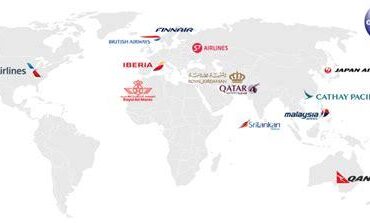
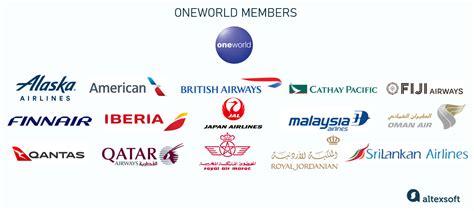
For years, Southeast Asia represented one of oneworld’s weaker regions compared with competing global alliances. Although members such as Cathay Pacific, Japan Airlines, Malaysia Airlines, and Qantas already provided strong regional connectivity, the Philippines remained a noticeable gap.
Philippine Airlines immediately strengthens that position.
The carrier adds access to one of Asia’s largest domestic aviation markets while expanding international connectivity between the Philippines and major destinations across North America, Australia, Japan, Southeast Asia, and the Middle East.
This expansion is particularly significant because millions of Filipinos live abroad, especially in the United States and Canada. The resulting travel demand creates substantial opportunities for alliance cooperation, particularly through improved connections with American Airlines and other oneworld members.
Rather than merely increasing membership numbers, Philippine Airlines fills a strategic gap that enhances the alliance’s overall competitiveness.
Member-Elect Status Marks Only the Beginning
Receiving an invitation does not immediately make an airline a full alliance member.
Instead, the carrier first becomes a member-elect, indicating that it has formally committed to joining while beginning the extensive integration work required before passengers receive alliance-wide benefits.
This intermediate phase is often misunderstood because little appears to change publicly.
Flights continue operating normally.
Frequent flyer benefits generally remain unchanged.
Airport procedures remain largely the same.
Behind the scenes, however, enormous transformation projects begin simultaneously across almost every department within the airline.
Technology teams redesign reservation systems.
Airport operations coordinate new procedures.
Customer service departments adopt alliance standards.
Commercial teams negotiate reciprocal agreements.
Loyalty specialists integrate mileage programs.
These activities continue for months—or frequently years—before official membership becomes possible.
Sponsor Airlines Guide Every New Member
One of the least understood aspects of alliance expansion is the sponsor airline system.
Every airline entering oneworld receives support from an existing member that acts as mentor throughout the integration journey.
This sponsor airline provides technical expertise, operational guidance, commercial advice, and practical experience accumulated during its own alliance integration.
The relationship significantly reduces implementation risks because experienced members understand where challenges typically emerge.
When Oman Air joined oneworld, Qatar Airways served as its sponsor, helping coordinate technology alignment, operational procedures, employee training, and commercial integration.
Earlier, Cathay Pacific played a similar mentoring role during SriLankan Airlines’ membership process.
Although Philippine Airlines’ sponsor has yet to be publicly announced, a similar partnership will almost certainly become one of the project’s most important success factors.

Integration Requires Much More Than Branding Changes
Many travelers mistakenly assume alliance membership simply involves repainting aircraft and adding logos.
In reality, branding represents perhaps the smallest component of the process.
True integration affects virtually every customer interaction.
Reservation platforms must exchange booking information seamlessly.
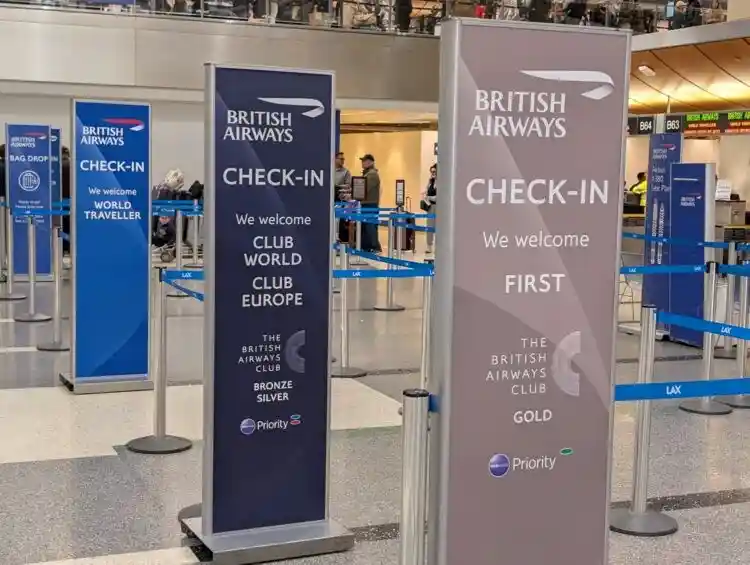
Airport check-in systems must recognize alliance elite status.
Baggage handling systems must coordinate transfers between different airlines.
Boarding procedures require standardization.
Lounges must verify reciprocal access privileges.
Customer service agents need training on alliance policies.
Digital platforms must support mileage earning and redemption across multiple airlines.
Even relatively simple passenger services often require months of software development, testing, and certification before becoming operational.
Frequent Flyer Integration Is Among the Most Complex Tasks
For passengers, loyalty programs represent one of the most visible benefits of alliance membership.
Customers expect to earn miles regardless of which member airline they fly.
Elite status should unlock priority boarding, lounge access, additional baggage allowances, expedited check-in, and preferred seating across every participating carrier.
Delivering these benefits consistently requires remarkable technological coordination.
Each airline operates its own loyalty database, reservation platform, fare structures, and customer management systems.
These independent technologies must exchange information accurately in real time.
Even small inconsistencies can prevent mileage credits, deny lounge access, or disrupt customer recognition.
Consequently, loyalty integration often becomes one of the longest and most technically demanding phases of alliance implementation.
Operational Consistency Defines the Passenger Experience
Passengers rarely notice the enormous operational work occurring behind the scenes.
Regardless of whether travelers begin their journey on Japan Airlines, continue with Cathay Pacific, and complete the final segment aboard Qatar Airways, the overall experience should feel consistent.
Achieving this consistency requires alignment across numerous operational areas.
Check-in processes.
Priority baggage handling.
Transfer procedures.
Airport signage.
Customer service protocols.
Irregular operations management.
Staff training.
Special assistance procedures.
Each component contributes to a seamless passenger journey despite involving multiple independent airlines operating across different countries.
Why Membership Frequently Takes Longer Than Expected
Alliance officials often estimate integration timelines between twelve and twenty-four months.
Actual experience frequently exceeds those projections.
Oman Air provides an excellent example.
Its intention to join was announced in 2022, yet full membership was not achieved until mid-2025 after extensive operational preparation.
Such delays are rarely signs of failure.
Instead, they reflect the extraordinary complexity involved in integrating dozens of interconnected business systems while maintaining uninterrupted flight operations.
Unlike many corporate mergers, airlines cannot suspend daily services while implementing changes.
Flights continue departing every day.
Millions of passengers continue traveling.
Thousands of employees continue working.
Integration therefore proceeds gradually alongside normal commercial operations, making schedule flexibility almost inevitable.
Technology Is Often the Greatest Challenge
Modern airlines depend upon hundreds of interconnected digital systems.
Reservation software.
Departure control.
Revenue management.
Crew scheduling.
Maintenance planning.
Baggage tracking.
Mobile applications.
Customer databases.
Payment processing.
Alliance membership requires many of these platforms to exchange information with partner airlines while maintaining security, reliability, and regulatory compliance.
Because each airline has developed unique technological ecosystems over decades, creating seamless interoperability demands careful planning, extensive testing, and continuous coordination.
Technology therefore becomes one of the largest investment areas during alliance integration.
oneworld Connect Offers an Alternative Path
Recognizing that not every airline requires full membership, oneworld introduced oneworld Connect as a more flexible partnership model.
Rather than satisfying every alliance requirement immediately, participating airlines can establish targeted cooperation with selected members while retaining greater operational independence.
This approach reduces implementation costs while allowing carriers to provide certain alliance benefits to passengers.
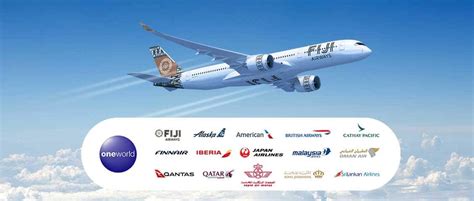
Fiji Airways demonstrated how effective this pathway can be.
After spending several years as a oneworld Connect partner, the airline gradually accumulated operational experience before transitioning toward full alliance membership.
The model illustrates that alliance participation no longer follows a single rigid structure but instead accommodates varying commercial objectives.
How oneworld Continues Expanding Its Global Network
Although oneworld remains the smallest of the three major global airline alliances by membership numbers, its expansion strategy emphasizes network quality over rapid growth.
Rather than recruiting airlines simply to increase membership totals, the alliance focuses on carriers capable of strengthening underserved markets, improving connectivity, and enhancing premium customer experiences.
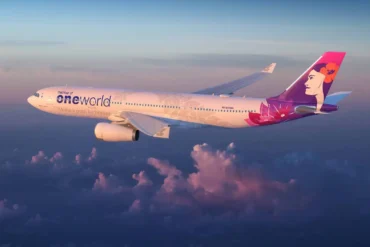
Recent additions such as Oman Air, the planned integration of Hawaiian Airlines, and the future membership of Philippine Airlines demonstrate this measured approach.
Each airline contributes strategic geographic advantages rather than merely expanding the alliance’s numerical footprint.
This selective philosophy reinforces why invitations remain central to the recruitment process.
Invitation Reflects Strategic Partnership Rather Than Simple Admission
Joining oneworld represents far more than adding another airline logo to an alliance website.
It signifies years of planning, millions of dollars in investment, extensive technological transformation, and close cooperation between multiple independent airlines operating across continents.
The invitation itself merely opens the door.
True membership is earned through successful integration, operational excellence, and the ability to deliver a seamless customer experience consistent with alliance standards.
For travelers, the eventual result is almost effortless: smoother connections, broader route choices, reciprocal loyalty benefits, and a more consistent journey across dozens of destinations worldwide.
Behind that apparent simplicity lies one of commercial aviation’s most sophisticated collaborative achievements—one that begins not with an application form, but with an invitation extended only after existing members conclude that a new airline genuinely strengthens the alliance for everyone involved.