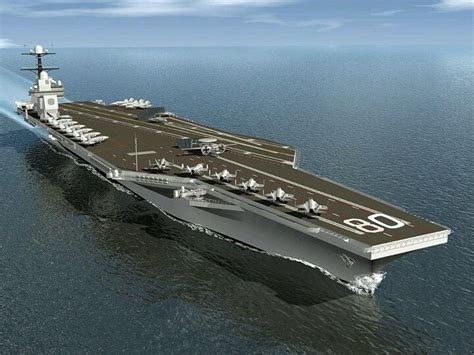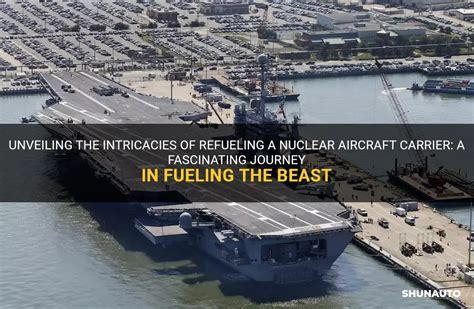
Refueling a nuclear-powered aircraft carrier is one of the most complex and time-consuming maintenance operations in the modern military. It is not just about topping off a fuel tank; it is a complete and profound overhaul known as Refueling and Complex Overhaul (RCOH). This once-in-a-lifetime procedure redefines what it means to “refuel” a vessel that forms the backbone of U.S. naval power.
The name “refueling” barely scratches the surface of what actually occurs during this elaborate operation. For carriers like the USS George Washington, USS Nimitz, or USS John C. Stennis, undergoing RCOH is akin to going under the knife for full-body surgery. The process requires incredible precision, labor, and time — not days, not weeks, but often four to six years.
Why Nuclear Aircraft Carriers Only Get Refueled Once Every 25 Years
Unlike traditional ships that rely on diesel or gas turbines, U.S. nuclear carriers such as those in the Nimitz-class are powered by two pressurized water reactors. These reactors are so efficient that they can operate uninterrupted for up to 25 years without needing a single refueling. That longevity is intentional — it allows the Navy to project power globally without depending on a complex fuel logistics chain. However, when that 25-year mark arrives, the overhaul begins.
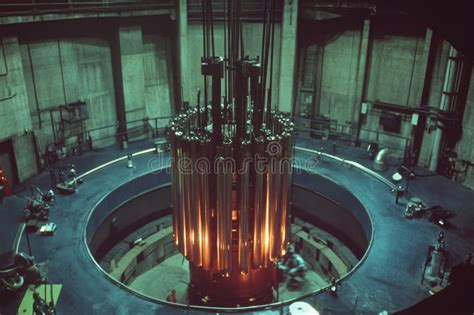
The process starts with cooling down and shutting off the reactors, a meticulously cautious task that takes several days on its own. After the reactors are rendered safe, trained specialists carefully extract hundreds of radioactive fuel rods, working under intense safety protocols. Every movement is monitored, every component accounted for.
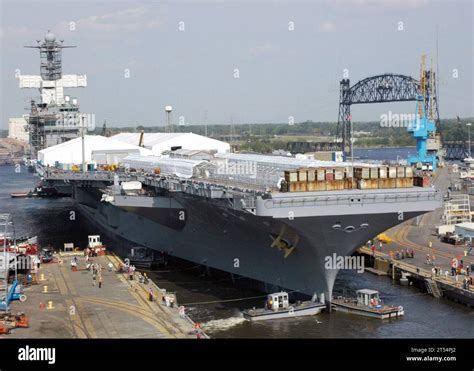
This is not done at just any dock. The only facility in the United States capable of conducting a nuclear carrier RCOH is Newport News Shipbuilding in Virginia. Home to specialized cranes, custom tooling, and an army of skilled engineers, Newport News becomes a temporary home to nearly 6,000 personnel assigned to the ship during the overhaul.
The Full Scope of an RCOH: Beyond Just Fuel
Despite its name, an RCOH is far more than just refueling. The Navy uses this rare window — once every 25 years — to dig deep into the ship’s structure and technology. It’s a total systems reboot, where virtually every system is inspected, tested, repaired, or replaced.
During this phase, upgrades include:
- Combat systems overhaul to match modern threats
- New radar arrays and sensor suites to improve battlefield awareness
- Software and hardware upgrades across electronics, navigation, and communications
- Structural repairs to aging components not accessible during routine operations
- Complete rewiring of electrical systems
- Modernization of living quarters and crew amenities
These tasks ensure that the carrier doesn’t just return to the fleet in working condition, but emerges decades more advanced than when it entered the dry dock.
Dry Dock Operations: A Theater of Precision
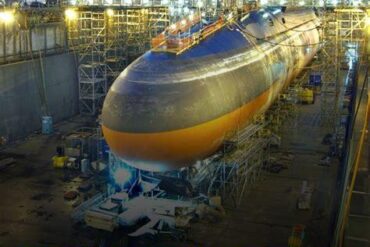
Once in dry dock, the aircraft carrier is completely drained of seawater, allowing full access to its hull and underwater systems. Towering cranes swing across its decks, lowering massive machinery with millimeter precision. Welding sparks fly day and night. Inside, thousands of components — some the size of a car, others as small as a watch spring — are replaced or upgraded.
This also marks a rare opportunity to perform essential structural inspections. Marine growth is scraped off the hull. Cathodic protection systems are renewed. Propulsion shafts and rudders are meticulously calibrated. The rudder stock, catapults, and aircraft elevators undergo detailed analysis, and if necessary, complete replacement.
In all, the RCOH represents hundreds of thousands of man-hours, with workers operating around the clock in overlapping shifts. Engineers, nuclear specialists, electricians, welders, IT experts, and logistics coordinators all play a role in ensuring nothing is missed.
USS George Washington: A Case Study in Complexity
When the USS George Washington (CVN-73) entered Newport News Shipbuilding for its RCOH, the timeline was expected to be four years. But unexpected complexities, including pandemic-related delays, pushed the overhaul toward the six-year mark. At its peak, over 5,980 crew and civilian personnel were working simultaneously on the carrier.
Part of the extended timeline involved challenges in the nuclear refueling cycle, material delays, and redesigning certain components to meet updated combat requirements. Despite the slow pace, every hour was vital. As a vessel that would serve the U.S. Navy until approximately 2050, precision and longevity were non-negotiable.
Strategic Rotations: Keeping the Fleet Mission-Ready
With the U.S. Navy operating 11 nuclear aircraft carriers, it must maintain a careful rhythm of availability. While up to three carriers may be undergoing maintenance or overhaul at any given time, seven to eight are kept ready for immediate deployment. This allows the U.S. to ensure continuous maritime dominance across key global regions.
The RCOH is so intensive that it is only performed once during the ship’s estimated 50-year service life. Once completed, the carrier reenters the fleet with enhanced capabilities, reduced maintenance needs, and renewed endurance. It is, in every sense, a rebirth for the warship.
Nuclear Power: Clean Energy with Global Reach
One often overlooked advantage of nuclear carriers is their clean energy profile. While they are powerful military assets, these carriers emit only water vapor. Their lack of dependence on fossil fuel not only simplifies logistics but reduces their environmental impact — a rare combination of power and sustainability.
Moreover, with no need to refuel at sea, nuclear carriers can remain deployed for months at a time, covering vast regions without the limitations that traditional fuel-dependent ships face. This is a strategic advantage that extends the U.S. Navy’s operational envelope far beyond rivals.
A Technological and Logistical Triumph
The successful execution of an RCOH demonstrates not just engineering excellence but also the logistical might of the United States. Coordinating such a multi-year operation across agencies, shipyards, vendors, and defense contractors is a massive undertaking. Each component, from nuclear rods to radar modules, must arrive on time, tested, and ready.
Costing hundreds of millions of dollars, the process isn’t cheap. But in return, the Navy receives a platform capable of global combat operations for another 20 to 25 years. It is a strategic investment in both national security and technological superiority.
Final Thoughts: Why It’s Worth the Wait
In the end, the Refueling and Complex Overhaul of a nuclear aircraft carrier is not about time — it’s about transformation. When the ship returns to active duty, it is often more advanced than when it was first launched. This is the Navy’s chance to leap forward in capability without building an entirely new ship.
While the world sees carriers glide across oceans with an air of invincibility, few understand the depth of effort required to keep them running. Beneath the decks lies a story of precision engineering, tireless labor, and unwavering commitment. That story doesn’t unfold in days or weeks — it spans years, ensuring these floating fortresses remain dominant symbols of American power.