Modern airliners are engineering masterpieces designed to maximize efficiency, reliability, and safety. Yet when a tail strike occurs, the consequences can vary dramatically depending on the aircraft involved. A tail strike that leaves a Boeing 777 back in service within days may keep a Boeing 787 Dreamliner or Airbus A350 parked in a maintenance hangar for weeks or even months. The difference is not simply the severity of the incident. It is rooted in the materials used to build these aircraft, the complexity of modern composite structures, and the challenges engineers face when assessing damage hidden beneath the surface.
Understanding why this happens requires a closer look at how modern aircraft are built and how structural damage is evaluated after an impact.
The Hidden Cost of a Tail Strike on Modern Widebody Aircraft
A tail strike occurs when the rear section of an aircraft makes contact with the runway during takeoff, landing, or a go-around. While the event may appear minor from the cabin, the reality is often far more serious.
The rear fuselage is not merely an aerodynamic shell. It forms part of the aircraft’s pressurized structure and absorbs significant aerodynamic and structural loads during flight. Any compromise to this area must be thoroughly investigated before the aircraft can safely return to service.
Tail strikes typically result from excessive nose-up rotation during takeoff, unstable approaches, hard landings, incorrect weight calculations, or improper performance data. In some cases, only sacrificial protective components are damaged. In others, the fuselage itself suffers structural harm that extends deep into critical load-bearing sections.
The challenge for maintenance teams is determining exactly where the damage ends and whether the aircraft can continue to withstand thousands of future pressurization cycles without risk.
For airlines operating expensive long-haul fleets, every day spent on the ground translates into lost revenue, disrupted schedules, passenger inconvenience, and additional maintenance costs.
After the initial inspection, the true complexity of the repair often becomes apparent.
Why Composite Aircraft Behave Differently After Impact
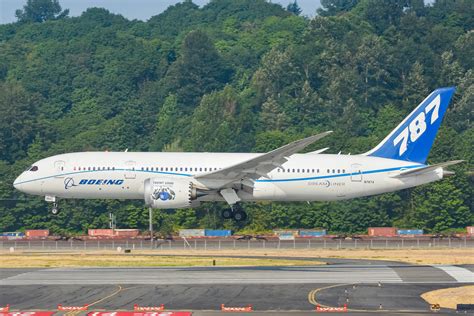
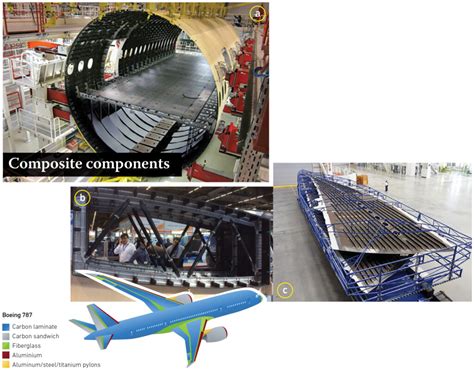
The Boeing 787 Dreamliner and Airbus A350 represent a major shift in commercial aircraft design. Both aircraft use approximately 50 percent composite materials by weight, primarily carbon-fiber-reinforced plastic.
These advanced materials provide several significant advantages. They reduce overall aircraft weight, improve fuel efficiency, resist corrosion, and contribute to lower operating costs. These benefits have helped make the Boeing 787 and Airbus A350 among the most successful long-haul aircraft of the modern era.
However, composite structures react to impacts differently than traditional aluminum airframes.
When an aluminum aircraft experiences a tail strike, damage is often visible. Engineers may observe dents, cracks, buckling, deformation, or torn skin panels. While repairs can still be extensive, the damage usually provides clear visual evidence regarding its severity.
Composite materials tell a different story.
A relatively small scrape or abrasion on the exterior surface can conceal extensive internal damage. Fibers may fracture beneath the skin. Bonded layers may separate. Microscopic cracking can develop within the laminate structure. These forms of damage frequently remain invisible during a standard visual inspection.
This phenomenon is often referred to as Barely Visible Impact Damage (BVID). It is one of the primary reasons composite aircraft require more extensive post-incident evaluation.
A surface that appears relatively intact may contain hidden structural degradation that affects the aircraft’s ability to carry loads safely.
As a result, engineers cannot rely solely on external appearances when assessing a Boeing 787 or Airbus A350 after a tail strike.
The Extensive Inspection Process Required for Boeing 787 and Airbus A350 Repairs
The inspection phase often consumes more time than many people realize.
Following a tail strike, maintenance personnel must determine whether damage extends beyond the visible contact area. This frequently involves a combination of advanced non-destructive testing methods designed to examine internal structures without dismantling large portions of the aircraft.
Common inspection techniques include ultrasonic testing, thermographic analysis, radiographic imaging, tap testing, and other specialized procedures capable of detecting internal flaws.
These inspections allow engineers to identify:
- Internal delamination between composite layers
- Fiber breakage beneath the outer surface
- Hidden cracks within structural laminates
- Bonding failures
- Damage extending into adjacent load-bearing structures
Because composite damage can spread beyond the obvious impact location, inspection zones often expand considerably beyond the initial strike area.
Maintenance teams must then compare their findings against manufacturer-approved repair manuals. If damage exceeds predefined limits, airlines frequently consult directly with Boeing or Airbus engineering specialists before proceeding.
This additional engineering review can significantly extend aircraft downtime.
Unlike a straightforward dent in a metal fuselage, composite damage frequently demands a far deeper understanding of how loads travel through the structure and how repairs will restore original strength.
Why Boeing 777 Tail Strike Repairs Are Often Faster
The Boeing 777 occupies an interesting middle ground between older and newer generations of widebody aircraft.
Although highly advanced, the aircraft relies primarily on a traditional aluminum fuselage design. This characteristic can simplify damage assessment following certain types of tail strikes.
When impact occurs, structural damage is usually easier to identify visually. Engineers can quickly locate affected areas, determine deformation patterns, and establish repair requirements.
Some Boeing 777 variants were also equipped with dedicated tail skid systems designed specifically to absorb runway contact and minimize structural damage. Even though modern operational software has become the primary prevention method, these protective systems historically helped reduce repair complexity following minor incidents.
In situations where damage remains confined to the tail skid or localized fuselage sections, repairs may involve replacing components, installing approved repair patches, or repairing specific structural elements.
Because aluminum damage tends to reveal itself more clearly, maintenance teams can often move through inspection and repair phases more efficiently.
This does not mean every Boeing 777 tail strike is minor.
If the impact reaches critical structures such as the pressure bulkhead, major fuselage frames, internal systems, or load-bearing components, repair timelines can still extend into weeks or months. Nevertheless, the inspection process is often more straightforward than on composite-heavy aircraft.
Composite Repairs Demand Precision at Every Stage
Once damage has been fully mapped, the actual repair process begins.
This stage is where Boeing 787 and Airbus A350 maintenance can become exceptionally time-consuming.
Metal repairs often involve well-established procedures such as removing damaged material, replacing panels, installing reinforcements, or applying approved structural repairs using mechanical fasteners.
Composite repairs require a far more controlled approach.
Technicians must carefully remove damaged layers while preserving surrounding structural integrity. New composite plies are then applied according to exact engineering specifications. Each layer must be positioned in a specific orientation to restore the structure’s original load-bearing characteristics.
Even small deviations can compromise repair quality.
Environmental conditions become critically important. Temperature, humidity, cleanliness, material handling procedures, and curing requirements must all remain within strict limits throughout the repair process.
Composite repair materials themselves introduce additional complications. Many require specialized storage conditions and have limited usable lifespans. Some repairs require large curing systems, specialized tooling, or dedicated facilities not available at every maintenance base.
Consequently, airlines sometimes transport damaged aircraft to specialized maintenance centers capable of performing advanced composite work.
After repairs are completed, additional inspections and verification procedures must confirm that structural integrity has been fully restored.
Only then can the aircraft return to commercial service.
Real-World Examples Highlight the Difference
Several recent incidents demonstrate how dramatically repair timelines can vary.
One notable example involved a LATAM Airlines Boeing 777-300ER that suffered a significant tail strike during takeoff from Milan Malpensa Airport in July 2024.
Investigators later determined that incorrect weight data contributed to the event, resulting in an unusually low rotation speed and prolonged runway contact.
Although the aircraft’s aluminum structure simplified certain aspects of damage assessment, the incident still required extensive inspection and repair work. The event highlighted that even traditional metal aircraft can experience substantial downtime after severe tail strikes.
The Boeing 777 did not simply receive a quick visual inspection before returning to service.
However, the repair process remained fundamentally different from what is often required on composite-intensive aircraft.
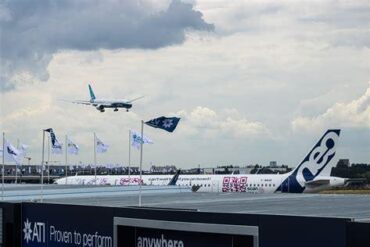
A contrasting example occurred in January 2024 when an Air France Airbus A350 experienced a tail strike during a go-around at Toronto Pearson International Airport.
The aircraft landed safely, but the aftermath illustrated the complexities associated with composite structures.
Initial repair work took place in Toronto before the aircraft was repositioned to Europe for further maintenance. Additional repairs and inspections followed at specialized facilities.
The aircraft ultimately returned to commercial service nearly ten months after the incident.
That timeline demonstrates how hidden structural damage, extensive engineering analysis, specialized repair procedures, and certification requirements can dramatically increase downtime for composite aircraft.
The Challenge Extends Beyond Tail Strikes
The maintenance challenges associated with composite structures are not limited to runway contact incidents.
Ground handling damage presents similar concerns.
Service vehicles, loading equipment, catering trucks, jet bridges, and maintenance tools occasionally make unintended contact with aircraft. On traditional metal aircraft, resulting damage is often visible and relatively easy to assess.
Composite structures introduce uncertainty.
A seemingly minor impact can create internal damage that remains undetected during routine inspections. If the incident goes unreported, the aircraft may continue operating before maintenance personnel discover the problem.
This possibility places greater emphasis on reporting procedures, inspection protocols, and safety culture throughout airline operations.
Ground handlers, maintenance technicians, and flight crews must treat even minor impacts seriously because visible damage may represent only a fraction of the actual structural effects.
The growing use of composites throughout the aviation industry has fundamentally changed how airlines approach maintenance and damage assessment.
Why Longer Repairs Do Not Mean Composite Aircraft Are Less Safe
It is important to understand that extended repair timelines do not indicate a weakness in composite aircraft design.
Both the Boeing 787 and Airbus A350 underwent rigorous certification programs involving extensive structural testing, fatigue analysis, impact evaluations, and damage tolerance demonstrations before entering commercial service.
Their composite structures deliver tremendous benefits throughout their operational lives.
The issue lies in detection and repair complexity rather than structural strength.
Because internal damage can be difficult to identify visually, engineers adopt a highly conservative approach following any significant impact. Extensive inspections ensure that no hidden flaws remain before the aircraft resumes passenger service.
This conservative methodology protects both airlines and passengers.
While the process may be expensive and time-consuming, it ensures that repaired aircraft meet the same safety standards required before the incident occurred.
The Real Reason a 787 or A350 Can Spend Weeks in the Hangar
The difference ultimately comes down to visibility and complexity.
A Boeing 777’s aluminum fuselage often allows engineers to identify damage faster, understand its extent more clearly, and apply established repair techniques with greater efficiency. Minor tail strike damage can sometimes be addressed relatively quickly when critical structures remain unaffected.
The Boeing 787 and Airbus A350 operate under a different reality.
Their carbon-fiber composite structures offer outstanding efficiency and performance benefits, but hidden damage can exist beneath seemingly minor surface marks. Detecting that damage requires advanced testing, detailed engineering analysis, specialized repair procedures, and extensive verification before the aircraft can safely return to service.
That is why a Boeing 777 may occasionally be back in the air within days after a limited tail strike, while a Boeing 787 Dreamliner or Airbus A350 can spend weeks—or even months—inside a hangar. The aircraft themselves are not more fragile. They simply demand a more sophisticated and meticulous approach to proving that every structural layer beneath the surface remains fully airworthy.