The dramatic return from space is one of the most dangerous phases of any mission. After surviving launch, enduring the harsh environment of orbit, and completing their objectives, astronauts and cosmonauts still face the challenge of reentering Earth’s atmosphere at tremendous speeds. Yet for more than six decades, the United States and Russia have followed remarkably different approaches to this final stage of spaceflight. American spacecraft have traditionally splashed down in oceans, while Russian capsules have routinely landed on solid ground across the vast steppes of Central Asia. The reason for this difference is not technology alone. It is a story shaped by geography, physics, history, and practicality.
The roots of these contrasting landing methods stretch back to the earliest days of the Space Race. During the 1950s and 1960s, both the United States and the Soviet Union raced to achieve milestones that would demonstrate technological superiority. While their spacecraft designs differed, the most influential factor affecting recovery operations was something neither nation could change: location.
The Earth rotates at approximately 1,025 miles per hour at the equator. This rotational speed provides a natural boost to rockets launched eastward, helping them reach orbital velocity more efficiently. As a result, space agencies prefer launch sites as close to the equator as possible. Every mile closer translates into greater efficiency and reduced fuel requirements.
The United States enjoys a major geographical advantage in this regard. Launch facilities such as Cape Canaveral in Florida are positioned relatively close to the equator and are bordered by vast expanses of open ocean. Rockets launched from the southeastern United States can safely travel over water, minimizing risks to populated areas below. This location naturally creates ideal conditions for ocean recoveries during spacecraft returns.
By contrast, the Soviet Union faced a much different reality. Most of its territory lies far north of the equator. Seeking the southernmost feasible launch location within Soviet territory, engineers established the famous Baikonur Cosmodrome in Kazakhstan. Although this location was strategically chosen, it remained significantly farther north than American launch sites.
Geography Shaped Spacecraft Recovery Strategies
The geographical differences between the two nations extended beyond launch locations. The United States is bordered by enormous bodies of water on both coasts. The Atlantic and Pacific Oceans offered natural recovery zones where spacecraft could safely descend without threatening population centers.
Russian planners had no such luxury. The Arctic Ocean was too dangerous due to extreme cold and extensive ice coverage. The Caspian Sea was relatively small and surrounded by multiple nations, making it unsuitable for routine spacecraft recovery operations.
Instead, Russia possessed something equally valuable: vast stretches of sparsely populated land. Huge regions of Kazakhstan and southern Russia consist of open plains with minimal human habitation. These remote areas provided ideal landing zones for descending spacecraft.
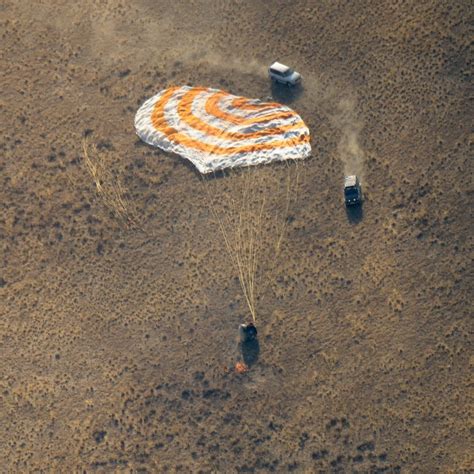
Rather than designing missions around ocean splashdowns, Soviet engineers optimized their spacecraft for land recoveries. This decision became a defining feature of Russian human spaceflight programs and remains in use today with the Soyuz spacecraft.
The First Space Missions Revealed Two Different Philosophies
The contrast between American and Soviet recovery methods became evident during humanity’s first ventures into space.
On April 12, 1961, cosmonaut Yuri Gagarin made history aboard Vostok 1 as the first human to journey into space. However, his return to Earth was far from comfortable. Because the Vostok capsule was not designed to absorb the impact of a direct landing with a person inside, Gagarin ejected from the spacecraft at an altitude of more than four miles and descended separately using a parachute.
The capsule itself landed independently under its own parachutes. Both Gagarin and the spacecraft touched down in a remote field hundreds of miles from Moscow. This unusual procedure demonstrated how Soviet engineers adapted to the realities of land-based recovery.
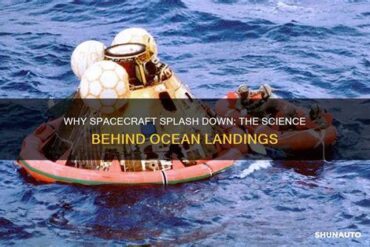
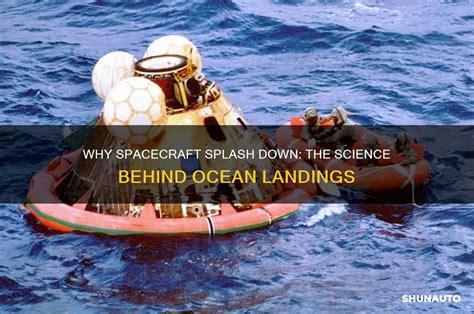
Just weeks later, American astronaut Alan Shepard completed his historic flight aboard the Freedom 7. Unlike Gagarin, Shepard remained safely seated inside his capsule throughout descent. Freedom 7 splashed into the Atlantic Ocean, where recovery teams quickly retrieved both astronaut and spacecraft.
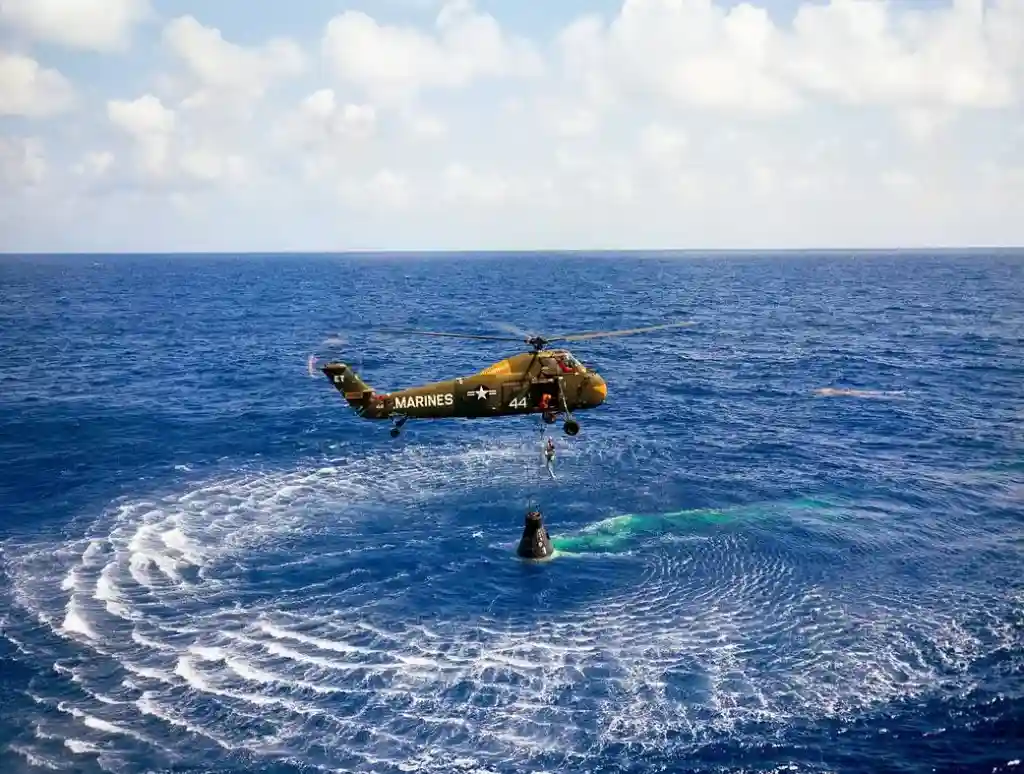
These two missions established traditions that would continue for decades.
Why Water Is Safer but Land Is More Practical
Ocean splashdowns provide a naturally forgiving landing surface. Water absorbs impact forces more effectively than solid ground, reducing stress on both astronauts and spacecraft. Early American capsules benefited greatly from this characteristic, especially before advances in precision landing technology.
However, ocean recoveries introduce their own challenges. Naval vessels, helicopters, and extensive support teams must be positioned in advance. Rough seas, storms, and unpredictable weather can complicate retrieval efforts.
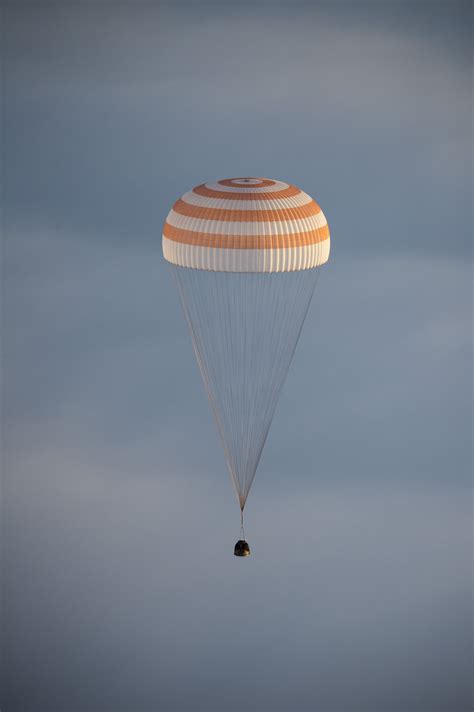
Land landings require spacecraft to withstand stronger impacts, but they simplify recovery logistics once touchdown occurs. Russian Soyuz capsules use parachutes combined with small braking rockets that fire moments before landing, reducing impact velocity and protecting crew members.
Modern Spaceflight Still Reflects Historical Geography
Despite enormous technological progress, geography continues to influence spacecraft recovery methods. Russia’s Soyuz capsules still descend onto the broad plains of Kazakhstan, where specialized recovery crews await their arrival. Meanwhile, American spacecraft frequently return to ocean recovery zones.
Even modern commercial spacecraft demonstrate the enduring importance of location. Companies such as SpaceX often recover crew capsules in the ocean, taking advantage of the extensive coastal access available to the United States.
Ultimately, the reason Russian spacecraft land on solid ground while NASA traditionally splashes down in the ocean is remarkably simple. Each nation built its space program around the geography it possessed. America’s coastlines encouraged water recoveries, while Russia’s immense expanses of open land made terrestrial landings the practical choice. More than sixty years after the dawn of human spaceflight, those geographical realities continue to shape how explorers return home from the final frontier.