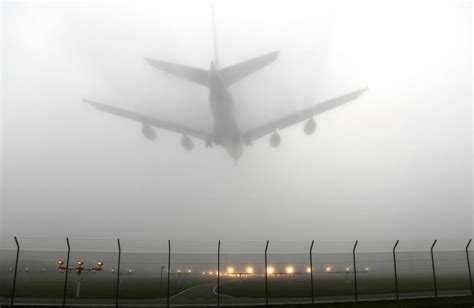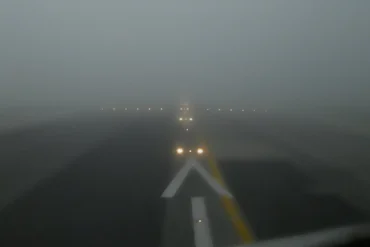
In the world of aviation, landing an aircraft in low-visibility conditions is a finely tuned process that relies on highly sophisticated systems, rigorous procedures, and extensive pilot training. The days when pilots depended solely on their eyes to gauge altitude are long past; today, technology provides multiple layers of support to ensure safe landings even when visibility drops to zero.
Understanding Instrument Landing Systems (ILS)
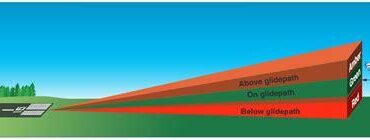
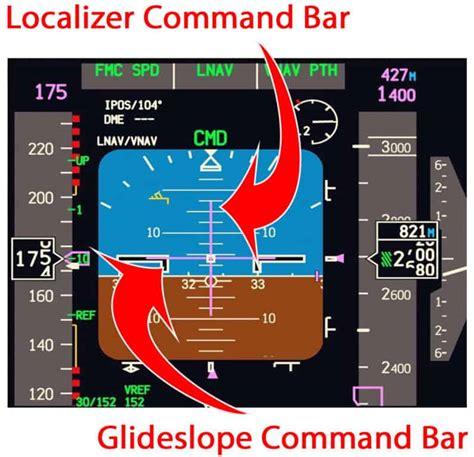
Instrument Landing Systems (ILS) are the backbone of modern low-visibility landings. These systems use radio signals transmitted from ground-based equipment to guide the aircraft along the correct glide path and approach angle. The two main components of the ILS are the localizer, which provides horizontal guidance, and the glideslope, which offers vertical guidance.
When an aircraft intercepts the localizer, it aligns with the runway’s centerline. Simultaneously, following the glideslope ensures a constant descent path towards the runway threshold. On final approach, pilots meticulously monitor their instruments to track their position relative to these guidance beams, allowing them to descend without ever seeing the ground until moments before landing.
Critical Altitude Measurements: Altimeters and Radar Altimeters
Pilots have two primary tools to determine altitude: the barometric altimeter and the radar altimeter. The barometric altimeter measures altitude above sea level based on atmospheric pressure, while the radar altimeter measures the precise distance between the aircraft and the ground directly beneath it.
The radar altimeter becomes crucial during landing, especially in the final 2,500 feet. It provides a real-time readout of the actual height above ground level (AGL), ensuring pilots can make precise altitude judgments during their descent. When flying an ILS approach, the barometric altimeter guides pilots to the Decision Height (DH), while the radar altimeter assists in the final few hundred feet where precision becomes critical.
Decision Height and Missed Approaches
Every precision approach procedure includes a Decision Height (DH) or Decision Altitude (DA)—an altitude at which the pilot must decide whether to land or initiate a missed approach. If the runway environment (lights, markings, or features) is not visible upon reaching DH, the pilot must abort the landing and climb away according to a pre-published missed approach procedure.
Typical DH values are around 200 feet AGL for standard ILS approaches, but in the case of more advanced procedures such as Category II or Category III approaches, the DH can be significantly lower, or even non-existent, as in CAT IIIC approaches where pilots can land “blind” relying solely on instruments and automated systems.
Minimum Descent Altitude (MDA) in Non-Precision Approaches
When a precision approach is unavailable, pilots execute a non-precision approach based on navigational aids like VORs or GPS. These approaches include a Minimum Descent Altitude (MDA), below which descent is prohibited unless the runway is clearly visible.
During non-precision approaches, pilots manage descent rates meticulously and often use timed legs to gauge their progress toward the runway. If, at MDA, they cannot visually identify the runway environment, they must initiate a missed approach, just as they would in a precision approach.
Failures to adhere to MDA regulations have historically led to tragic outcomes, such as the Southern Airways Flight 932 accident in 1970, where the aircraft descended below MDA without visual contact, striking terrain short of the runway.

Autoland Systems and Category III Approaches
Modern airliners and certain business jets are equipped with Autoland systems capable of flying the aircraft from final approach to touchdown without human input. Autoland is crucial for Category III approaches, where visibility is minimal or non-existent.
Category III is divided into subcategories:
- CAT IIIA: Decision height below 100 feet but not less than 50 feet, with runway visual range (RVR) not less than 200 meters.
- CAT IIIB: Decision height below 50 feet or no DH, RVR not less than 75 meters.
- CAT IIIC: No DH and no RVR limitations; allows landings in zero visibility conditions.
Pilots and aircraft must be specially certified to conduct Category III landings, and both the airport and its supporting systems must meet strict standards.
Visual Aids: PAPI, ALS, and Runway Lights
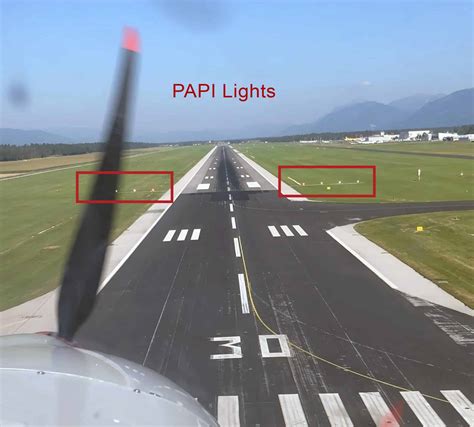
Even when instruments guide most of the approach, visual aids become crucial near the runway threshold. Systems like Precision Approach Path Indicator (PAPI) lights and the Approach Lighting System (ALS) help pilots confirm their alignment and glide slope visually once conditions permit.
PAPI lights, typically located beside the runway, provide immediate visual feedback on whether the aircraft is too high, too low, or correctly aligned with the optimal glide path. The ALS extends from the runway into the approach area, offering a bright, unmistakable visual reference that can penetrate through fog and low clouds to guide pilots toward the landing point.
Cockpit Resource Management and Cross-Checking Instruments
Landing in low visibility demands exceptional cockpit resource management (CRM). Pilots must cross-check multiple instruments—primary flight displays, navigation aids, altitude indicators, and communication from air traffic control (ATC)—to ensure consistency and accuracy. Mutual monitoring between the captain and first officer, known as the “challenge and response” technique, helps catch errors before they escalate.
Redundancy is key: autopilot systems, dual independent navigational inputs, and multiple altimeters ensure that no single system failure can jeopardize the landing.
Training and Simulation: Preparation for the Worst Conditions
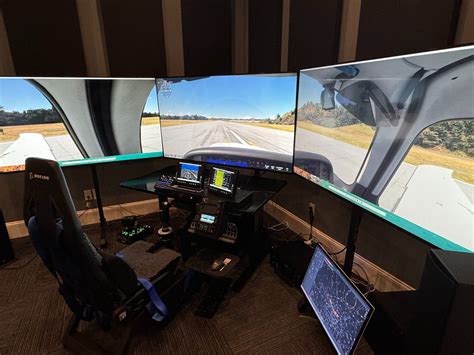
Pilots undergo rigorous training to handle low-visibility landings, including countless hours in flight simulators replicating zero-visibility scenarios. These simulators allow pilots to practice following instrument approaches precisely, reacting to failures, and making split-second decisions when visual cues are absent.
Annual proficiency checks ensure that pilots remain current with instrument approach procedures, including scenarios that require full missed approaches or emergency landings under instrument meteorological conditions (IMC).
Emerging Technologies: Head-Up Displays and Enhanced Vision Systems
The future of low-visibility landings lies in advanced technologies such as Head-Up Displays (HUDs) and Enhanced Vision Systems (EVS). HUDs project critical flight information onto a transparent screen directly in the pilot’s line of sight, allowing for continuous instrument monitoring without looking down.
EVS uses infrared cameras and other sensors to “see” through fog, rain, and darkness, projecting a clear image of the runway environment even when the human eye cannot discern it. Together, HUD and EVS technologies are pushing the boundaries of safe landings in adverse conditions even further.
Conclusion: Precision, Technology, and Vigilance
In sum, pilots landing without outside visual reference rely on a symphony of technological aids, meticulously crafted procedures, and unwavering discipline. From traditional ILS signals and radar altimeters to cutting-edge EVS systems and Autoland capabilities, each element contributes to a matrix of safety.
While human judgment remains at the heart of every landing, the seamless integration of machine and pilot ensures that even when the world outside is invisible, every arrival can be a safe one.