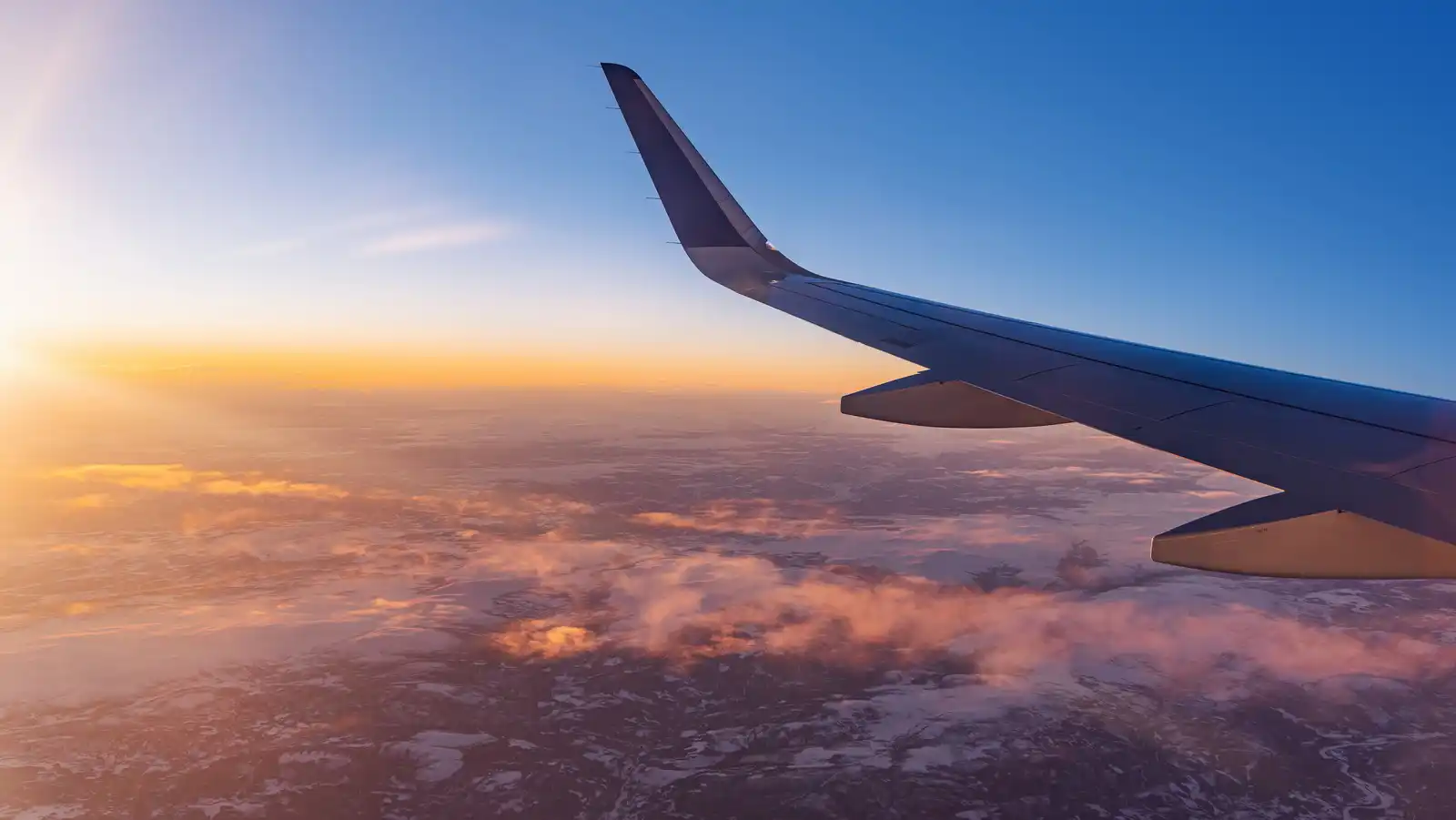
When passengers glance out the window of a jet cruising at 35,000 feet, it feels natural to assume the aircraft is traveling through territory that belongs to a specific country. The landscape below may be invisible beneath a blanket of clouds, but the expectation remains that every part of the world is neatly divided by national borders extending upward into the sky. Surprisingly, international law tells a more complicated story. While countries unquestionably control the airspace above their land and territorial waters, there are vast regions of the atmosphere where no nation possesses ownership at all. Even more remarkably, the world has never formally agreed on where national airspace ends and outer space begins.
Modern aviation functions with extraordinary precision despite these unresolved legal questions. Every day, thousands of aircraft cross continents and oceans, guided by a network of regulations, procedures, and international cooperation. Yet beneath this smooth operation lies a legal framework containing ambiguities that have existed for decades. The sky through which airliners travel is not as clearly defined as maps on the ground might suggest.
The legal reality becomes particularly fascinating during long-haul flights. A passenger traveling between North America and Europe, Asia and Australia, or South America and Africa may spend hours crossing airspace that technically belongs to no state. At the same time, the upper boundary of national sovereignty remains one of the most debated questions in aerospace law.
Understanding how this system works reveals an often-overlooked truth: aviation succeeds not because every legal issue has been resolved, but because practical cooperation has proven more important than perfect legal certainty.
The Foundation of Modern Airspace Law
The legal structure governing global aviation traces its origins to the 1944 Chicago Convention, one of the most influential agreements in transportation history. Signed during the final stages of World War II, the treaty established the framework that continues to govern international civil aviation today and led to the creation of the International Civil Aviation Organization (ICAO).
At the heart of the convention is a principle that remains universally accepted: every state possesses complete and exclusive sovereignty over the airspace above its territory. This concept may seem obvious now, but during the early years of aviation, it represented a critical legal breakthrough.
Without recognized sovereignty, nations would have limited ability to regulate aircraft entering their territory. Border control, customs enforcement, national defense, and air traffic management would become nearly impossible. The convention therefore ensured that no aircraft could freely enter another nation’s airspace without authorization.
The agreement solved one of aviation’s earliest challenges, yet it left another question unanswered. Although the treaty confirmed that states control the air above their territory, it never specified how high that control extends. The omission was not accidental. At the time, aviation technology had not advanced far enough to make the issue urgent. Commercial aircraft operated at relatively low altitudes, and spaceflight remained a distant dream.
As a result, the convention established horizontal boundaries while remaining silent about vertical ones. Countries knew where their airspace began geographically, but no one could say with certainty where it ended overhead.
This unresolved issue remains embedded within international law today. More than eight decades later, there is still no universally accepted legal definition marking the exact point where sovereign airspace transitions into outer space.
Why Defining the Edge of Space Is So Difficult
The challenge of defining a boundary between airspace and outer space may initially appear straightforward. After all, maps define borders on Earth with remarkable precision. Why not do the same vertically?
The problem arises because Earth’s atmosphere does not end abruptly. Instead, it gradually becomes thinner as altitude increases. There is no sharp physical line separating the atmosphere from space.
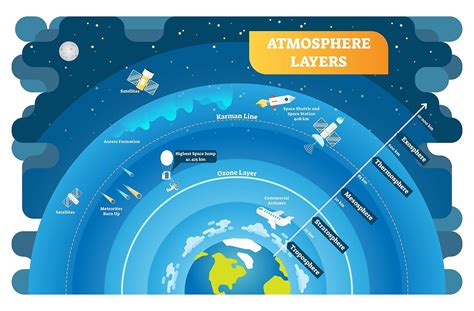
Scientists, engineers, governments, and international organizations have proposed various solutions over the years. The most famous is the Kármán Line, located approximately 100 kilometers, or 62 miles, above sea level.
Named after aerospace pioneer Theodore von Kármán, the line represents an altitude where conventional aerodynamic flight becomes increasingly impractical. Above this height, an aircraft would need to travel so fast to generate lift that orbital mechanics become more relevant than traditional aviation principles.
Because of its scientific significance, the Kármán Line has become a widely recognized benchmark within the aerospace community. Many organizations treat it as the symbolic edge of space.
However, symbolism and law are not the same thing.
Despite its widespread recognition, the Kármán Line has never been formally adopted through a binding international treaty. It carries scientific credibility but lacks universal legal authority. As a result, it remains a practical guideline rather than an enforceable legal boundary.
The Outer Space Treaty Left the Question Open
The legal uncertainty became even more apparent with the adoption of the 1967 Outer Space Treaty, the foundational agreement governing activities beyond Earth.
The treaty established one of the most important principles in modern space law: outer space cannot be claimed by national sovereignty. No nation may declare ownership over the Moon, planets, or the vast expanse beyond Earth’s atmosphere.
This principle transformed space into a global commons available for exploration and use by all nations.
Yet while the treaty prohibited territorial claims in space, it never defined where space actually begins.
Negotiators deliberately avoided drawing a precise line. Any chosen boundary risked triggering disputes involving military operations, scientific research, satellite activities, and future commercial ventures. Governments preferred ambiguity over conflict.
The result was a legal compromise that solved one problem while preserving another.
For decades, discussions within international forums have attempted to establish a universally accepted boundary. Despite extensive debate, no consensus has emerged. Different countries and organizations continue to apply different standards depending on their operational requirements.
The United States has historically recognized an altitude of approximately 50 miles, or 80 kilometers, for awarding astronaut status. This benchmark differs significantly from the 100-kilometer Kármán Line recognized elsewhere.
Consequently, a legal gray zone exists between these two altitudes. Depending on which standard is applied, an individual traveling through this region might be considered either an astronaut in space or a pilot operating within airspace.
The ambiguity has remained manageable because few vehicles operate regularly within these heights. However, emerging technologies are beginning to change that reality.
The Rise of Suborbital Flight Could Force New Legal Answers
For most of aviation history, the lack of a clearly defined boundary between airspace and space had little practical significance. Commercial airliners fly far below any proposed space threshold, typically cruising between 30,000 and 43,000 feet.
Today, however, technological advances are creating vehicles that challenge traditional classifications.
Commercial space tourism flights, reusable launch systems, hypersonic transportation concepts, and high-altitude aerospace vehicles increasingly operate in environments that blur the distinction between aviation and astronautics.
A suborbital spacecraft may depart from a conventional runway, climb through controlled airspace, briefly enter regions commonly regarded as space, and then return to Earth. Determining which regulations apply during each phase of flight becomes increasingly complex when no universally accepted boundary exists.
Questions of liability, licensing, air traffic management, insurance, and national jurisdiction become far more difficult when legal definitions remain unsettled.
What was once a largely theoretical debate is gradually becoming an operational necessity. As aerospace technology continues advancing, governments may eventually be compelled to establish legal boundaries that previous generations successfully postponed.
The Vast Airspace Above the Oceans Belongs to No Country
While the boundary between airspace and space remains a future challenge, another legal reality affects commercial aviation every day.
Large portions of the atmosphere above Earth’s oceans belong to no state whatsoever.
International law grants countries sovereignty over the airspace above their land territory and territorial waters. Under the United Nations Convention on the Law of the Sea, territorial waters generally extend up to 12 nautical miles from a nation’s coastline.
Within that zone, the airspace overhead is treated as sovereign territory.
Beyond that limit lies the high seas.
The high seas themselves belong to no nation. Equally important, the airspace above them also lacks national ownership.
This fact often surprises travelers because aviation appears highly controlled. Aircraft follow designated routes, communicate with controllers, adhere to international regulations, and remain under constant operational oversight. Such organization naturally creates the impression that a government must own the airspace being used.
Legally, ownership and management are entirely different concepts.
An aircraft crossing the middle of the Atlantic Ocean, Pacific Ocean, or Indian Ocean may be operating in airspace that belongs to no country at all. It is neither flying through sovereign territory nor traveling in outer space. Instead, it occupies international airspace governed through cooperation rather than ownership.
For passengers, the experience remains unchanged. For international law, however, the distinction is profound.
Crossing the Atlantic Through Airspace With No Sovereign Owner
A transatlantic flight offers one of the clearest examples of this legal reality.
Consider an aircraft departing from New York and heading toward London. Shortly after departure, it operates within United States airspace. As it moves offshore, it eventually leaves sovereign territory and enters international airspace above the Atlantic Ocean.
For several hours, the aircraft may travel through regions where no nation possesses territorial rights.
Later, as it approaches Europe, it enters sovereign airspace associated with Ireland, the United Kingdom, or other European states before reaching its destination.
Throughout the journey, passengers remain unaware of these transitions because operational procedures ensure continuity. The aircraft follows approved routes, maintains communication, and receives navigational guidance regardless of whether it is flying above sovereign territory or international airspace.
The smoothness of the experience demonstrates the effectiveness of international aviation cooperation. Legal ownership may change—or disappear entirely—but operational safety remains constant.
How ICAO Organizes Airspace Nobody Owns
The existence of ownerless airspace does not mean that it lacks structure. International aviation relies on a sophisticated administrative system designed to ensure safe and efficient operations.
ICAO divides the world into Flight Information Regions, commonly known as FIRs. These regions assign responsibility for providing air traffic services, search and rescue coordination, weather information, communications support, and flight assistance.
The distinction between administration and sovereignty is crucial.
A country managing a Flight Information Region does not gain ownership of that airspace. Instead, it performs specific operational functions on behalf of the international aviation community.
The North Atlantic illustrates this principle particularly well. Various portions of oceanic airspace are administered by authorities in Canada, Iceland, Ireland, Portugal, and the United Kingdom. These countries coordinate traffic flows and provide essential services to aircraft crossing the ocean.
Yet none of them acquires territorial rights over the airspace they manage.
This arrangement resembles traffic management on an international highway rather than ownership of the land itself. Controllers provide guidance and maintain safety, but administrative responsibility does not transform into sovereignty.
As a result, aircraft can move safely through vast regions of international airspace while no country claims the sky as its territory.
Why Aviation Works Despite Unresolved Legal Questions
Perhaps the most remarkable aspect of this system is how effectively it functions.
Every day, thousands of aircraft traverse oceans, continents, and remote regions with extraordinary safety. The success of modern aviation demonstrates that practical procedures can often compensate for legal ambiguity.
Oceanic flights provide an excellent example. Many regions lack continuous radar coverage due to their immense distances. Instead of relying solely on surveillance technology, aviation authorities use procedural systems based on satellite navigation, position reporting, data communications, and carefully designed separation standards.
Pilots follow established routes with exceptional precision. Controllers coordinate traffic using agreed procedures refined over decades of experience. Airlines, regulators, and governments cooperate through standardized frameworks that prioritize operational reliability.
The result is a transportation network capable of handling millions of flights annually despite unresolved questions concerning ownership, sovereignty, and the edge of space.
Rather than waiting for perfect legal clarity, the aviation industry developed practical solutions that allowed progress to continue. In many ways, operational reality advanced faster than international law.
The Future of Airspace Law in an Age of Space Tourism
The legal uncertainties surrounding airspace ownership have remained manageable because conventional aircraft operate far below disputed boundaries and because international cooperation successfully governs the high seas.
That balance may not last forever.
The emergence of commercial spaceflight, hypersonic passenger transportation, reusable launch vehicles, and persistent high-altitude platforms is beginning to challenge assumptions that have shaped aviation law for generations.
Future vehicles may routinely operate in regions where current legal definitions become inadequate. Questions regarding jurisdiction, sovereignty, liability, security, and navigation will grow increasingly important as aerospace technology expands beyond traditional categories.
Eventually, governments may need to determine precisely where national airspace ends and where outer space begins. They may also need to create entirely new regulatory frameworks for vehicles operating between those environments.
Until then, aviation continues to rely on a system built upon cooperation, convention, and practicality.
Conclusion
At 35,000 feet, passengers often imagine themselves traveling through a world of clearly defined borders and jurisdictions. The reality is far more intriguing. International law grants nations complete sovereignty over the airspace above their territory, yet no treaty has ever established the exact altitude where that sovereignty ends. Simultaneously, countless long-haul flights spend hours crossing international airspace above the high seas, where no country possesses ownership at all.
These legal gaps might seem like serious weaknesses, but they reveal something remarkable about modern aviation. The global air transport system succeeds not because every question has been answered, but because international cooperation has consistently provided practical solutions where legal certainty remains elusive.
The next time an airliner cruises smoothly across an ocean at 35,000 feet, it may be traveling through a region of the sky that belongs to no nation on Earth. Yet thanks to decades of collaboration between governments, regulators, and aviation professionals, that ownerless sky remains one of the safest and most carefully managed environments in the world.