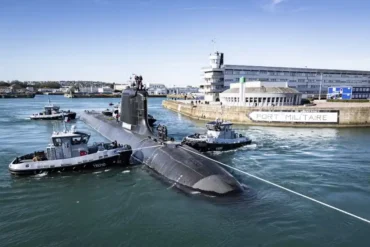
Nuclear submarines represent one of the most advanced engineering achievements ever placed beneath the ocean’s surface. These stealth vessels can remain submerged for months, travel across entire oceans without surfacing, and operate silently in some of the most hostile environments on Earth. At the heart of that capability lies a nuclear reactor that powers the submarine for decades. Yet when the time eventually arrives to replace that fuel, the process is anything but simple. Refueling a nuclear submarine is not a quick technical service—it is a multi-year industrial operation involving nuclear safety protocols, structural surgery on the vessel, and a full modernization of its internal systems.
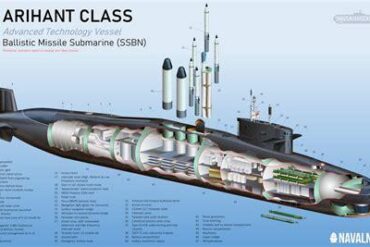
Understanding why this task takes years requires examining how nuclear propulsion works and how submarines are built around their reactors. Unlike conventional ships that simply pump fuel into storage tanks, nuclear submarines generate energy through controlled nuclear fission. The reactor core contains enriched uranium fuel assemblies that produce heat, which then drives steam turbines connected to propulsion systems and electrical generators. This design allows submarines to operate for decades without refueling, but once the core is depleted, replacing it involves dismantling part of the vessel itself.
The scale of the operation reflects both the complexity of nuclear technology and the uncompromising safety standards required when handling radioactive materials. Even for experienced naval shipyards, replacing a reactor core demands years of preparation, engineering precision, and rigorous oversight.
The Engineered Refueling Overhaul: A Multi-Year Process
When a nuclear submarine reaches the midpoint of its operational life, it undergoes what the U.S. Navy calls an Engineered Refueling Overhaul (ERO). This process usually takes two to three years, though unexpected delays can extend the schedule even further.
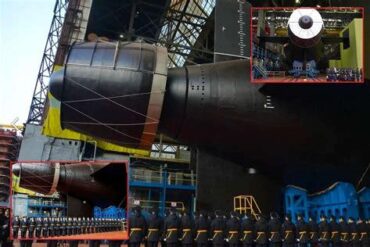
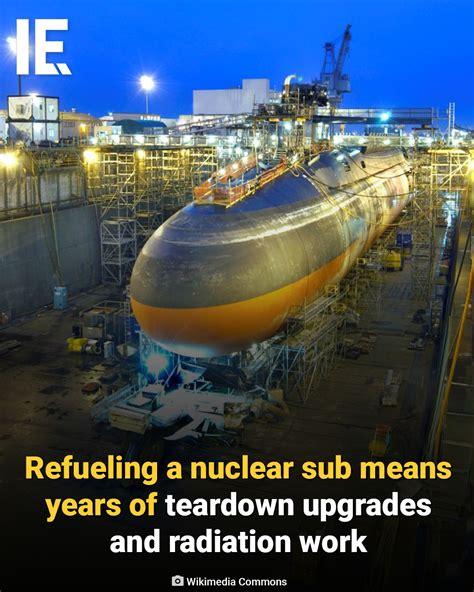
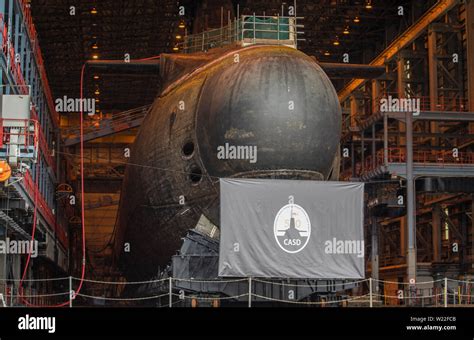
During an ERO, the submarine is removed from active service and placed in a specialized dry dock facility designed to handle nuclear materials. These facilities include extensive radiation monitoring systems, ventilation controls, and containment infrastructure to ensure the safety of workers and the surrounding environment.
The overhaul begins with the controlled shutdown and cooling of the reactor. Even after the reactor stops operating, the nuclear fuel continues to generate heat and radiation. Engineers must therefore carefully manage cooling systems and shielding before any physical access to the reactor compartment can begin.
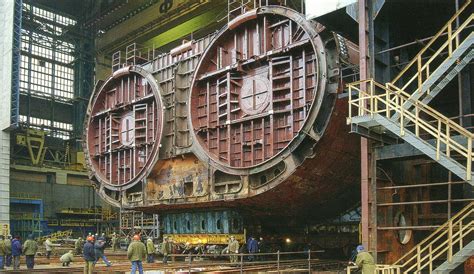
What makes this stage particularly challenging is that the reactor is not designed for easy access. Submarines are built with compact internal layouts and thick pressure hulls capable of withstanding extreme ocean depths. To reach the reactor core, technicians often cut through sections of the submarine’s hull using specialized tools, essentially performing structural surgery on the vessel.
Every step must be carried out slowly and methodically. Radiation containment systems operate continuously, and workers follow strict exposure limits while removing the reactor components.
Removing and Replacing the Reactor Core
The most delicate phase of the overhaul involves extracting the spent nuclear fuel core from the reactor vessel. The core contains highly radioactive fuel assemblies that have been operating for decades. These components must be removed with extreme care to avoid contamination or damage.
The removal process typically involves specialized cranes, remote handling tools, and heavily shielded transport containers. Once extracted, the old core is placed inside secure casks and transported to long-term nuclear storage facilities where it will remain under strict monitoring.
Installing the new reactor core requires the same level of precision. Engineers carefully position the replacement fuel assemblies inside the reactor vessel, reconnect coolant systems, and reassemble the reactor structure piece by piece. After installation, technicians reseal the reactor compartment and reconstruct the sections of the hull that were cut open during the refueling operation.
Structural integrity is absolutely critical. Submarines operate under immense water pressure when diving to deep ocean depths. Even microscopic weaknesses in the hull could threaten the vessel and its crew. Because of this, the repaired hull sections undergo extensive inspections, ultrasonic testing, and pressure validation.
Modernization During the Overhaul
Refueling is only one part of the broader overhaul. Since a submarine typically undergoes an ERO after two decades of service, naval engineers use the opportunity to modernize the vessel for the next phase of its operational life.
Technicians inspect nearly every critical component inside the submarine. Mechanical systems, electronics, sonar equipment, and combat systems are evaluated and upgraded where necessary. Many older parts are replaced entirely with modern equivalents that reflect the latest naval technologies.
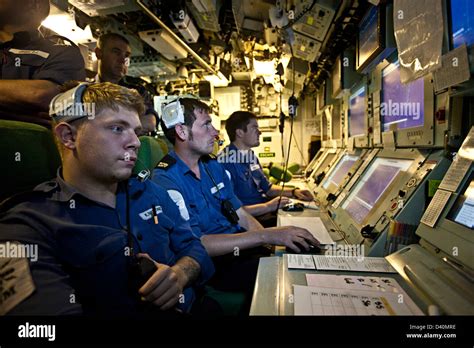
Weapons systems may receive updated launch control hardware, navigation systems can be replaced with more advanced digital equipment, and internal communication networks are often modernized. These upgrades ensure that the submarine remains technologically competitive for another 20 years of service.
Once the internal upgrades are complete, the vessel undergoes extensive testing procedures. Shipyard engineers run diagnostic checks on propulsion systems, electrical networks, and onboard weapons platforms. The reactor itself must pass numerous safety inspections before it can be restarted.
The final stage involves sea trials, where the submarine returns to open water under controlled conditions. Engineers and naval crews monitor the vessel closely as it performs propulsion tests, deep-water maneuvers, and operational checks. Only after passing these trials does the submarine officially return to active duty.
The Enormous Cost of Nuclear Refueling
Replacing a nuclear reactor core is not only time-consuming but also extremely expensive. According to defense industry estimates, the cost of refueling a nuclear submarine ranges from $600 million to $800 million depending on the vessel class and the scope of modernization work performed.
Although this figure is substantial, it remains significantly lower than the price of constructing a new submarine. Modern nuclear submarines are among the most expensive machines ever built. A Virginia-class attack submarine costs roughly $5 billion, while the next-generation Columbia-class ballistic missile submarine may reach $15 billion per vessel.
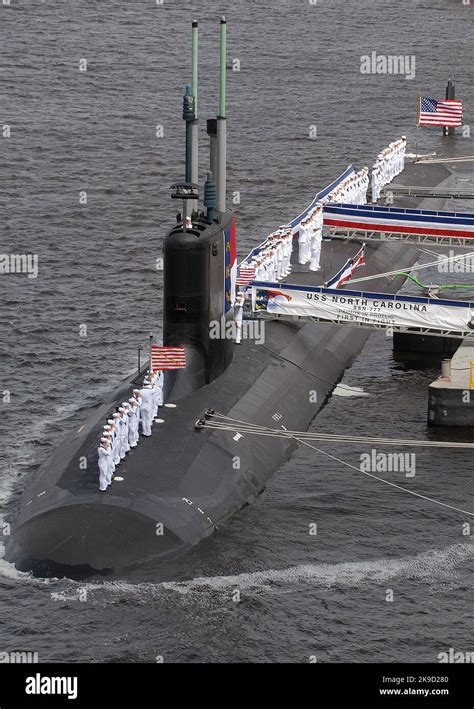
Because of these massive costs, naval engineers have increasingly focused on developing life-of-the-ship reactors. These advanced reactor cores are designed to last for the entire operational lifespan of the submarine, eliminating the need for mid-life refueling. The U.S. Navy’s Virginia-class and Columbia-class submarines already incorporate this technology, allowing them to operate for 33 to 43 years without replacing their nuclear fuel.
Older submarine classes, including the Los Angeles-class and Ohio-class, still rely on the traditional refueling model. As these vessels approach the midpoint of their service lives, shipyards must perform the complex ERO process to extend their operational capability.
A Deliberately Slow and Precise Operation
The years required to refuel a nuclear submarine are not the result of inefficiency. The process is intentionally slow because the stakes are extraordinarily high. Engineers must manage radioactive materials, preserve the structural integrity of a deep-diving warship, and ensure that every system functions flawlessly before the submarine returns to sea.
Each step—from shutting down the reactor to cutting open the hull and installing a new core—demands painstaking attention to detail. Thousands of workers, engineers, inspectors, and nuclear safety specialists collaborate to ensure the operation proceeds without incident.
When the overhaul is finally complete, the result is essentially a rejuvenated submarine capable of serving another two decades beneath the ocean’s surface. For naval forces that depend on stealth, endurance, and reliability, the years spent refueling are an investment in maintaining one of the most formidable technological assets ever built.