In the world of modern transportation, airbags have become nearly synonymous with safety. Introduced in automobiles in the 1970s, they’ve saved tens of thousands of lives by mitigating the impact of collisions. And yet, despite facing similar crash forces, commercial airplanes rarely feature airbags—at least not in the way car passengers are accustomed to. This gap raises a compelling question: why don’t airplanes have airbags for every passenger? The answer lies in the unique nature of aviation dynamics, regulatory requirements, historical precedence, and cost-efficiency decisions by airlines.
Airbags in Cars vs. Airplanes: Not All Forces Are Equal
In an automobile crash, the most common threat is a frontal collision—a high-speed, high-force impact directly affecting passengers in a forward motion. Airbags were invented specifically to combat these forces. In contrast, airplane crashes are less predictable in terms of impact direction. Accidents may involve nose-dives, tail-first descents, belly landings, or even in-flight structural failures, making the effectiveness of a traditional airbag more limited in application.
Airplanes are also subject to vastly different kinetic energies and deceleration profiles. While a car collision may stop a vehicle in a matter of feet, aircraft crashes—especially survivable ones—often involve much higher speeds and more dispersed impact zones. An airbag designed for a car environment might offer minimal benefit or even cause injury if deployed inappropriately in an aircraft scenario.
The Role of Seatbelts: The Aviation Standard for Decades
Seatbelts have been standard in aircraft since long before they were legally required in automobiles. The aviation seatbelt is engineered to restrain the body primarily against vertical and forward forces. Due to cabin layout and motion dynamics, lap belts provide sufficient protection in most turbulence or crash landing scenarios, especially when passengers adopt the brace position.
The key difference is that aircraft safety design assumes a controlled crash, one that passengers can survive if properly restrained. Hence, most crash survivability studies emphasize fuselage integrity, flame retardancy, and seat anchorage over secondary systems like airbags. Airbags, in this environment, become supplementary rather than essential.
When Airbags Do Exist: A Niche but Growing Application
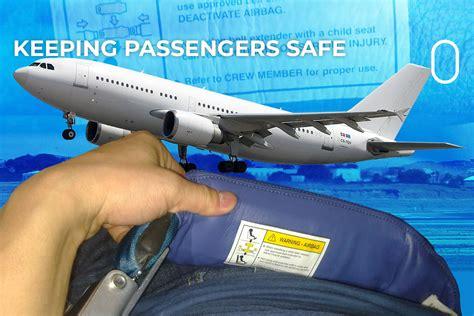
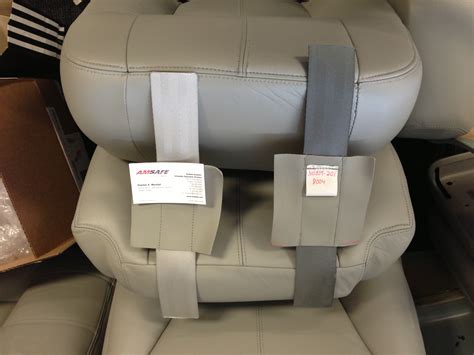
Contrary to popular belief, some airplanes do have airbags—but not the dashboard-mounted kind seen in cars. Instead, select airplanes feature seatbelt airbags, pioneered by AmSafe Inc. These specialized devices are designed to inflate from the seatbelt itself, deploying in milliseconds upon impact.
The U.S. Federal Aviation Administration (FAA) began requiring these seatbelt airbags in specific seats in 2010. The rule applies only to seats with greater space in front of them, such as:
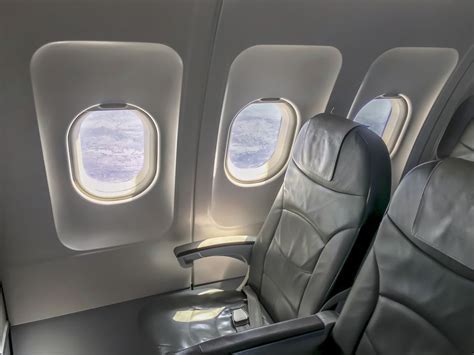
- Bulkhead seats (located in front rows with no forward seat to buffer impact)
- Premium/business class lie-flat seats
- Exit row seats
- Crew jump seats
These seats lack the protective cushion of a forward seat, leaving passengers vulnerable to whiplash or head trauma. Thus, airbag-equipped seatbelts fill this gap, inflating to protect the upper torso and reduce forward motion injuries.
Why All Seats Don’t Have Airbags: Economics and Fleet Age
If airbags add protection, why not install them on all seats? The answer lies in cost, space constraints, and airline inertia. Seatbelt airbags are more expensive to install and maintain than traditional belts. For airlines operating on razor-thin profit margins, these costs multiply across hundreds of seats per aircraft and dozens of aircraft per fleet.
Moreover, most airline fleets are not new enough to feature factory-installed seatbelt airbags. The average age of a U.S. commercial aircraft is between 11 and 15 years. These older models were built long before airbag requirements were introduced, and retrofit installation is rarely prioritized unless legally mandated.
Crash Statistics: Survival Is Rarely Influenced by Airbags Alone
Another factor is the nature of aircraft crashes. Unlike car collisions—which happen frequently and often at survivable speeds—plane crashes are extremely rare and usually catastrophic when they occur. According to the National Transportation Safety Board (NTSB), the overall survival rate in U.S. commercial airline accidents is over 95%, largely because of effective crash avoidance and rigorous pilot training.
When accidents are survivable, it’s usually because the forces involved fall within the structural tolerance of the aircraft, and passengers are restrained by their seatbelts. In these cases, existing safety systems work as intended, reducing the relative need for airbags.
Aviation Regulations: Safety by Design, Not Just Gadgets
Aircraft are certified under stringent FAA and EASA safety standards, including requirements for seat strength, fire resistance, evacuation timelines, and structural load-bearing. Aircraft seats must withstand crash forces up to 16 times the force of gravity (16g). All cabin components are tested for deformation, detachment, and injury risk.
The presence of airbags is seen as an enhancement, not a requirement, and only in particular risk environments. In contrast, car design relies on passive restraint systems like airbags to meet crashworthiness standards. Thus, safety in aviation is baked into every structural decision, whereas automotive safety often depends on supplementary systems to make up for vulnerabilities.
Challenges of Airbag Deployment in Aircraft Environments
Adding airbags to every seat is not just a cost question—it’s a logistical and engineering dilemma. Aircraft cabins are narrow, dense, and highly optimized. Space between seats is limited, and improper deployment of an airbag could:
- Injure a passenger sitting in an awkward or unusual position
- Obstruct aisle access during emergency evacuation
- Complicate cabin crew operations or rescue efforts
- Interfere with passenger electronics or tray tables
Airlines also face the challenge of retraining cabin crews and re-certifying equipment when adding new systems. For these reasons, unless mandated by regulators or required for a specific aircraft configuration, widespread airbag installation has not gained momentum.
The Future: Will Airbags Become Standard on All Flights?
As aviation technology continues to evolve, the possibility of universal airbag deployment on airplanes remains open, especially in premium cabins and next-generation aircraft. The rise of lightweight, electronically triggered seatbelt airbags has reduced size and weight barriers. If airline manufacturers begin integrating these systems directly into new production models, fleet modernization could accelerate adoption.
But for now, seatbelt airbags remain a premium safety feature in selective zones rather than a universal norm. With seatbelt compliance high, crash survivability already statistically strong, and aviation accidents extraordinarily rare, airlines face little pressure to outfit all seats with airbags.
Conclusion: A Calculated Tradeoff in Aviation Safety Design
The absence of airbags on airplanes is not an oversight—it’s a deliberate safety engineering decision based on impact analysis, cost-effectiveness, regulatory compliance, and operational logistics. While airbag systems have become indispensable in automobiles, their aviation counterparts serve a very specific and limited role.
Ultimately, seatbelts, aircraft design, and crew training remain the cornerstones of airline safety. In a future where every passenger might have personalized restraint systems, we may see broader airbag use. But for now, airbags in aviation are a supplemental measure—not a necessity.