Fighter jets have long been the spearhead of modern air forces—sleek, fast, and lethally efficient. Equipped with powerful engines, sophisticated avionics, and advanced weapon systems, they dominate the skies through overwhelming forward-focused firepower. So it might seem logical to ask: Why don’t these fearsome machines have missiles that can fire backward? After all, in a three-dimensional dogfight, threats can come from any angle, including directly behind. Yet, despite the apparent tactical appeal, rear-facing missiles remain absent from even the most cutting-edge fighter jets. The reasons are grounded in the laws of physics, engineering challenges, and the evolution of air combat strategy.
Physics at Supersonic Speeds: Fighting Against Momentum
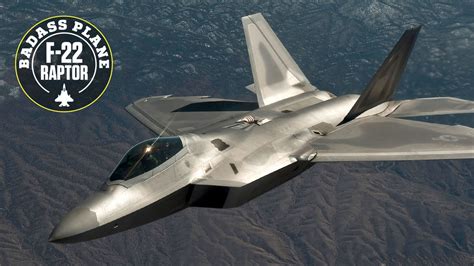
At the heart of the issue is Newtonian physics. Fighter jets frequently fly at speeds exceeding 600 mph, with high-performance aircraft like the F-22 Raptor capable of supercruise—sustained supersonic flight without afterburners—at Mach 1.82 (1,220 mph). Firing a missile backward from such speeds presents a daunting problem: the missile would inherit the aircraft’s forward velocity. To effectively target a pursuing aircraft, the missile must first decelerate from its inherited forward momentum, reach zero relative speed, and then accelerate in the opposite direction toward the threat.
This sequence is extremely inefficient and time-consuming. The energy required to perform such a reversal would demand larger propulsion systems, more fuel, and increased time to lock and track, ultimately rendering the missile vulnerable and ineffective in the fast-paced environment of aerial combat. These limitations are not theoretical; they are practical physics barriers that cannot simply be overcome by clever design.
Aerodynamic Trade-Offs and Airframe Design
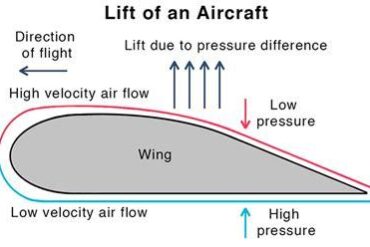
Fighter jets are marvels of aerodynamic engineering. Every inch of the airframe is shaped to reduce drag and maximize lift at both subsonic and supersonic speeds. The idea of adding rear-firing missile pods or launch systems would severely compromise this balance. Rear-mounted launchers would not only increase drag but also interfere with the aircraft’s finely-tuned boundary layer airflow, potentially reducing agility and fuel efficiency.
Moreover, launching a missile backward would disrupt the flow of air around the tail, possibly damaging the aircraft or destabilizing its flight trajectory. In supersonic flight, even small aerodynamic disturbances can lead to significant performance degradation or catastrophic failure. These risks, combined with the questionable effectiveness of rearward weapons, make such a configuration an ill-advised trade-off.
Tactical Shifts: The End of Traditional Dogfighting
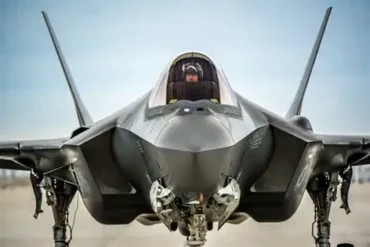
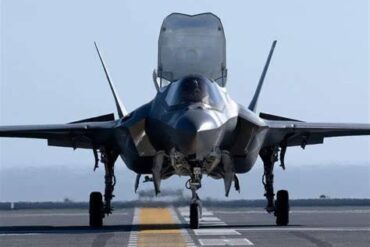
The evolution of air combat has shifted dramatically away from close-in dogfights—those dramatic, swirling battles once immortalized in Hollywood blockbusters. Today, beyond-visual-range (BVR) engagements are the norm. Aircraft like the F-35 Lightning II and Eurofighter Typhoon are equipped with advanced radars, stealth capabilities, and long-range missiles such as the AIM-120 AMRAAM that can engage enemy aircraft from over 50 miles away.
In this context, dogfights are increasingly rare. The objective is to eliminate threats before visual contact is ever made. Stealth aircraft further reduce the chance of a tail pursuit by minimizing radar signatures and using superior situational awareness tools, like Distributed Aperture Systems (DAS) and 360-degree electro-optical targeting systems.
So instead of requiring a missile that fires backward, pilots rely on technology that ensures they’re never tailed in the first place. As aircraft become more autonomous and AI-enhanced, this trend will likely deepen.
All-Aspect Missiles: Hitting Targets Behind You Without Turning
While rear-firing missiles remain absent, all-aspect air-to-air missiles effectively solve the same problem using smarter guidance rather than reverse thrust. These missiles, such as the AIM-9X Sidewinder and IRIS-T, can track and engage targets regardless of their relative position—including those behind the launching aircraft.
Thanks to high off-boresight capabilities, these missiles can veer off dramatically from the launch trajectory, aided by helmet-mounted cueing systems (HMCS) that allow pilots to target enemies simply by looking at them. So rather than needing a missile to launch backward, modern fighters fire forward, and the missile curves back toward the enemy.
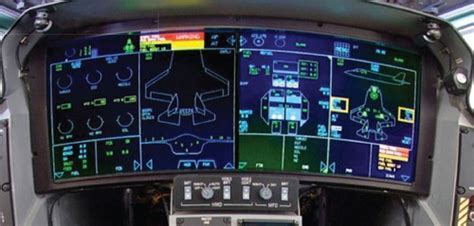
This technology is especially potent in close engagements where time is limited and agility is key. The combination of all-aspect missiles and pilot sighting tools provides full spatial coverage without requiring reverse-firing mechanics.
Rear Defense Is Better Handled by Evasive Maneuvers and Support Systems
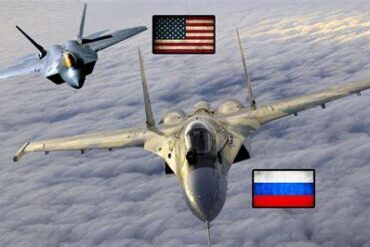
If a fighter jet does find itself with an enemy on its tail, rear defense doesn’t rely on firing back—it depends on breaking the lock or outmaneuvering the opponent. High-G turns, barrel rolls, and sudden vector shifts are standard evasive tactics. The F-22 Raptor and Su-35, for instance, use thrust-vectoring nozzles that enable extreme maneuvers no conventional aircraft could achieve.
Additionally, modern jets are equipped with defensive countermeasures, including:
- Flares to mislead heat-seeking missiles
- Chaff to confuse radar-guided missiles
- Electronic countermeasures (ECM) to jam or spoof enemy sensors
- Decoys such as the towed ALE-50
These tools work in tandem to prevent successful missile locks or hit confirmation, effectively reducing the need for any kind of backward projectile.
Engineering Limitations: No Space, No Line of Sight
From a purely mechanical standpoint, fighter jets are already densely packed machines. The fuselage contains flight computers, avionics, internal fuel tanks, and weapon bays. Space is at a premium. Introducing a backward-launch mechanism would require sacrificing internal components or increasing the aircraft’s size—both of which go against stealth design principles.
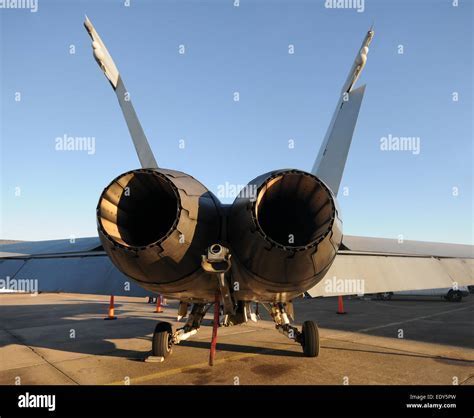
Furthermore, firing a missile backward would require unobstructed line-of-sight, which doesn’t naturally exist behind most jets due to tail fins, engine nozzles, and other structural elements. Retrofitting systems to account for these blind spots would require complete redesigns, which aren’t justified by the marginal combat benefit.
Historical Attempts and Fictional Influence
Despite the practical challenges, the idea of a rearward-firing weapon isn’t entirely without precedent. In World War II, the Germans experimented with Schräge Musik—an upward-angled cannon system mounted on night fighters. It wasn’t exactly backward-firing, but it demonstrated the creative attempts to increase firing range and angles.
In modern aviation, however, no combat-proven jet has employed a missile system designed specifically for rear-launch. The concept has survived more through science fiction than science fact. Films and video games often feature dramatic scenes of backward-firing missiles, capturing the imagination but departing from engineering reality.
Looking Forward: Could Future Jets Change the Equation?
While the current physics and engineering limitations make backward-firing missiles unfeasible, the future of aerial combat may bring new paradigms. Hypothetically, unmanned combat aerial vehicles (UCAVs) or drone swarms could deploy 360-degree micro-munitions, leveraging artificial intelligence to calculate vector corrections dynamically.
There’s also emerging interest in directed-energy weapons such as lasers, which don’t require traditional launch mechanics and could theoretically be aimed in any direction with minimal structural changes. However, these technologies are still in experimental phases and unlikely to see wide deployment for at least another decade.
Until then, rear-facing missiles remain a solution in search of a problem—a concept superseded by better tactics, smarter weapons, and superior aircraft design.
Conclusion: A Forward-Looking Strategy in a 360-Degree Threat Environment
The absence of backward-firing missiles on fighter jets is not a design oversight—it’s a deliberate outcome of strategic, physical, and technological considerations. Rather than trying to solve the problem of tail threats with brute force, modern aircraft address it through superior evasion, all-aspect targeting systems, and long-range engagement doctrines.
Backward-firing missiles might sound logical at first glance, but in the fast, unforgiving world of aerial warfare, where every ounce of drag, second of delay, and pound of fuel matters, they simply don’t add up. The future of air combat will continue to be shaped not by cinematic flair but by precision engineering, tactical foresight, and evolving battlefield realities.