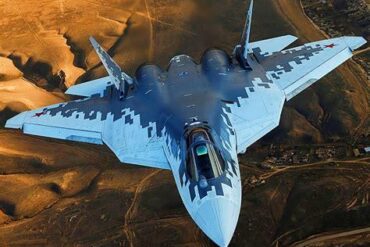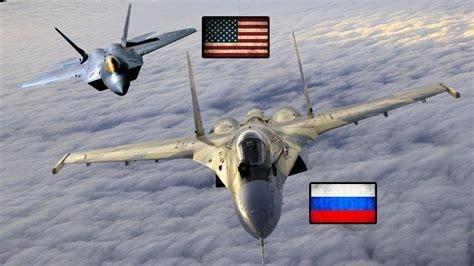
The Cold War not only shaped geopolitics but also aviation philosophy. American and Russian fighter jet design diverged significantly due to contrasting doctrines, industrial capabilities, and battlefield expectations. Where Russia emphasized hyper-maneuverability and dogfighting prowess, the United States shifted toward long-range detection, stealth, and networked warfare. These priorities laid the groundwork for how each nation conceptualized air dominance.
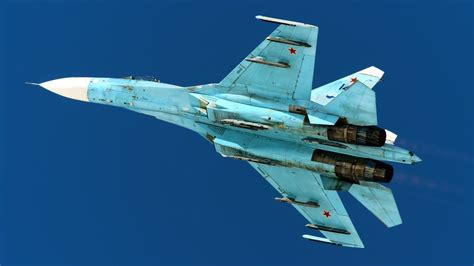
Why American Jets Rarely Embraced Russian-Style Thrust Vectoring
Russian fighters like the Su-27, MiG-29, and their successors introduced thrust vectoring (TV) to enhance agility at low speeds. This allowed them to perform remarkable post-stall maneuvers, such as the famous “Cobra” or tail-slide. In theory, these maneuvers could give an edge in close-range dogfights.
However, thrust vectoring has a limited tactical window. Its benefits peak in one-circle turning engagements—typically below optimal fighting speeds. In rate-based fights (which most engagements resemble), aircraft like the F-15 or F-16 often matched or outperformed Russian designs without the added mechanical complexity of thrust vectoring.
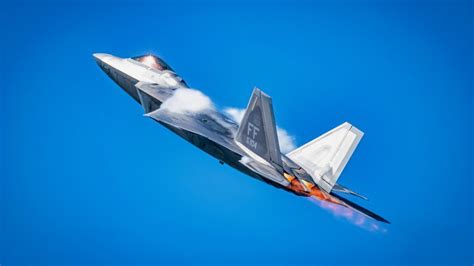
From a maintenance perspective, thrust-vectoring nozzles introduce increased failure points, especially under combat stress. A nozzle malfunction mid-air can render a fighter ineffective or worse, uncontrollable. While the F-22 Raptor features 2D thrust vectoring, it remains the only operational U.S. fighter with that capability—a testament to the strategic caution around the technology.
The U.S. also tested TV through the X-31 experimental program, a joint American-German effort. Although the X-31 demonstrated extreme agility, the program’s final assessment concluded that short-range missile improvements and situational awareness advancements provided greater battlefield value. The results were published in the American Institute of Aeronautics and Astronautics report titled “Practical Limits of Supermaneuverability and Full Envelope Agility.”
American Jets in Dogfights: Agility vs Awareness
The idea that maneuverability wins dogfights is a holdover from mid-20th-century air combat. Today, dogfights are the exception, not the rule. Modern fighters rarely close to visual range, and engagements are usually decided before opponents even see each other.
This doctrine shift became evident during the Vietnam War, when the U.S. relied heavily on F-4 Phantoms—radar-guided interceptors ill-suited for close-range combat. Rules of engagement (ROE) demanded visual identification before firing, rendering long-range missile capability moot and forcing dogfights with nimble MiG-17s and MiG-21s. U.S. kill ratios suffered, leading to the creation of TOPGUN, the Navy’s elite training school that emphasized maneuver warfare, energy management, and combat situational awareness.
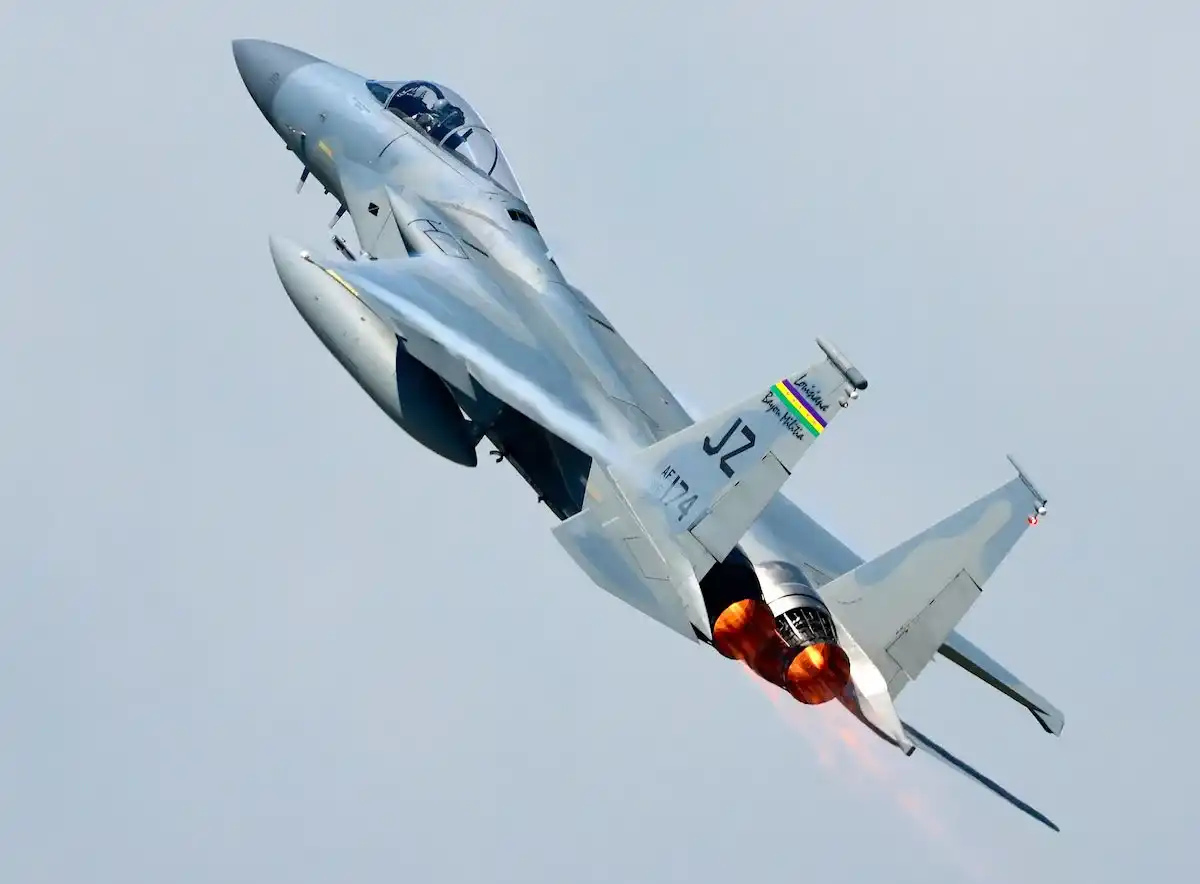
Tactics soon improved, and by the late 70s and 80s, U.S. fighters like the F-14 Tomcat, F-15 Eagle, and F/A-18 Hornet were introduced, combining agility, advanced radar, and long-range missile integration. The F-15 in particular boasts an unbroken 104-0 kill record—a staggering feat rooted in training, teamwork, and superior systems.
Even in rare dogfight scenarios, it’s often not the aircraft’s agility but pilot skill and training that determine the outcome. A quote from the legendary Red Baron remains relevant: “It’s not the crate, it’s the man in the crate.”
From Vietnam to Iraq: Case Studies in BVR Superiority
By the 1990s, the Gulf War and Balkan conflicts showcased how air combat had evolved. U.S. fighters engaged MiG-29s over Iraq and Bosnia, downing them before they entered visual range. Using AIM-7 Sparrow and AIM-120 AMRAAM missiles, American jets eliminated adversaries at distances over five miles. The agility of the MiG-29 was irrelevant—the fight was already over.
Training exercises like Cope India 2004, however, revealed vulnerabilities. The Indian Air Force’s Su-30MKIs exploited weaknesses in American tactics, prompting the U.S. Air Force to update its procedures. These engagements reinforced that no single edge—whether maneuverability or stealth—is decisive without coordinated tactics and training.
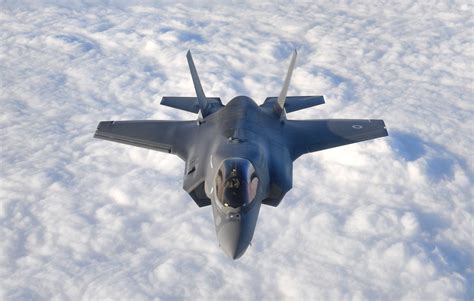
Today, modern U.S. aircraft such as the F-22 and F-35 excel not because of their agility alone, but due to a fusion of stealth, sensors, datalinks, and system interoperability. In a real conflict, even if an F-22 merges with a Su-57, nearby F-35s feeding it targeting data would likely guarantee dominance. Networked warfare wins wars.
What Actually Wins an Aerial Engagement?
Contrary to popular depictions, air-to-air victories rarely come down to Top Gun-style dogfights. Instead, the first detection and first missile launch overwhelmingly determine outcomes. Historical analysis shows that in Vietnam, up to 80% of downed pilots never saw their attacker.
Modern fighters prioritize situational awareness. Systems like the F-35’s Distributed Aperture System (DAS) and Helmet-Mounted Display Systems (HMDS) allow pilots to spot, track, and engage threats without turning the aircraft. Advanced radar systems, electronic countermeasures (ECM), and off-board cues from AWACS aircraft drastically extend a fighter’s lethality before opponents can respond.
When dogfights do happen, they usually emerge from chaotic, unplanned encounters—making training, fuel state, and tactical adaptability decisive. An F-14 with superior endurance could outlast a MiG-23 and engage after its opponent tries to disengage low on fuel. However, the reverse could happen if a pilot misjudges energy states or weapon envelopes.
U.S. vs Russian Design Philosophies: A Strategic Fork
During the Cold War, Soviet design bureaus built jets with an eye toward simplicity, quantity, and rapid deployment. MiG-21s, MiG-23s, and Su-17s were optimized for high-speed intercepts under Ground-Controlled Interception (GCI) networks. These aircraft often featured large radars in large airframes to compensate for weaker engine and sensor tech compared to their NATO counterparts.
U.S. aircraft, conversely, embraced pilot autonomy, modular avionics, and long-term sustainability. Cockpits were designed with ergonomics and ease of data interpretation in mind. The MiG cockpit layout, while standardized across variants, appeared cluttered to Western pilots.
This divergence widened over generations. While the Soviets doubled down on maneuverability in Gen 4 fighters, the U.S. poured resources into stealth technology and sensor fusion, culminating in aircraft like the F-117 Nighthawk, B-2 Spirit, F-22 Raptor, and F-35 Lightning II.
Today’s 5th and 6th generation concepts favor low observability, multi-domain integration, and long-range internal weapon bays—often at the cost of raw maneuverability. This reflects the reality that the next battle may be fought without visual contact at all.
The Doctrine of “Shoot First, Never Merge”
The current mantra within Western air forces is clear: If you’re in a dogfight, you’ve already made a mistake. The goal is to engage, neutralize, and disengage without ever entering visual range. This doctrine is supported by:
- AWACS and off-board sensors: extending sensor coverage far beyond onboard capabilities.
- High-speed datalinks: sharing threat and targeting data instantly across aircraft.
- Stealth profiles: delaying or denying enemy radar locks.
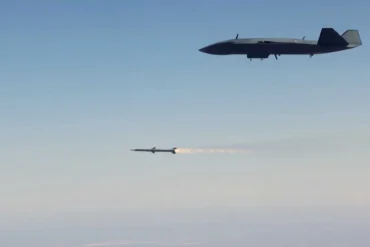
- Advanced missiles: weapons like the AIM-120D AMRAAM and AIM-260 JATM are designed for high off-boresight, long-range engagements.
The American kill-to-loss ratio speaks volumes. The F-15’s 104-0 record, combined with extensive pilot training, advanced maintenance, and strategic infrastructure, underscores the holistic system that underpins U.S. air superiority.
Conclusion: It’s Not a 1v1 — It’s a Networked War
While Russian jets are impressive feats of engineering with a focus on close-range dominance, the battlefield has evolved. American fighters prioritize survivability, integration, and awareness, shaping a battlespace where first-look equals first-kill. Supermaneuverability, while impressive on airshow runways, simply does not outweigh the benefits of stealth, sensor fusion, and BVR capability in the modern age.
In the end, the best aircraft is not the most agile, nor the fastest—it’s the one that sees first, shoots first, and brings its pilot home.