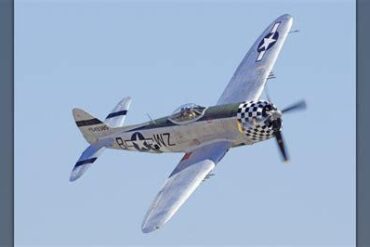
When envisioning an aircraft, propellers often dominate the mental image—a testament to their legacy in aviation history. For more than a century, propellers have been essential in generating thrust, the forward-driving force that enables airplanes to lift off the ground and soar through the sky. Despite advancements in jet propulsion, propellers remain relevant, particularly in military, cargo, and short-haul civilian aircraft. However, contrary to popular belief, simply increasing the number of propeller blades or propellers themselves does not result in ever-higher top speeds.
In fact, the relationship between propeller design and aircraft speed is a delicate balance of thrust, drag, weight, and aerodynamic efficiency. Adding more blades—or even more propellers—introduces complexities that can diminish overall speed, making the pursuit of “more is better” fundamentally flawed.
The Essential Role of Propellers in Generating Thrust
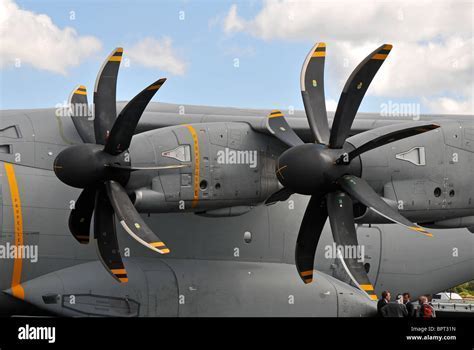
Propellers convert engine power into thrust by rotating blades that push air backward, propelling the aircraft forward based on Newton’s Third Law. This mechanism has underpinned powered flight since the Wright Brothers’ pioneering days, evolving in complexity and efficiency over the decades.
Modern propeller aircraft, such as turboprops, employ advanced materials, blade shapes, and aerodynamic principles to maximize efficiency. But the underlying principle remains the same: balancing thrust with aerodynamic limitations.
Contrary to misconceptions, slapping more blades onto a propeller or adding extra propellers to an aircraft does not equate to infinite thrust or speed. Instead, each additional blade introduces aerodynamic drag, weight penalties, and mechanical complexity that can offset the intended performance gains.
Why More Blades Don’t Automatically Mean More Speed
The misconception that more propeller blades lead to higher speeds stems from an oversimplified view of aerodynamics. While it’s true that adding blades can increase thrust—particularly at low speeds or during takeoff—there’s a critical trade-off in the form of drag and efficiency loss at higher velocities.
Propeller blades operate by cutting through the air at high rotational speeds, creating lift in a similar manner to airplane wings. However, as the number of blades increases, the spacing between them narrows, causing turbulent airflow and increased interference between blade wakes. This results in:
- Higher aerodynamic drag
- Reduced propeller efficiency at high rotational speeds
- Diminishing returns in thrust generation beyond optimal blade counts
- Increased structural and mechanical complexity
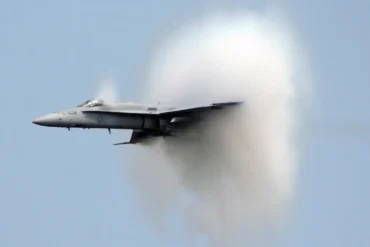
At certain speeds—especially those approaching or exceeding 400 to 500 mph—the tips of propeller blades can even approach transonic speeds, leading to shockwaves, vibrations, and severe efficiency loss.
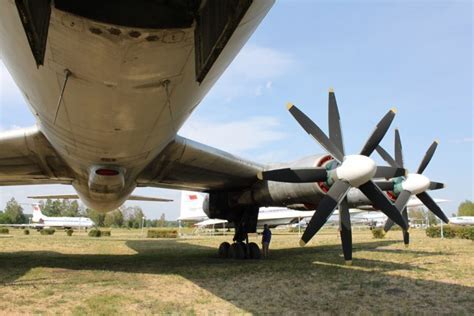
Case Study: The Soviet Tupolev Tu-95—The Fastest Propeller Aircraft Ever Built
A compelling real-world example that underscores the limitations of propeller technology is the Tupolev Tu-95, a strategic bomber introduced by the Soviet Union during the Cold War. Despite utilizing four massive, contra-rotating propellers with multiple blades each, the Tu-95 achieved an unprecedented top speed of 575 mph, making it the fastest propeller-driven aircraft in history.
The Tu-95’s design reflects the extreme engineering needed to push propeller aircraft toward their absolute performance limits. Its enormous blades, combined with counter-rotating propellers, mitigated some drag penalties and harnessed additional thrust. Still, this represents an outlier, not a scalable design solution for everyday aircraft.
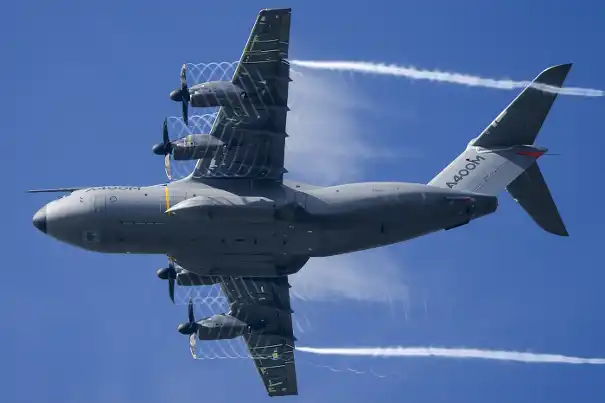
Compare this to the Lockheed C-130 Hercules, a workhorse transport aircraft for the U.S. Air Force, equipped with four six-bladed propellers. Its latest variant, the C-130J, achieves a top speed of around 417 mph at 22,000 feet—fast by turboprop standards but still significantly slower than both the Tu-95 and modern jet aircraft.
These examples reveal a key truth: adding more blades can optimize thrust for specific operational needs, such as short takeoff distances or heavy payload lifting, but it doesn’t inherently enable higher top speeds.
The Drag Dilemma: How Excess Propellers Slow Aircraft
Every additional blade or propeller introduces more surface area moving through the air, amplifying parasite drag, one of the dominant forces working against an aircraft’s forward motion. As drag increases, more engine power is required to maintain or increase speed, but engine power itself is constrained by design limitations.
Moreover, the rotational speed of propellers is limited by the risk of blade tip speeds reaching transonic or supersonic velocities, which induce severe aerodynamic disturbances and noise. Once this threshold is approached, additional blades often exacerbate rather than solve the problem.
Therefore, aircraft engineers meticulously calculate the optimal number of blades for specific performance profiles, considering factors such as:
- Maximum allowable rotational speeds
- Airframe design constraints
- Noise regulations
- Fuel efficiency targets
- Altitude performance requirements
The Other Limitations of Propeller Aircraft
Beyond speed, propeller-driven aircraft face several other limitations that cap their role in modern aviation. Propellers, by design, excel in specific niches—short-haul flights, cargo operations, or military missions in rough terrain—but fall short in other performance metrics when compared to jet engines.
Noise pollution remains one of the most glaring disadvantages. The distinctive hum and buzz of propeller aircraft stem from blade tip vortices and rotational frequencies, which are difficult to mitigate entirely. In fact, early military aircraft faced challenges with machine gun synchronization, as bullets fired through the propeller arc risked catastrophic self-damage—a problem solved through mechanical interrupter gear but emblematic of propeller-induced constraints.
Additionally, propeller aircraft generally:
- Operate at lower cruising altitudes
- Exhibit reduced passenger and cargo capacities
- Deliver slower transit times compared to jet-powered counterparts
- Struggle with efficiency at high subsonic speeds
These limitations explain why commercial aviation has almost universally shifted toward turbofan and turbojet propulsion for long-distance and high-speed operations.
The Niche Future of Propellers in Aviation
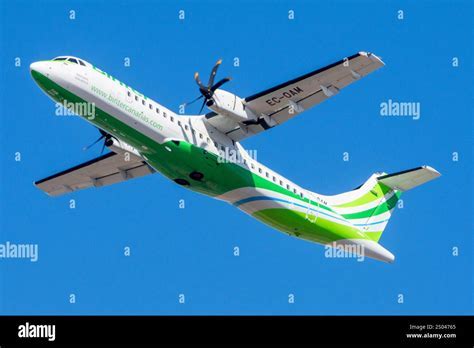
Despite inherent constraints, propellers continue to thrive in specific aviation sectors. Turboprops, for instance, remain the aircraft of choice for regional flights, island-hopping services, and short takeoff and landing (STOL) operations where runway length is restricted.
Military applications also capitalize on propellers’ unique advantages. Aircraft like the AC-130 gunship leverage propeller efficiency at lower speeds to perform close air support missions with extended loiter times. Similarly, surveillance planes and maritime patrol aircraft favor propellers for endurance and operational flexibility.
Moreover, emerging technologies in electric aviation and hybrid propulsion systems may revitalize propeller use for ultra-efficient, low-speed flights aimed at reducing carbon footprints.
Conclusion: Propeller Blade Counts and Speed—A Delicate Balance
The belief that more propeller blades translate to higher aircraft speeds oversimplifies the complex interplay of aerodynamics, propulsion physics, and engineering limitations. While blade count can enhance thrust under specific conditions, the accompanying drag, noise, structural stresses, and diminishing aerodynamic returns impose hard ceilings on performance.
Aircraft designers strive to optimize this balance, ensuring that each additional blade serves a functional purpose without compromising efficiency or inducing speed penalties. Historical examples like the Tu-95 demonstrate that it’s possible to stretch propeller-driven speeds to remarkable levels, but these feats require immense engineering trade-offs unlikely to be generalized across aviation.
As aviation continues evolving, propellers will retain their place—not as tools for breaking speed records—but as reliable, efficient propulsion systems tailored to missions where their unique benefits outweigh their well-known constraints.