Every successful flight depends on a careful balance of aerodynamic forces, structural engineering, and precise calculations. Among the most fundamental principles in aviation, aircraft weight and balance determines whether an airplane can safely take off, climb, cruise, maneuver, and land. Even a technologically advanced jet filled with sophisticated avionics cannot overcome poor loading decisions that place too much mass onboard or distribute it incorrectly.
Pilots, dispatchers, and airline operations teams perform weight and balance calculations before departure because physics leaves little room for error. Every passenger, cargo container, fuel tank, and baggage compartment changes the aircraft’s center of gravity and influences how it behaves in the air. The result is a delicate equation where stability and performance depend on keeping everything within carefully established limits.
Understanding why these calculations matter requires examining how gravity, lift, and moments interact throughout every phase of flight.
Understanding Aircraft Weight Through Basic Physics
Weight in aviation is more than a number printed on a loading sheet. It represents the force of gravity acting on the aircraft’s total mass, commonly expressed through the equation W = mg, where weight equals mass multiplied by gravitational acceleration.
Every structural component contributes to this total. Wings, engines, fuel, passengers, avionics, landing gear, cargo pallets, and even catering supplies all add to the force pulling the airplane toward Earth. To become airborne, the wings must generate lift that exceeds this downward force.
An increase in weight means the aircraft requires more lift, which generally demands greater speed, a higher angle of attack, or additional engine thrust. Each solution comes with limitations imposed by structural strength and aerodynamic performance.
Aircraft manufacturers therefore establish strict operating limits that define exactly how much weight an airplane can safely handle.
Why Maximum Takeoff Weight Exists
The concept of Maximum Takeoff Weight (MTOW) is one of aviation’s most important safety boundaries. MTOW represents the highest certified weight at which an aircraft can begin takeoff while meeting structural and performance requirements.
An airplane exceeding MTOW faces multiple challenges simultaneously. Longer runway distances become necessary, climb performance deteriorates, braking distances increase after landing, and structural loads rise during turbulence or maneuvering.
Manufacturers determine these limits through extensive engineering analysis and flight testing rather than conservative guesswork. The certification process examines wing loading, landing gear strength, engine capability, braking systems, and emergency procedures under demanding conditions.
Although MTOW itself remains fixed regardless of location, environmental conditions influence whether operations at that weight are practical. Airports situated at high elevations experience thinner air, reducing engine performance and wing efficiency. As a result, aircraft departing from such airports often require weight reductions despite remaining below their published structural limits.
How Engineers Reduce Aircraft Weight Without Sacrificing Safety
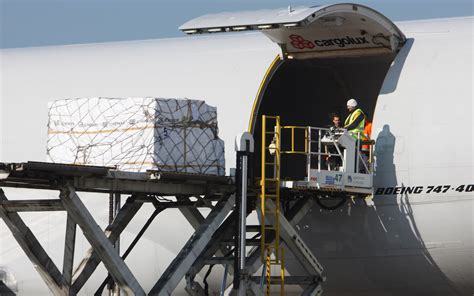
Modern aerospace engineering continuously seeks methods to minimize empty weight while preserving durability and reliability. Every kilogram removed from an aircraft can potentially be replaced with additional passengers, fuel, or revenue-generating cargo.
Manufacturers increasingly employ advanced aluminum alloys, titanium components, and carbon-fiber composites to achieve this balance. These materials provide exceptional strength relative to their mass while resisting fatigue and corrosion.
Design improvements extend beyond structural materials. Lightweight cabin interiors, optimized wiring systems, redesigned seats, and more efficient engines collectively contribute to lower operating weights.
Historically, specialized systems such as Jet-Assisted Takeoff (JATO) demonstrated another method of overcoming weight challenges by providing temporary rocket thrust during departure. While uncommon in commercial aviation today, JATO illustrates how engineers have explored creative solutions when additional performance became necessary.
Center of Gravity: The Invisible Point That Controls Stability
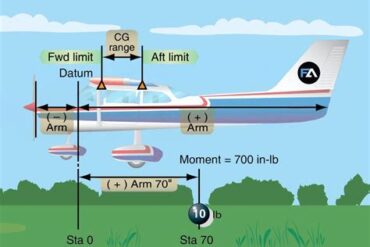
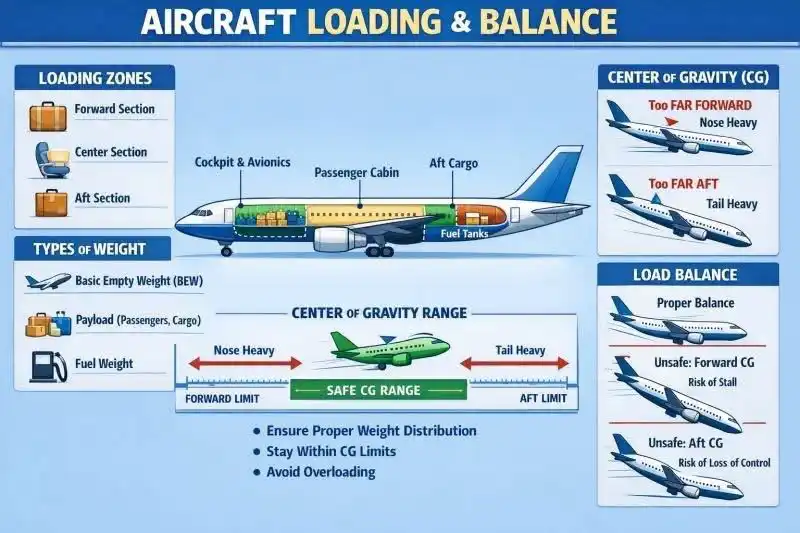
While total weight determines how much lift is needed, center of gravity (CG) determines how that weight is distributed throughout the aircraft.
The center of gravity represents the theoretical point where all mass could be considered concentrated for balance calculations. If suspended exactly at its CG, an aircraft would remain level rather than tipping forward or backward.
This principle resembles balancing a seesaw. Moving only one participant changes equilibrium, requiring adjustments elsewhere to restore stability.
Aircraft loading follows exactly the same concept. A single cargo container positioned too far aft or forward can significantly alter handling characteristics, especially in smaller airplanes where loading changes have proportionally larger effects.
Pilots therefore calculate not only total weight but also its precise location relative to manufacturer-approved CG limits.
Why Nose-Heavy and Tail-Heavy Aircraft Become Dangerous
An airplane with a forward center of gravity becomes excessively nose-heavy. In this condition, the horizontal stabilizer must generate greater downward force to maintain level flight, increasing drag and reducing efficiency.
Control forces also rise, making rotation during takeoff more difficult and limiting flare capability during landing. In extreme situations, elevator authority may become insufficient to raise the nose properly.
The opposite condition—a center of gravity located too far aft—creates even greater hazards.
With an aft CG, pitch stability decreases dramatically because the aircraft naturally resists returning to level flight after disturbances. Small control inputs produce larger-than-expected responses, making precise handling more difficult.
Recovery from aerodynamic stalls can also become challenging since lowering the nose requires sufficient control authority that may no longer exist with excessive rearward loading.
Several historical aircraft designs featuring rear-mounted engines demanded particular attention to balance management because their configuration naturally shifted mass toward the tail.
The Relationship Between Center of Gravity and Center of Lift
Aircraft stability depends on more than center of gravity alone. Engineers also consider the Center of Lift (COL), representing the effective location where aerodynamic lift acts on the wings.
For conventional airplane designs, maintaining the center of lift slightly behind the center of gravity promotes natural longitudinal stability. This arrangement creates a tendency for the nose to lower gently, allowing the tail surfaces to counteract and maintain equilibrium.
The interaction between these forces directly affects the Angle of Attack (AOA), defined as the angle between the wing’s chord line and the relative airflow.
Increasing AOA generally produces more lift until a critical threshold is reached. Beyond that point, airflow separates from the wing surface and lift rapidly declines, causing an aerodynamic stall.
An improperly positioned center of gravity alters the balance between pitching moments and aerodynamic forces, potentially requiring constant control inputs that increase pilot workload and reduce efficiency.
Proper loading keeps these forces harmonized, allowing the aircraft to maintain stable flight with minimal control corrections.
Why Airlines Enforce Passenger and Baggage Limits
Weight restrictions imposed by airlines often appear inconvenient, but they exist for sound engineering reasons rather than administrative preference.
Every checked suitcase, carry-on bag, cargo shipment, and fuel load contributes to both total aircraft weight and center of gravity calculations. Dispatchers use specialized software to ensure these variables remain within certified limits before releasing a flight.
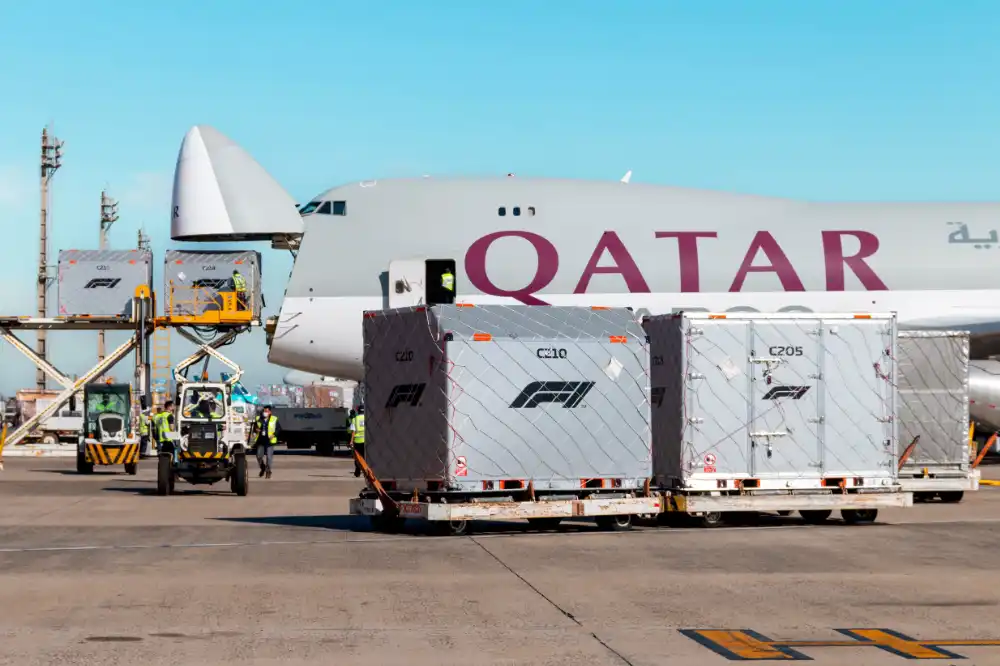
Passenger seating assignments may occasionally be adjusted on lightly loaded regional aircraft to maintain balance. Cargo containers are also positioned according to detailed loading plans that account for both structural limitations and CG requirements.
These procedures ensure the airplane behaves exactly as engineers intended during takeoff, cruise, turbulence, and landing.
Why Aircraft Weight and Balance Remains a Cornerstone of Flight Safety
Aircraft weight and balance combines Newtonian mechanics, aerodynamics, and engineering into one of aviation’s most essential operational disciplines. The total amount of weight determines whether sufficient lift can be generated, while its distribution governs stability, controllability, and stall behavior.
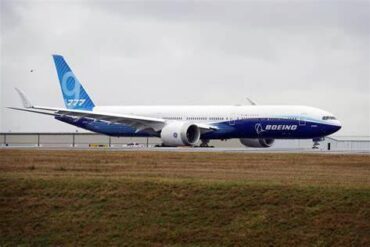
From lightweight training airplanes to wide-body intercontinental airliners, every certified aircraft operates within carefully defined loading envelopes developed through extensive testing and analysis. Respecting those boundaries enables predictable handling characteristics and preserves critical safety margins.
The remarkable reliability of modern aviation depends not only on powerful engines and advanced technology but also on meticulous attention to the simple yet uncompromising physics of weight, gravity, lift, and balance.