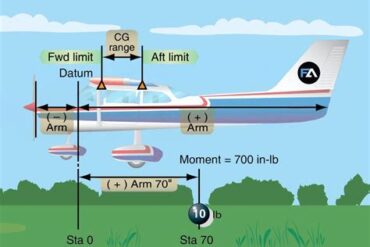
The mass of an aircraft and the position of its center of gravity are essential for safe flight operations. Before any flight, pilots must reference the Aircraft Flight Manual (AFM) for crucial mass and balance information. This includes maximum empty mass, maximum fuel load, and how the fuel’s position affects the center of gravity. Additionally, it outlines the maximum freight or passenger load per compartment and its impact on the center of gravity. It also specifies the maximum mass allowed for take-off and landing, along with critical center of gravity positions for each flight phase.
To ensure safety, it’s important to know the actual empty weight of the aircraft, the center of gravity’s location, the passenger and freight loads, and the planned fuel load. With this data, one can calculate the aircraft’s total weight and the center of gravity at any point during flight. The calculated or actual take-off mass must not exceed either the maximum permitted take-off mass listed in the AFM or the maximum determined by aircraft performance calculations.
Similarly, the calculated or actual landing mass must stay within limits, adhering to the AFM’s maximum permitted landing mass and the maximum established for the destination and alternate airports. Throughout all stages of flight, the aircraft’s center of gravity must remain within the limits specified in the AFM.