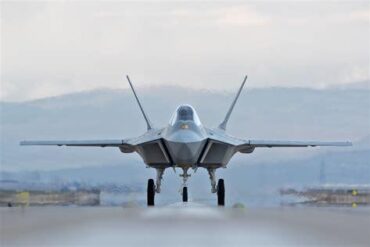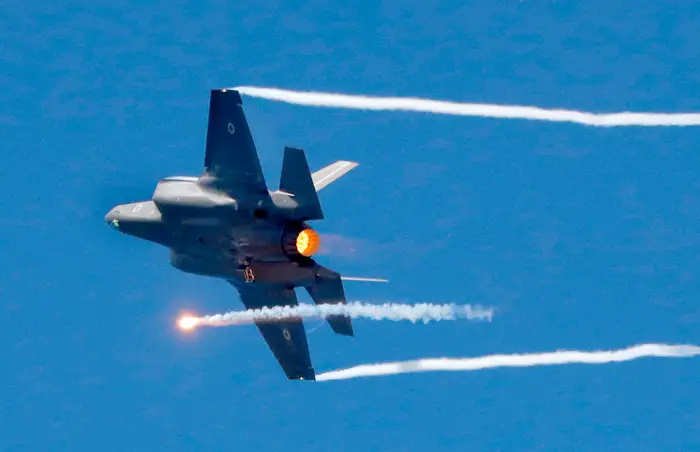
The strategic rivalry between Israel and Iran has entered a new phase defined by the operational deployment of the F-35 stealth fighter. This fifth-generation aircraft, particularly in its Israeli-modified F-35I Adir variant, represents a stark technological edge over Iran’s largely legacy and domestically reverse-engineered air defense systems. The F-35’s unmatched stealth characteristics, advanced electronic warfare capabilities, and battlefield survivability expose the severe asymmetry between Israel and Iran’s military capacities — a gap that is becoming increasingly consequential in real-world engagements.
F-35 Technical Superiority vs. Iran’s Defense Limitations
The F-35 Lightning II is not just a fighter; it is a battlefield platform that integrates stealth, intelligence gathering, and precision strike into one frame. With a radar cross-section of merely 3.8 mm², comparable to the signature of a small insect, it operates below the detection threshold of conventional radar systems. Iran’s current defense infrastructure, centered around Russian-made S-300 systems and local adaptations, struggles to engage such low-observable targets with any degree of certainty.
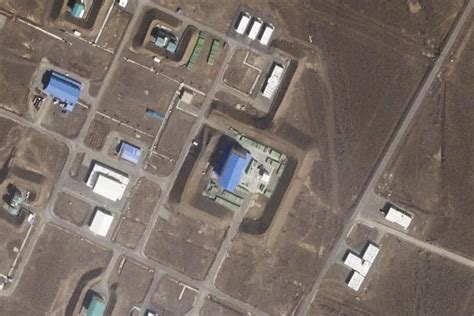
This vulnerability was illustrated in early 2024, when Israeli F-35s executed a nighttime precision strike deep in Iran’s northeastern region, targeting the highly classified Shahroud Aerospace Research Center. The F-35s entered and exited Iranian airspace undetected, neutralizing hardened targets with JDAM-guided munitions, and exposing glaring fissures in Tehran’s layered air defense posture.
Israeli Operations and F-35I’s Combat Innovation
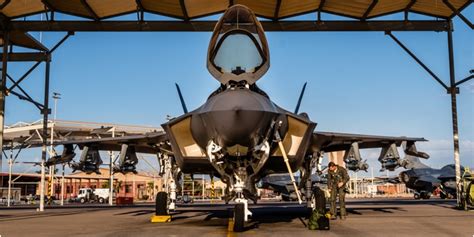
Israel has employed the F-35 not merely as a deterrent but as a strategic instrument of preemptive force. The F-35I Adir, a custom configuration adapted for Israeli warfare doctrine, has proven decisive in executing multi-domain operations:
- Strikes on Iranian nuclear development sites, especially around Natanz and Fordow, leveraging the F-35’s stealth to avoid radar networks.
- Disruption of missile manufacturing and transport hubs in Syria and Iraq, linked to the Iranian Revolutionary Guard Corps (IRGC).
- Covert deep penetration missions, bypassing regional radar grids to collect ISR (intelligence, surveillance, reconnaissance) data, which are then disseminated through Israel’s real-time command-and-control networks.
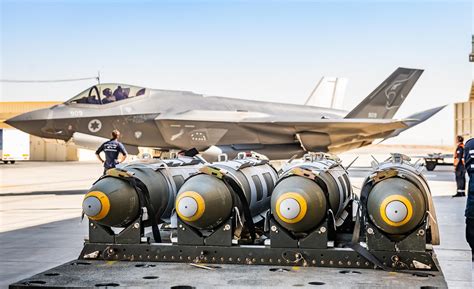
In mid-2024, Israel debuted a modified “beast mode” configuration of the F-35I, arming the aircraft with external pylons carrying precision bombs. Although this compromised stealth to a degree, it dramatically increased payload capacity, making the aircraft more versatile in low-threat airspace environments such as western Syria.
Iran’s Counterclaims and Disputed Engagements
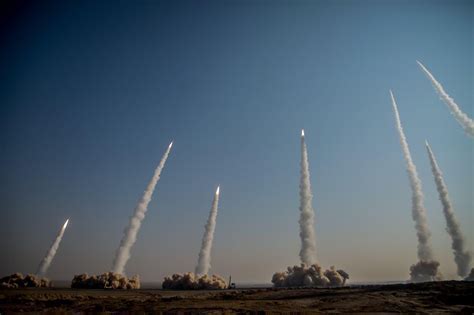
Iran has consistently claimed success in countering Israeli air incursions, particularly through the downing of F-35 aircraft. The most publicized of these assertions came in October 2024, when Tehran reported it had shot down an Israeli F-35 operating over Syrian territory. However, Western intelligence agencies, including NATO satellite imagery analysts, failed to verify any F-35 wreckage or loss, suggesting either successful evasion by Israeli forces or strategic misreporting by Iranian media.
That same month, Iranian state TV broadcast footage allegedly depicting the destruction of two Israeli F-35 squadrons at an airbase in southern Israel. In reality, commercial and military satellites only confirmed structural damage to outer facilities, not to aircraft themselves. Theories proposed by regional analysts suggest the Israeli Air Force (IAF) may have preemptively relocated F-35 units, leveraging their rapid deployment capability and short-takeoff/landing characteristics.
Technological Arms Race and Tactical Adaptation
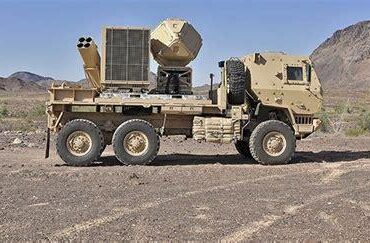
Iran is aggressively seeking to bridge the gap by pursuing advanced Russian systems, notably the S-400 Triumf air defense platform. Parallel reports indicate exploratory developments into laser-based anti-air systems, although these remain in early prototype stages. Despite such efforts, the S-300s currently in Iran’s arsenal have demonstrated an intercept probability of 70-80% under optimal conditions, which deteriorates significantly against stealth threats.
Meanwhile, Israel continues to leverage the F-35’s full-spectrum warfare systems, including:
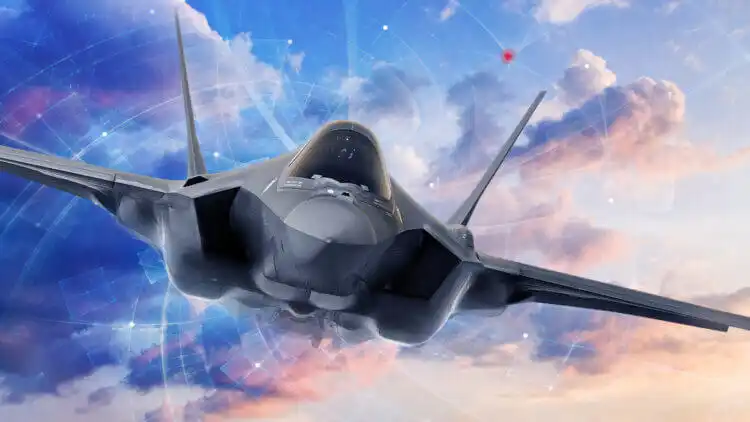
- AN/ASQ-239 electronic warfare suite capable of radar jamming, missile deflection, and signal interception.
- Distributed Aperture System (DAS), designated AN/AAQ-37, providing 360-degree coverage with infrared tracking, enabling early missile warning and passive target acquisition.
- Sensor fusion capabilities that integrate data from ground, air, and space assets, giving Israeli commanders real-time operational superiority.
These systems render Iran’s battlefield “transparent” to Israeli pilots while simultaneously blinding Iranian defense operators, highlighting a crucial edge in modern electronic-dominated warfare.
Geopolitical Repercussions and Regional Equilibrium
The operational usage of the F-35 in the Iranian theatre has geopolitical consequences that transcend the tactical:
- The United States has quietly endorsed Israel’s use of the F-35, even providing logistics and software updates from Lockheed Martin’s global support infrastructure.
- Russia, while nominally aligned with Iran, has refrained from overt military support or providing Tehran with the latest S-400 or Su-57 fighters, likely to avoid escalating tensions with Israel or jeopardizing its own delicate balancing act in Syria.
- European actors, particularly France and Germany, express increasing concern over escalations disrupting global energy markets and leading to an uncontrolled regional arms race.
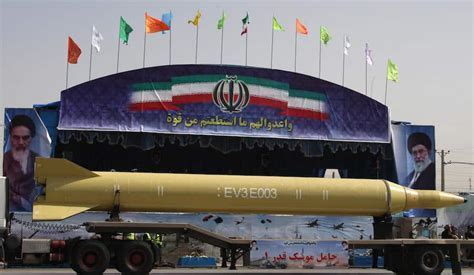
Iran’s missile advancements — particularly in precision-guided intermediate-range systems like the Khorramshahr and Emad — represent a growing threat. In response, Israel may further expand its F-35 fleet or integrate complementary platforms like loitering munitions and space-based ISR assets.
Strategic Forecast and Doctrinal Evolution
The deployment of the F-35 around Iranian airspace signals more than a tactical shift — it marks a doctrinal transformation where information dominance, stealth superiority, and first-strike capacity redefine the battlefield. For Iran, the urgency to reshape its integrated air defense system (IADS) becomes existential. Its reliance on patchwork radar coverage, combined with limited AWACS (Airborne Warning and Control System) support, creates exploitable seams for advanced fifth-generation fighters.
Moreover, the increasing reliance on cyber-electronic warfare by the F-35 raises broader concerns about network-centric warfare in closed airspaces, where even communications can be hijacked or jammed mid-mission. These emerging paradigms place Iran, and similar regional powers, at a severe disadvantage unless rapid and sweeping modernization occurs.
The broader consequence is a militarized feedback loop: Israel’s F-35 use compels Iran to escalate its defenses, which in turn invites preemptive measures, increasing the likelihood of larger confrontations. Without robust diplomatic frameworks, this technological race could spiral into broader armed conflict.
FAQ
What makes the F-35 so hard for Iran to detect or intercept?
The F-35’s stealth profile, achieved through radar-absorbing materials and advanced shaping, drastically reduces its radar cross-section to just 3.8 mm². Coupled with electronic countermeasures and passive sensors, it can penetrate defended airspace without triggering alerts in time for response.
Has Iran ever successfully shot down an F-35?
There is no confirmed evidence that Iran has shot down an F-35. Although Iranian media has repeatedly claimed such incidents, independent verification has never been produced. Western intelligence consistently refutes these assertions due to lack of visual confirmation or wreckage.
Could Iran’s future acquisition of S-400 systems change the balance?
While the S-400 is significantly more capable than the S-300, its effectiveness against the F-35 is still subject to debate. Stealth fighters like the F-35 are specifically designed to degrade such systems through electronic warfare, decoys, and precision strikes before the engagement envelope is reached.