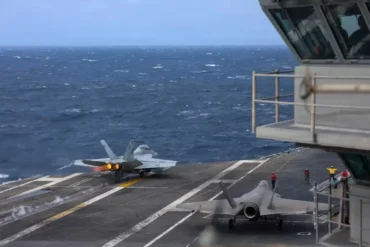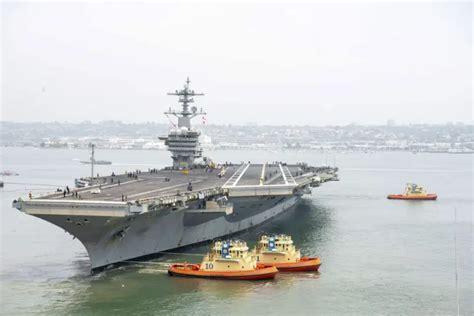
The United States is positioning itself for a significant escalation in naval posture as the Pentagon directs a second aircraft carrier strike group to prepare for potential deployment to the Middle East. The move comes while President Donald Trump weighs military action against Iran, even as indirect nuclear negotiations continue through regional intermediaries. The development signals a calibrated but unmistakable display of force, designed to expand operational flexibility without yet crossing the threshold into open conflict.
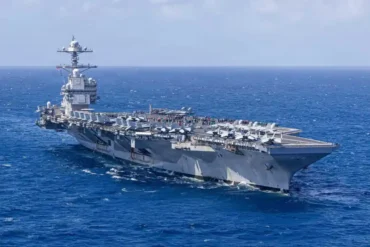
On February 11, 2026, reports confirmed that the Pentagon instructed a second carrier strike group to enter readiness status for possible deployment to the U.S. Central Command (CENTCOM) area of responsibility. Although no final authorization has been signed, officials acknowledged that the order to sail could be issued within hours. The most likely vessel assigned to the mission is USS George H.W. Bush (CVN 77), currently completing advanced training exercises off the coast of Virginia.
The preparation of USS George H.W. Bush would place two U.S. Navy carrier strike groups in the Middle East for the first time in nearly a year, joining USS Abraham Lincoln, which entered the region on January 26, 2026. The presence of two carriers is not routine. It represents a deliberate surge posture typically reserved for moments of elevated crisis or imminent contingency operations.
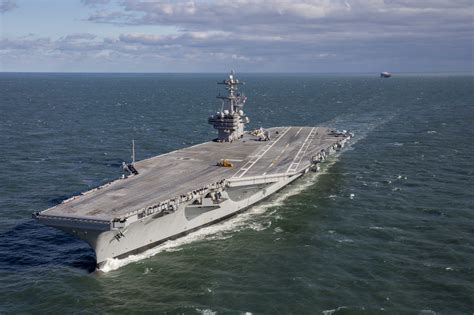
Strategic Signal: USS George H.W. Bush and the Power Projection Equation
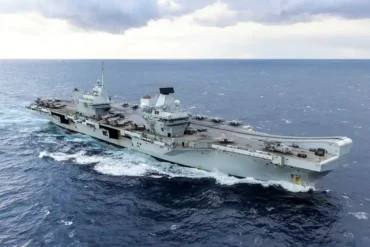
USS George H.W. Bush is a Nimitz-class nuclear-powered aircraft carrier, capable of sustained high-speed transit and long-duration operations without refueling. Measuring over 333 meters in length and displacing approximately 100,000 tons, the carrier functions as a mobile airbase, projecting tactical airpower across vast distances. If deployment is ordered, the vessel could sail within roughly two weeks. Transit through the Atlantic, Mediterranean, and Suez Canal would place arrival in theater no earlier than mid-March 2026.
The operational implications are substantial. A second carrier would expand sortie generation capacity, increase defensive coverage against ballistic missile threats, and provide redundancy should one strike group become engaged or targeted. Carrier strike groups are not solitary ships; they are integrated combat systems composed of guided missile destroyers, cruisers, submarines, and a full carrier air wing.
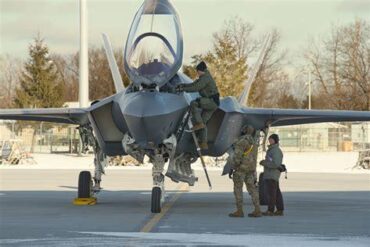
USS Abraham Lincoln, already operating under CENTCOM, carries Carrier Air Wing 9. Its aviation complement includes F-35C Lightning II stealth fighters, F/A-18E and F/A-18F Super Hornets, EA-18G Growler electronic warfare aircraft, E-2D Hawkeye airborne early warning platforms, and MH-60 helicopters. The strike group is escorted by Arleigh Burke-class destroyers equipped with the Aegis combat system, capable of launching Tomahawk cruise missiles and providing ballistic missile defense.
The addition of USS George H.W. Bush would effectively double the available carrier-based tactical airpower in the region, enhancing both offensive strike capability and layered defense against drone and missile attacks.
Escalating Maritime Tensions in the Arabian Sea and Strait of Hormuz
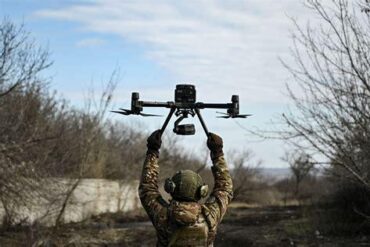
The renewed carrier posture follows a series of maritime incidents underscoring rising tensions with Iran. On February 3, 2026, a Marine Corps F-35C from Marine Fighter Attack Squadron 314 shot down an Iranian Shahed-139 drone after it approached USS Abraham Lincoln in the Arabian Sea. U.S. Central Command reported that the drone continued its approach despite de-escalation measures. No damage or casualties were reported.
That same day, Islamic Revolutionary Guard Corps Navy (IRGCN) vessels and an Iranian Mohajer drone attempted to halt and seize the U.S.-flagged tanker MT Stena Imperative in the Strait of Hormuz. USS McFaul responded rapidly, escorting the tanker while U.S. Air Force aircraft provided overwatch. The attempted interdiction reinforced the persistent volatility of the world’s most strategically sensitive maritime chokepoint.
Iran subsequently announced the seizure of two foreign oil tankers near Farsi Island on February 5, transferring them to Bushehr under allegations of fuel smuggling. These actions unfolded against the backdrop of heightened nuclear tensions and serve as reminders of Tehran’s ability to apply pressure through maritime disruption.
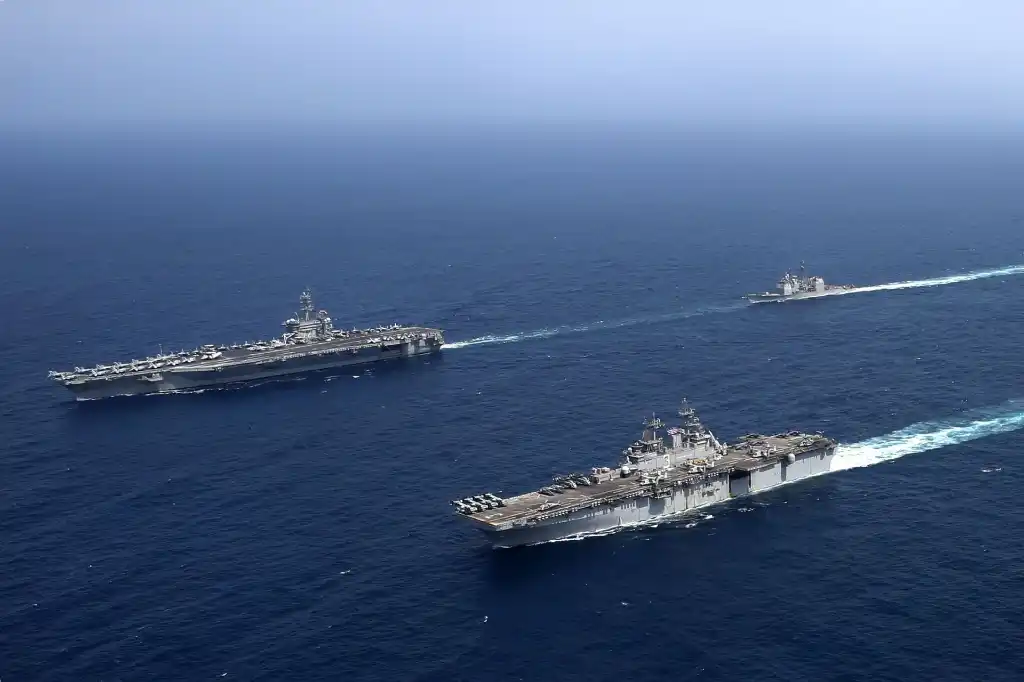
Operation Midnight Hammer and the Nuclear Flashpoint
The present naval buildup cannot be separated from the events of June 22, 2025, when the United States conducted strikes on Iranian nuclear facilities during Operation Midnight Hammer. The operation involved approximately 4,000 personnel and 125 aircraft in a coordinated campaign targeting Fordow, Natanz, and Isfahan.
Seven B-2 stealth bombers delivered 12 GBU-57 Massive Ordnance Penetrator (MOP) bombs against the deeply buried Fordow facility. Natanz was struck with two additional MOPs, while Isfahan sustained more than 24 Tomahawk cruise missile strikes launched from a U.S. submarine. The operation represented one of the most complex long-range strike packages executed in recent years.
Iran later announced that several bombs had not detonated and remained embedded within nuclear facilities, complicating inspections by the International Atomic Energy Agency (IAEA). Tehran has cited unexploded ordnance as grounds for restricting international inspection access, adding a technical and political layer to an already combustible dispute.
Prior to those strikes, dual carrier strike groups led by USS Carl Vinson and USS Nimitz were positioned in the Arabian Sea. Iran responded with missile launches targeting Al Udeid Air Base in Qatar. Although no casualties were reported, the exchange underscored the potential for rapid escalation between the two states.
Expanded U.S. Military Posture Across the Region
The potential arrival of a second carrier occurs within a broader regional reinforcement effort. The United States maintains more than 30,000 service members across bases in Bahrain, Egypt, Iraq, Israel, Jordan, Kuwait, Qatar, Saudi Arabia, Syria, and the United Arab Emirates.
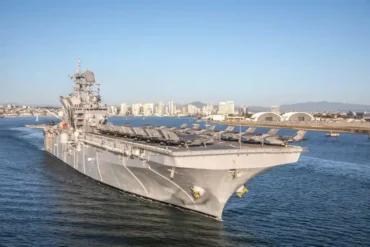
Naval assets currently operating in or near the region include USS McFaul and USS Mitscher in the Strait of Hormuz, USS Delbert D. Black in the Red Sea, and USS Roosevelt and USS Bulkeley in the Mediterranean. Littoral combat ships USS Canberra, USS Tulsa, and USS Santa Barbara are active in the Persian Gulf. Submarine deployments remain undisclosed but are widely assumed to be present.
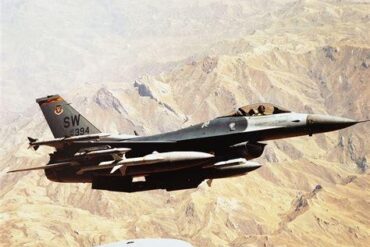
Airpower reinforcements include F-15E Strike Eagles relocated from RAF Lakenheath to Muwaffaq Salti Air Base in Jordan, alongside additional F-35 aircraft deployments. Patriot and Terminal High Altitude Area Defense (THAAD) systems have been repositioned to bolster missile defense architecture against potential Iranian ballistic missile and drone attacks.
This layered configuration of sea-based, land-based, and air assets creates a distributed yet interconnected deterrence network. The presence of two carriers would significantly enhance the capacity to conduct sustained strike operations while simultaneously defending forward bases and maritime commerce.
Diplomacy Under Pressure: Nuclear Negotiations in Muscat
Despite the visible military buildup, diplomatic engagement remains active. On February 6, 2026, U.S. and Iranian representatives held indirect talks in Muscat, Oman, mediated by Omani Foreign Minister Badr bin Hamad Al Busaidi. The negotiations are focused on Iran’s enriched uranium stockpile, which U.S. officials estimate at approximately 400 kilograms of high-enrichment material.
Washington has demanded that Iran surrender its remaining enriched uranium, limit enrichment levels below 60 percent purity, halt nuclear weapons development activities, restrict ballistic missile capabilities, and end support for regional proxy groups including Hezbollah, Hamas, and the Houthis. Tehran has rejected constraints on its missile program and maintains that uranium enrichment is a sovereign right under the Nuclear Non-Proliferation Treaty framework.
Regional governments including Saudi Arabia, the United Arab Emirates, and Qatar have urged restraint, wary of the economic and security consequences of open conflict. Russia and China have likewise called for diplomacy, emphasizing stability in global energy markets.
President Trump has publicly stated a preference for a negotiated outcome but has signaled that military action remains an option if talks fail. The decision on deploying a second carrier strike group remains pending, yet the preparatory order itself sends a clear strategic message: the United States intends to maintain escalation dominance while preserving diplomatic maneuver space.
The coming weeks will determine whether dual carrier deployment becomes a reality or remains a calculated lever in negotiations. In a region where maritime chokepoints, missile arsenals, and nuclear centrifuges intersect, the positioning of a single carrier can shift strategic equations. The positioning of two can redefine them.