Open-source flight tracking data and air traffic control monitoring on February 19, 2026, indicate that multiple U.S. Air Force F-16CJ Wild Weasel aircraft have departed Europe and appear to be heading toward the Middle East. Although the Pentagon has not issued a formal confirmation, the scale and composition of the movement strongly suggest a deliberate reinforcement of suppression of enemy air defenses (SEAD) capabilities in a region where tensions with Iran have sharpened in recent weeks.
The reported redeployment is not a routine rotation. Observers tracking transatlantic tanker support and coordinated fighter movements have pointed to a sizable package that may include as many as 36 F-16 Fighting Falcons, with roughly 24 configured in the specialized F-16CJ “Wild Weasel” configuration. Aircraft linked to the 169th Fighter Wing at McEntire Joint National Guard Base, the 480th Fighter Squadron at Spangdahlem Air Base, and additional units from Aviano Air Base have been associated with the movement. Tanker aircraft, including KC-135R Stratotankers and KC-46A Pegasus platforms, were tracked staging through Lajes Field in the Azores and Naval Station Rota in Spain, forming a logistical bridge across the Atlantic and Mediterranean.
Such coordination is rarely accidental. The combination of fighter squadrons, long-range tanker escorts, and staggered staging points reflects a carefully structured deployment architecture. Even without official acknowledgment, the operational signature is unmistakable: this is a forward positioning of aircraft optimized for operating in contested airspace against sophisticated radar and missile networks.
The F-16CJ Wild Weasel: America’s Dedicated SEAD Spearhead
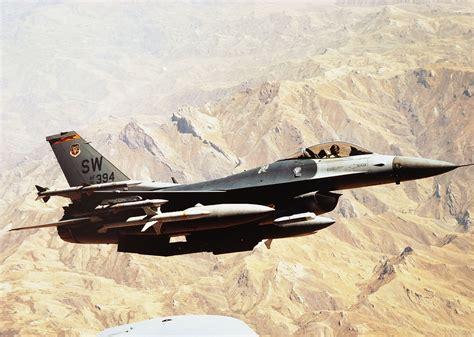
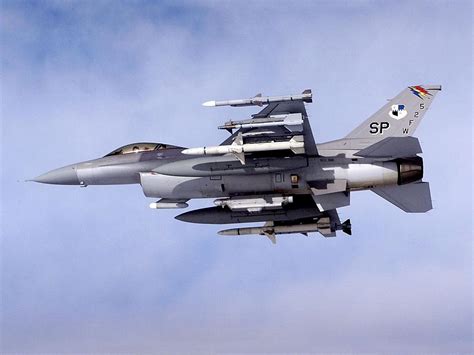
The F-16CJ designation refers to Block 50/52 variants of the F-16C configured for the Wild Weasel mission, a role historically associated with hunting and destroying enemy radar systems. The mission lineage traces back to the Vietnam War and the F-105 and F-4G Wild Weasel aircraft, which pioneered the concept of deliberately targeting surface-to-air missile (SAM) sites. When the F-4G was retired, the F-16CJ assumed the mantle.
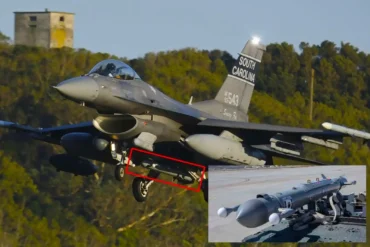
What differentiates the F-16CJ from a standard multirole F-16C is not merely software, but a tailored suite of hardware and doctrinal training focused on SEAD and DEAD (Destruction of Enemy Air Defenses) missions. Central to this capability is the AN/ASQ-213 HARM Targeting System (HTS) pod, mounted along the intake. The HTS passively detects and geolocates hostile radar emitters, allowing pilots to identify, classify, and prioritize threats in real time.
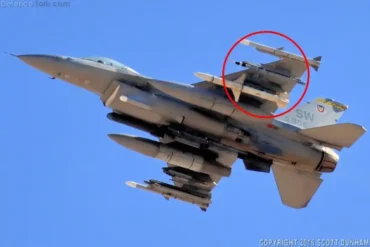
Armed with AGM-88 HARM (High-Speed Anti-Radiation Missile) or the more advanced AGM-88E AARGM, the F-16CJ can engage enemy radars the moment they activate. Anti-radiation missiles are designed to home in on radar emissions; in effect, the enemy’s attempt to track incoming aircraft becomes the signal that guides the counterstrike. This dynamic transforms the electromagnetic spectrum into a battlefield in its own right.
Complementing the offensive suite, F-16CJs frequently carry the AN/ALQ-184 electronic warfare pod, capable of jamming or deceiving hostile radar systems. The result is a platform that blends sensor fusion, electronic attack, and precision missile employment into a single tactical package.
Scale and Structure of the Reported Deployment
The reported movement of up to three dozen aircraft is significant. Deployments of this size are typically associated with contingency planning rather than routine presence missions. The involvement of multiple squadrons from both U.S.-based and European-based units suggests an effort to rapidly aggregate a substantial SEAD/DEAD force package.
Tanker staging through the Azores and Spain reveals the logistical backbone of such operations. Fighter aircraft lack the range to transit intercontinental distances without aerial refueling. The visible trail of KC-135R and KC-46A tankers underscores the coordinated, long-range nature of the transfer. This kind of transatlantic choreography signals planning at the theater level.
The final destination has not been publicly confirmed. However, the broader Middle East—where U.S. forces maintain multiple air bases and rotational deployments—offers several plausible reception points capable of supporting F-16 operations. Infrastructure considerations include hardened shelters, munitions storage for anti-radiation missiles, and secure command-and-control integration with regional air operations centers.
Why SEAD Matters in a Potential Iran Contingency
The strategic relevance becomes clear when viewed against Iran’s air-defense architecture. Iran fields a layered and evolving network of long-range, medium-range, and mobile surface-to-air missile systems, integrated with domestically produced and foreign-sourced radar arrays. Systems such as the Bavar-373, often described as Iran’s answer to advanced long-range SAM platforms, are designed to engage aircraft at extended ranges and high altitudes.
In any high-intensity scenario, the opening phase of an air campaign typically prioritizes degrading the adversary’s integrated air defense system (IADS). An IADS is more than a collection of missile batteries; it is a network of surveillance radars, fire-control radars, command nodes, and communication links. Neutralizing it requires not only physical destruction but also disruption of coordination.
This is where the Wild Weasel mission becomes indispensable. F-16CJs can:
- Detect and geolocate radar emitters as they activate
- Launch anti-radiation missiles within seconds of identification
- Provide escort protection for strike packages
- Conduct stand-off suppression from outside dense threat envelopes
- Orbit on the edge of defended airspace to deter radar activation
By forcing adversary radar operators to choose between remaining silent or risking destruction, SEAD aircraft create operational breathing room for other assets. Stealth aircraft, ISR platforms, bombers, and even aerial refueling tankers rely on a degree of suppression to operate effectively.
Tactical Employment in the Middle East Theater
Should tensions escalate, the presence of F-16CJs provides planners with multiple operational options. These aircraft could support maritime security patrols in the Persian Gulf, ensuring that U.S. and allied aircraft operate under protective SEAD coverage. They could also serve as rapid-response elements if Iranian air-defense systems begin tracking coalition aircraft in international airspace.
SEAD missions can take several forms. In a preemptive strike scenario, F-16CJs may precede strike packages, deliberately entering radar coverage zones to stimulate enemy emissions. Once radars illuminate, HARMs can be launched in rapid succession, degrading the defensive network before follow-on aircraft penetrate deeper.
In a deterrence posture, the mere presence of Wild Weasel aircraft complicates an adversary’s calculations. Radar operators know that activating their systems may invite immediate targeting. This dynamic shifts the balance of risk and may contribute to de-escalation by raising the perceived cost of aggressive air-defense posturing.
Importantly, F-16CJs retain credible air-to-air capability, carrying AIM-series missiles and equipped with modern radar systems. They are not single-purpose platforms; they can defend themselves and contribute to broader air-superiority efforts if required.
Strategic Signaling and Operational Flexibility
Forward-deploying a robust SEAD contingent sends layered messages. To regional partners, it signals that the United States is prepared to defend shared airspace and protect critical infrastructure. To Iran, it communicates that investments in advanced air-defense systems are acknowledged—but not insurmountable.
From an operational perspective, having Wild Weasels already in theater reduces response time. Crisis dynamics in the Middle East can evolve rapidly. Pre-positioned SEAD assets allow commanders to move from deterrent posture to active suppression within hours rather than days.
The deployment also relieves strain on other specialized assets, such as dedicated electronic attack aircraft. A distributed SEAD capability enhances resilience and complicates adversary targeting strategies. In a high-end conflict environment, redundancy and flexibility are decisive advantages.
The Electromagnetic Battlefield in Modern Warfare
Modern air campaigns are not solely contests of speed and firepower; they are battles for control of the electromagnetic spectrum. Radar emissions, jamming signals, data links, and missile seekers form an invisible web of interaction. The F-16CJ sits at the center of that web, exploiting emissions to neutralize threats.
This contest is iterative. Air-defense systems evolve to resist anti-radiation tactics, incorporating shutdown procedures, decoys, and mobility. SEAD aircraft adapt in turn, fielding improved seekers, GPS guidance for last-known coordinates, and networked targeting data. The reported presence of AARGM-capable F-16CJs suggests preparedness for precisely this cat-and-mouse dynamic.
In the broader geopolitical context, the movement of Wild Weasels toward the Middle East underscores a fundamental truth: control of the skies begins with neutralizing those who would deny it. Whether employed as a visible deterrent or as the opening move in a contingency plan, the F-16CJ Wild Weasel remains one of the U.S. Air Force’s most specialized and strategically relevant tools.
As open-source tracking continues to monitor aircraft movements, the deployment serves as a reminder that the architecture of modern power projection is both visible and subtle. Tanker trails across oceans, discreet fighter transits, and the quiet readiness of SEAD platforms collectively shape the balance of risk in one of the world’s most volatile regions.