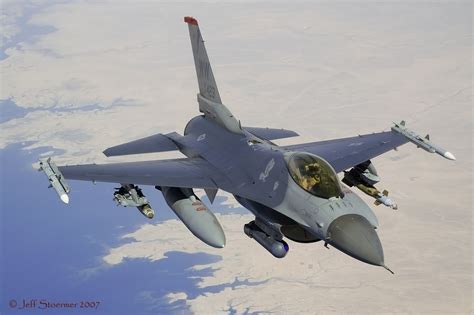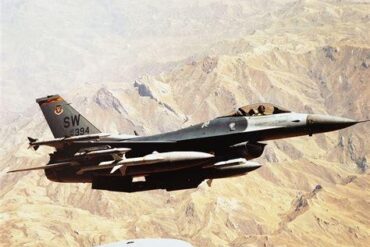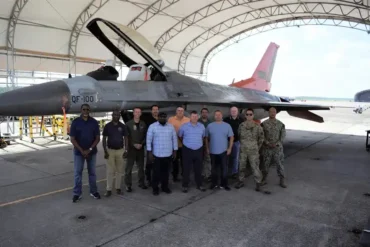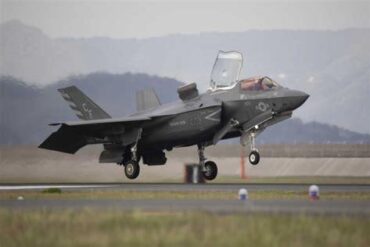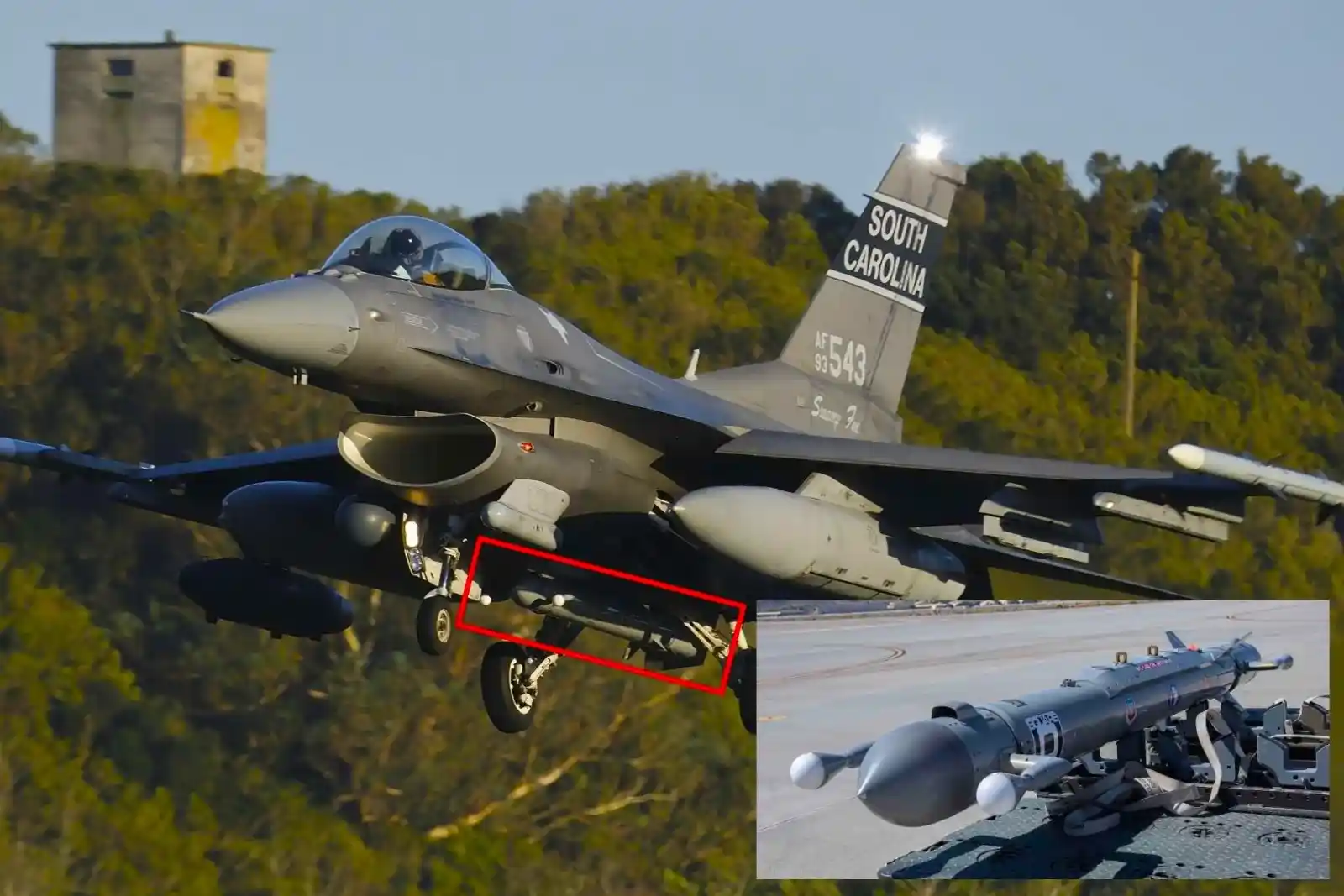
In mid-February 2026, a significant military deployment involving Block 52 F-16CJ Vipers from the South Carolina Air National Guard was observed as they transited across the North Atlantic. These aircraft, equipped with the cutting-edge Angry Kitten electronic warfare (EW) pods, were headed toward the U.S. Central Command area, signaling a reinforcement of America’s suppression-of-enemy-air-defense (SEAD) capabilities in response to escalating tensions with Iran. This move reflects an increase in U.S. airpower in the Middle East, positioning the military for potential high-intensity operations aimed at neutralizing Iran’s sophisticated air defense systems.
The deployment of these F-16CJ Vipers, part of the renowned F-16 Fighting Falcon family, is of particular significance due to the advanced systems they carry. These aircraft, primarily designed for SEAD and destruction of enemy air defense (DEAD) missions, are crucial for countering complex, layered Integrated Air Defense Systems (IADS) like those fielded by Iran. The addition of Angry Kitten pods further enhances their role, providing an advanced electronic warfare capability that could prove pivotal in any conflict involving Iranian air defenses.
The Role of Block 52 F-16CJ Vipers in SEAD Operations
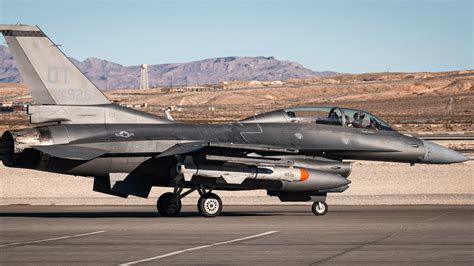
The F-16CJ Vipers are specially configured for the Wild Weasel role, a mission set designed to defeat air defense systems. These multirole, supersonic fighters are equipped with advanced radar and electronic warfare suites, as well as the capability to launch AGM-88 series anti-radiation missiles. These missiles are effective against surface-to-air missile (SAM) systems, radar installations, and other electronic threats, allowing the F-16CJ to target and neutralize enemy air defenses before the main strike force proceeds.
The Wild Weasel role, which focuses on identifying and neutralizing threats posed by SAMs and radar systems, requires highly specialized aircraft. The Vipers are equipped with sensor and datalink suites that enable them to pinpoint hostile radar emitters, relay target data to other aircraft, and disrupt enemy air defense networks. When coupled with the Angry Kitten EW pods, their effectiveness in SEAD operations is enhanced, making them an indispensable asset in any air campaign against Iran.
The Significance of Angry Kitten Electronic Warfare Pods
Developed by the Georgia Tech Research Institute, the Angry Kitten EW pod is a modular system based on a Digital Radio Frequency Memory (DRFM) architecture. This system allows the pod to capture, store, and then retransmit radar and other radio frequency (RF) signals in altered forms. The Angry Kitten’s capabilities include a wide range of electronic warfare techniques, from traditional jamming to more sophisticated methods such as false target generation and velocity-gate pull-off. These advanced tactics help confuse and deceive enemy radars, increasing the survivability of aircraft operating in hostile environments.
The Angry Kitten EW pod is not only effective in jamming but also adapts dynamically to new threat waveforms. This rapid adaptability is essential in modern warfare, where air defense systems are constantly evolving, and real-time intelligence plays a critical role. Originally conceived as a training tool, Angry Kitten has evolved into an operational asset capable of supporting complex military operations. For the F-16CJ Vipers, this pod will provide critical support in neutralizing Iran’s air defense systems by disrupting radar and communications, effectively degrading the IADS and making it easier for follow-on forces to carry out their missions.
F-16CJ Vipers in Action: Shaping the Battlefield for U.S. Airpower
In operational terms, the F-16CJ Vipers equipped with Angry Kitten pods would likely play a pivotal role in the opening stages of any air campaign targeting Iran. Iran’s IADS is a complex and multifaceted network, consisting of Russian-made long-range SAMs, locally produced medium-range systems, and a dense array of radars and command-and-control assets. This network is designed to detect and engage aircraft across a wide area, making it one of the most formidable air defense systems in the region.
A major challenge for any military force seeking to neutralize Iran’s IADS is dealing with mobile SAM batteries that use emission control tactics to avoid detection. These systems can rapidly relocate and fire on targets before moving again, making them difficult to target with traditional methods. However, the Angry Kitten pod’s ability to perform real-time jamming and deception against such systems makes it highly effective in this context. By targeting and scrambling the radars of these mobile units, the F-16CJ Vipers equipped with Angry Kitten can pave the way for other aircraft to penetrate Iranian airspace.
These Vipers, operating alongside other airborne assets such as early warning platforms, standoff jamming aircraft, and strike fighters, would form a formidable SEAD package. Together, they would create gaps in the Iranian air defense network, allowing other aircraft to carry out their missions with reduced risk. The F-16CJ’s mission profiles could range from pre-strike shaping operations to degrade radar coverage to direct support for strike aircraft penetrating Iranian defenses.
U.S. Air Force’s Shift Toward Modular EW Capabilities
The deployment of Angry Kitten-equipped F-16CJ Vipers reflects a broader shift within the U.S. Air Force toward modular electronic warfare systems. Instead of relying solely on dedicated electronic attack aircraft, the Air Force is increasingly distributing EW capabilities across its tactical fleet through systems like the Angry Kitten pod. This modular approach allows for greater flexibility and adaptability, as the EW systems can be reprogrammed between sorties to respond to new threats and intelligence.
This flexibility is particularly important in a high-stakes environment like the Middle East, where air defense systems are constantly evolving and intelligence can change rapidly. By equipping more aircraft with adaptive EW pods, the U.S. Air Force can deploy electronic warfare capabilities in a more distributed manner, improving the overall effectiveness of its operations and ensuring that it is prepared for any emerging threats.
The rapid reprogramming of these pods between missions allows for real-time adaptation to new radar waveforms, frequency shifts, and countermeasures. This ensures that the U.S. Air Force can maintain a technological edge over adversaries like Iran, whose air defense systems rely on constantly evolving tactics and technology.
Strategic Implications of the Deployment
The U.S. deployment of F-16CJ Vipers with Angry Kitten EW pods is not just a routine military rotation; it is a deliberate and calculated move designed to strengthen U.S. capabilities in the face of rising tensions with Iran. By positioning specialized, SEAD-optimized fighters in the region, the U.S. is sending a clear message that it is prepared to engage in high-intensity air operations if necessary.
The presence of these Vipers also highlights the increasing reliance on advanced EW technologies to counter modern air defense systems. Rather than simply massing aircraft, the U.S. is focusing on deploying platforms equipped with the latest technologies to degrade and neutralize enemy defenses. This approach ensures that U.S. forces can operate effectively in contested environments, even when facing advanced IADS and other technological threats.
If tensions with Iran escalate into direct military action, the F-16CJ Vipers will be among the first to enter the fray, suppressing air defenses and enabling other assets to operate in relative safety. The combination of Wild Weasel expertise, adaptive EW systems, and a growing concentration of supporting assets in the region underscores the U.S. commitment to maintaining air superiority in the face of evolving threats.
The use of such specialized aircraft in the CENTCOM theater is a clear indicator that the U.S. is not just planning for a conventional air campaign but is preparing for a complex and multifaceted operation that will involve sophisticated electronic warfare, advanced tactics, and a highly coordinated air effort.
As tensions with Iran continue to simmer, the deployment of these F-16CJ Vipers equipped with Angry Kitten pods serves as a reminder of the technological advancements that shape modern warfare and the critical role of electronic warfare in future conflicts.