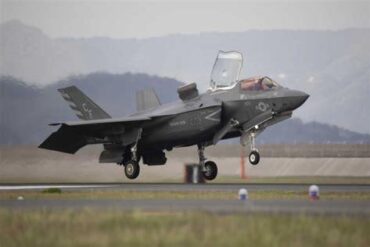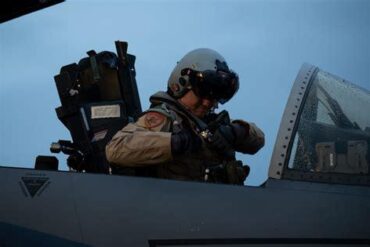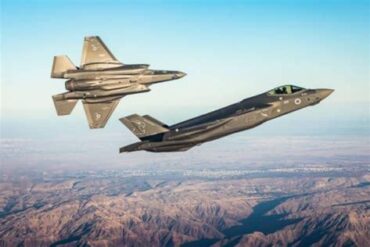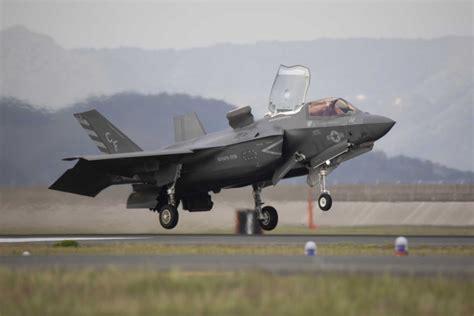
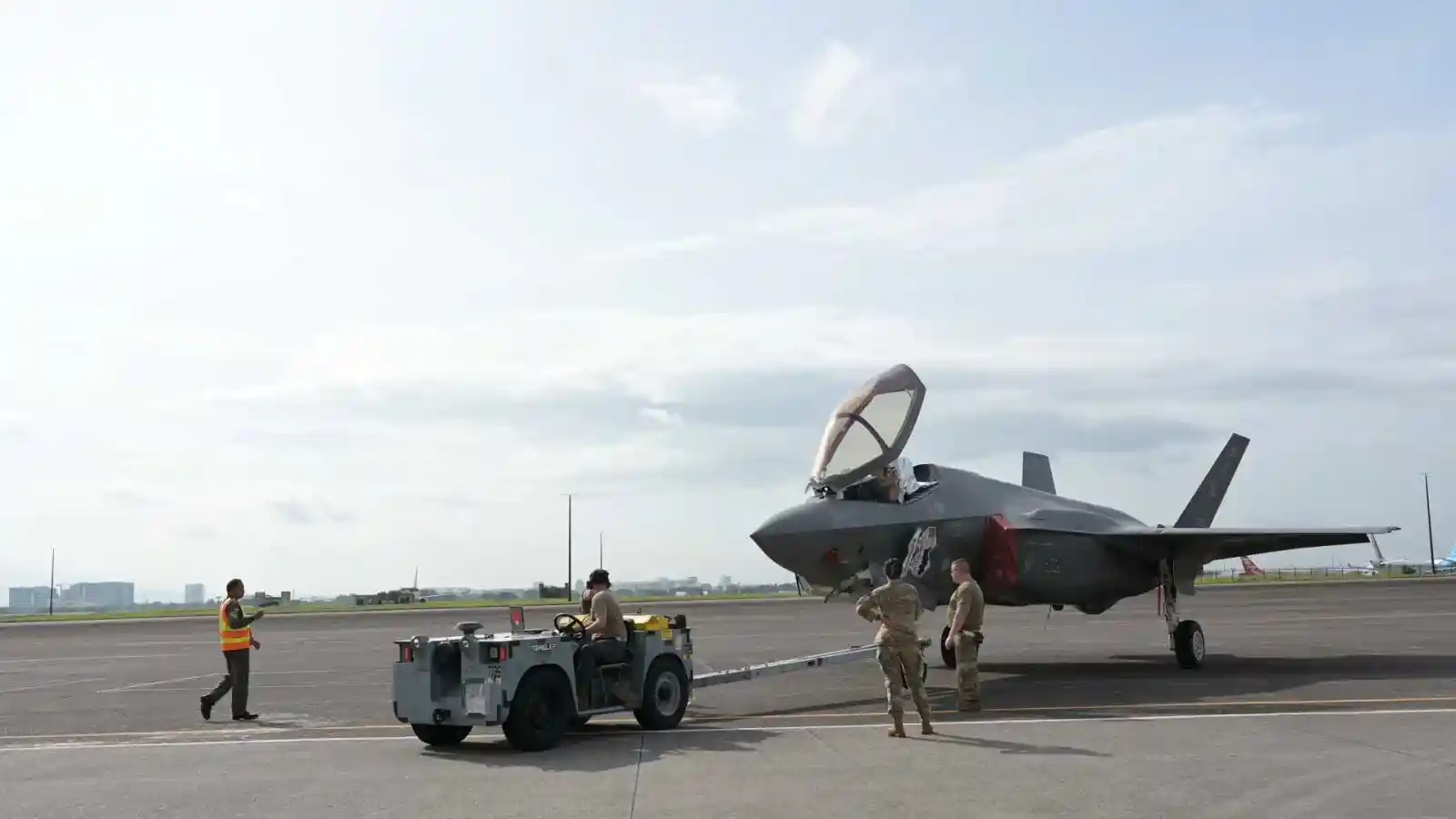
On July 7, 2025, the United States Air Force initiated a landmark strategic maneuver by deploying F-35A Lightning II stealth fighter jets to Clark Air Base in Pampanga, marking the first-ever deployment of the advanced aircraft to the Philippines. The historic arrival coincides with the Cope Thunder Philippines 25-2 exercise, a bilateral military training operation with the Philippine Air Force (PAF) that underscores deepening defense ties and comes amid escalating Chinese naval assertiveness in the region.
Strategic Context: Regional Tensions and Historical Recalibrations
This deployment does more than strengthen U.S.-Philippine interoperability—it represents a sharp message to Beijing. The F-35A arrival aligns with growing concerns over People’s Liberation Army Navy (PLAN) incursions into the Philippine Exclusive Economic Zone (EEZ), particularly in the volatile South China Sea. These waters have been the site of frequent confrontations, including laser targeting incidents, ramming of civilian vessels, and water cannon assaults against Philippine assets.
The Cope Thunder exercise is not merely symbolic. It builds on the 1951 Mutual Defense Treaty and the Enhanced Defense Cooperation Agreement (EDCA), which was expanded in 2023 to include nine bases across the archipelago. This year’s drills integrate 2,526 personnel, including 225 U.S. Pacific Air Forces crew members and 2,301 PAF personnel, representing one of the most extensive U.S. deployments in the country since the Cold War.
Cope Thunder 25-2: An Unprecedented Joint Exercise
The current iteration of Cope Thunder includes training missions over Basa Air Base and Northern Luzon, featuring a full spectrum of modern combat operations:
- Air Superiority Missions
- Suppression of Enemy Air Defenses (SEAD)
- Close Air Support (CAS)
- Aerial Refueling Operations
- Electronic Warfare Drills
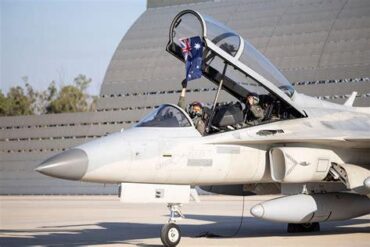
These operations simulate contested and realistic multi-domain warfare. U.S. aerial assets include the F-35A, F-16 Fighting Falcon, F-22 Raptor, and A-10 Thunderbolt II, supported by airlifters and refueling tankers from Guam and Misawa Air Base in Japan. On the Philippine side, FA-50PH light fighters, A-29B Super Tucano turboprops, AS-211 trainers, and rotary platforms offer complementary combat and support roles.
Clark Air Base: From Colonial Legacy to Modern Launchpad
Clark Air Base is not just a location—it is a symbol of enduring strategic partnership. Established in 1903 as Fort Stotsenburg and renamed Clark Field in 1919, it played a pivotal role during World War II and served as a Cold War-era hub for transient U.S. aircraft throughout the Pacific. After its closure in 1991 following the Mount Pinatubo eruption and the Philippine Senate’s vote to end U.S. basing rights, Clark was reborn as a dual-use facility. It now hosts the PAF’s 710th Special Operations Wing and serves as a critical node for multilateral exercises such as Balikatan and Cope Thunder.
Chinese Vessels Shadow Exercise Activity
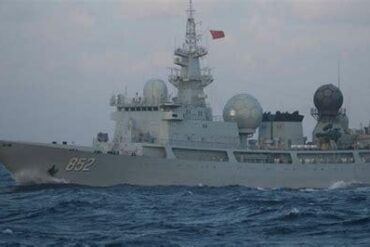
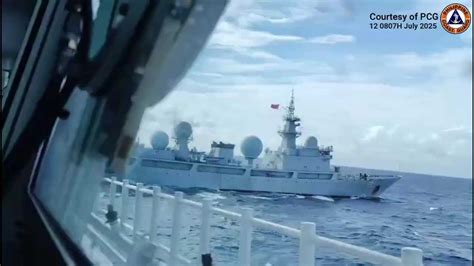
While U.S. and Philippine aircraft were conducting sorties, the Philippine Coast Guard (PCG) confirmed the presence of three Chinese warships—Type 815G surveillance ship Tianwangxing, China Coast Guard vessel 4203, and Type 052D destroyer Guilin (164)—lurking 69.31 nautical miles west of Cabra Island. These ships operated well within the Philippine EEZ, a move that violates both the United Nations Convention on the Law of the Sea (UNCLOS) and the 2016 Hague Arbitral Tribunal ruling.
The Tianwangxing, observed in previous drills such as Balikatan 2024 and Talisman Sabre, is equipped with cutting-edge electronic surveillance systems, including COMINT, SIGINT, and satellite tracking capabilities. Its unauthorized presence during the exercise suggests direct Chinese surveillance of U.S.-Philippine military integration.
F-35A Lightning II: The Game-Changer in Asia-Pacific Airpower
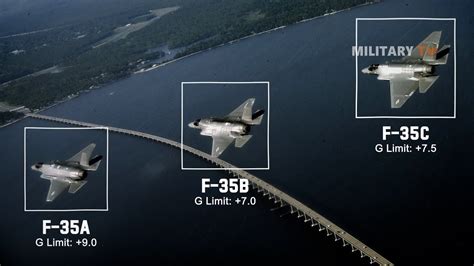
The F-35A Lightning II, built by Lockheed Martin, is a fifth-generation stealth multirole fighter optimized for air superiority, interdiction, and network-centric warfare. Key technical specs include:
- Engine: Pratt & Whitney F135
- Thrust: 177 kN
- Top Speed: Mach 1.6
- Combat Radius: ~1,240 km
- Service Ceiling: 15,240 meters
- Armament: AIM-120 AMRAAM, AIM-9X, GBU-31 JDAM, GBU-39 SDB, 25mm GAU-22/A cannon
- Sensors: AN/APG-81 AESA radar, EOTS, DAS, and Link 16 tactical data link
The aircraft’s internal weapons bay, stealth profile, and fused sensor suite allow it to detect, engage, and destroy enemy targets while remaining largely undetectable—ideal for operations in contested airspaces such as the South China Sea.
Agile Combat Employment and Distributed Deterrence
According to Lt. Col. Bryan Mussler, the deployment of the F-35A to the Philippines is a cornerstone of the Agile Combat Employment (ACE) doctrine. ACE aims to disperse assets across multiple forward operating locations to avoid vulnerability from a single-point failure or first-strike attack.
By training in realistic expeditionary conditions, U.S. forces validate the logistics and command-control structures needed to operate under pressure and at scale. The Pacific Department-Level Exercise (DLE) series, under which Cope Thunder now falls, also includes complementary exercises like Resolute Force Pacific, Emerald Warrior, and Mobility Guardian, focusing on joint force readiness, supply chain resilience, and multi-domain coordination.
Implications for Taiwan and South China Sea Contingencies
This deployment holds broader strategic implications for potential flashpoints such as the Luzon Strait—a narrow maritime corridor that connects the Philippine Sea to the South China Sea, adjacent to Taiwan’s southern flank. Analysts such as Tian Xia and Arnaud Leveau assert that forward basing from the Philippines strengthens contingency planning for scenarios involving both Taiwan Strait escalation and maritime conflicts in the Spratly or Paracel Islands.
The deployment may also expand Philippine access to U.S. intelligence, surveillance, and reconnaissance (ISR) capabilities, ensuring Manila is better equipped for domain awareness in its maritime zones. It also serves as a litmus test for future U.S. rotational presence in Southeast Asia.
Diplomatic Balancing and National Sovereignty
Despite the tactical benefits, Manila remains cautious. President Ferdinand Marcos Jr. has stated that such joint activities are focused on enhancing national defense capabilities and are not “directed at any one country.” However, the clear subtext is unmistakable. By welcoming next-generation airpower into its territory, the Philippines is staking a claim not only on territorial integrity but on its role as a central player in Indo-Pacific security architecture.
Conclusion: Forward Presence as Strategic Reality
The first-ever deployment of F-35A fighters to the Philippines is more than a military exercise—it is a deliberate posture shift, a strategic recalibration, and a geopolitical signal. As tensions rise over maritime rights, freedom of navigation, and sovereignty in the South China Sea, such deployments underscore a new regional reality: the Philippines is no longer merely a treaty ally—it is a forward partner in a contested Indo-Pacific order.
As aircraft thunder over Luzon and radar tracks light up the sea approaches to Palawan, the region—and the world—watch closely.