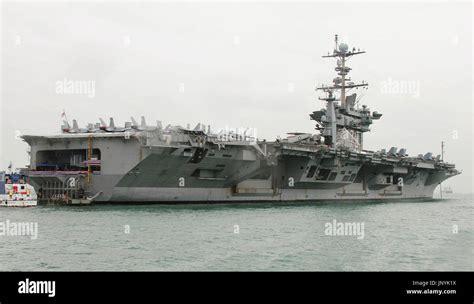
The arrival of the USS George Washington, a Nimitz-class nuclear-powered aircraft carrier, off the coast of the Philippines on Thursday underscores the intensifying maritime competition in the Indo-Pacific. This port call comes barely 24 hours after China’s Shandong, the country’s first fully indigenous aircraft carrier, made a high-profile visit to Hong Kong, highlighting the growing rivalry between Washington and Beijing for strategic influence in the region.
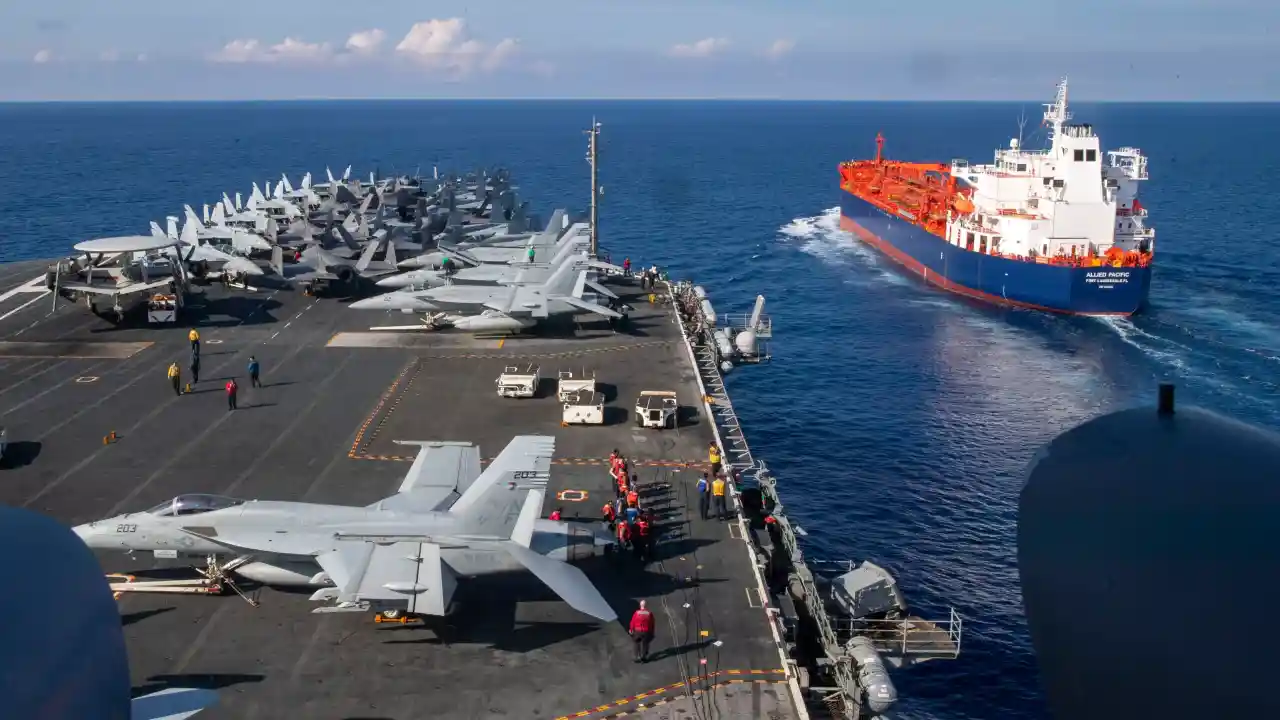
The USS George Washington (CVN-73), an integral component of the US Navy’s forward-deployed forces, docked near Manila, marking a significant symbol of renewed US-Philippine defense cooperation. The visit is seen as a direct signal of Washington’s commitment to supporting its treaty allies in Southeast Asia and ensuring freedom of navigation in the disputed waters of the South China Sea, where China continues to assert expansive, internationally rejected territorial claims.
Lieutenant-Commander Mark Langford, a spokesman for the George Washington, emphasized the broader strategic message behind the deployment: “The US Navy, along with our allies and partners, is committed to a free and open Indo-Pacific.” Langford further noted that operations like these demonstrate a continuous commitment to regional stability, regardless of “current events,” hinting at the ongoing tensions involving Beijing’s maritime ambitions.
The port call comes at a delicate moment, with Manila and Washington significantly upgrading their defense partnership under Philippine President Ferdinand Marcos Jr., who has shown greater willingness than his predecessor to challenge Chinese maritime assertiveness.
China’s Shandong Arrives in Hong Kong After Combat Drills
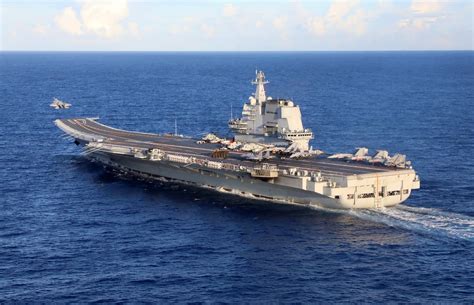
As the USS George Washington arrived in Philippine waters, the Shandong, China’s first domestically built aircraft carrier, docked in Hong Kong after concluding combat exercises in the western Pacific. The timing of these high-profile naval movements is more than coincidental and reflects the increasing military posturing between the two powers.

The Shandong (CV-17) had previously sailed near the northern Philippines in April, conducting joint maneuvers with the Liaoning, China’s first aircraft carrier acquired from Ukraine and extensively refurbished by Chinese engineers. The drills aimed to showcase China’s growing carrier strike capabilities and its ability to project power beyond its immediate coastline.
These deployments come as Beijing continues to assert sovereignty over nearly the entire South China Sea, a critical maritime corridor through which more than 60 percent of global trade transits. Despite a 2016 Permanent Court of Arbitration ruling invalidating China’s sweeping claims, Beijing maintains military outposts on artificial islands, backed by an expanding naval fleet.
Strategic Significance of the USS George Washington’s Visit
The USS George Washington’s arrival is part of the broader US strategy to reinforce alliances and maintain deterrence against Chinese maritime aggression. The 1951 Mutual Defense Treaty between the US and the Philippines serves as the backbone of this cooperation, obligating both nations to support each other in the event of external armed attack.
Under President Marcos Jr., Manila has granted the US expanded access to military bases under the Enhanced Defense Cooperation Agreement (EDCA), a move Beijing has strongly criticized. The two allies have also ramped up joint exercises, including the first-ever US-Philippines Coast Guard drills held in May 2025 within Philippine territorial waters.
Rear Admiral Carlos Borromeo of the Philippine Navy praised the George Washington’s visit, describing it as a “powerful demonstration of unity and shared interest in preserving maritime peace and stability.” He further highlighted that US carrier strike groups serve as visible reminders of the enduring security relationship between the two nations.
A Look at China’s Expanding Naval Capabilities
China’s naval ambitions are increasingly evident, with the US Department of Defense’s 2024 report declaring the People’s Liberation Army Navy (PLAN) as the world’s largest by fleet size, boasting over 370 ships and submarines.
The Shandong’s recent drills, alongside the Liaoning, demonstrate Beijing’s maturing carrier strike group operations, a capability that just over a decade ago was non-existent within China’s military arsenal. The carrier’s visit to Hong Kong serves both symbolic and operational purposes, reinforcing China’s claim over the city while projecting military confidence across the Indo-Pacific.
Regional analysts see these developments as an unmistakable signal that China aims to challenge US naval supremacy in waters critical to global commerce and regional security.
The Broader Indo-Pacific Tensions
Beyond the maritime maneuvering, broader geopolitical tensions continue to simmer. The US-Vietnam trade deal, signed earlier this week, has provoked new friction with Beijing. While the agreement spares Vietnam from the harshest of Washington’s tariffs, it imposes strict rules on goods transshipped through Vietnam to circumvent US trade barriers, a measure Beijing interprets as another front in Washington’s strategy to contain Chinese economic influence.
Chinese Foreign Ministry spokeswoman Mao Ning warned that “negotiations and agreements should not target or harm the interests of third parties,” an implicit reference to the ongoing US efforts to strengthen alliances and partnerships that marginalize Beijing.
Meanwhile, Vietnam faces the delicate task of balancing its economic dependence on Chinese raw materials with the benefits of deepening ties with the US. Analysts warn that missteps could invite retaliatory actions from Beijing, potentially destabilizing regional economies.
Military Balance in the South China Sea
The South China Sea remains a volatile flashpoint, with overlapping claims from China, the Philippines, Vietnam, Malaysia, Brunei, and Taiwan. Despite international legal rulings, China’s construction of military bases on disputed reefs and islands, coupled with its rapidly growing navy, has escalated regional anxieties.
In response, Washington has maintained an aggressive pace of Freedom of Navigation Operations (FONOPs) and bolstered its regional partnerships. The deployment of the USS George Washington, capable of carrying more than 70 aircraft, including F/A-18E Super Hornets, underscores the United States’ ability to project power and reassure allies amid China’s increasing assertiveness.

US officials, including Defense Secretary Lloyd Austin, have reiterated that America will honor its treaty obligations, warning that any armed attack against Philippine forces in the South China Sea would trigger a collective defense response.
Conclusion: A New Era of Naval Rivalry
The near-simultaneous deployments of the USS George Washington to the Philippines and China’s Shandong to Hong Kong mark a defining moment in the unfolding great-power competition in the Indo-Pacific.
As both nations flex their naval muscles, the stakes for regional stability, freedom of navigation, and the future of global trade routes could not be higher. For Southeast Asian countries like the Philippines and Vietnam, navigating this strategic rivalry requires deft diplomacy, military preparedness, and a delicate balancing of economic and security interests.
The months ahead are likely to witness more assertive military maneuvers, high-level diplomatic exchanges, and potentially greater economic fallout as Washington and Beijing vie for influence across one of the world’s most strategically vital regions.