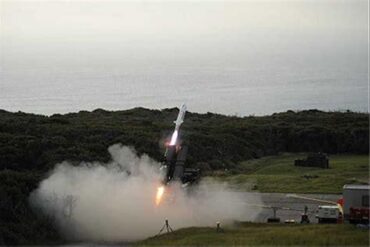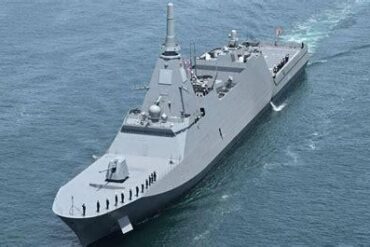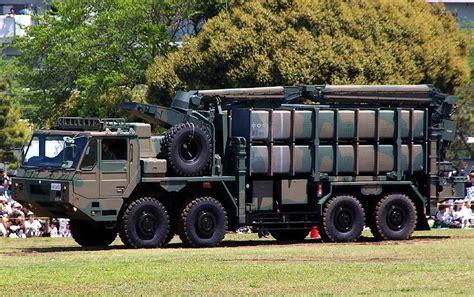
Japan is weighing the first-ever export of its Type 03 Chu SAM medium-range air defense system to the Philippines, a move that would signal a profound shift in Tokyo’s posture from a traditionally restrained arms supplier to an assertive regional security provider. The discussions, held quietly between Tokyo and Manila, unfold at a moment when pressure from China’s expanding military footprint in the South China Sea has sharpened Philippine defense needs and accelerated Japan’s internal debate on weapons export restrictions.
The proposal coincides with a historic policy transformation within Japan. Prime Minister Sanae Takaichi’s government is preparing to eliminate the long-standing “five-category” rule that has kept lethal weapons largely off Japan’s export menu. The rule—limiting transfers to rescue, transport, patrol, surveillance, and minesweeping functions—has defined Japan’s arms export posture for decades. The planned overhaul, enabled by the fact that these principles stem from a cabinet decision rather than legislation, allows the National Security Council to rewrite the rules with unprecedented speed.
The timing of an export discussion for the Type 03 Chu SAM is politically delicate yet strategically consistent. Japan’s evolving defense diplomacy seeks to strengthen frontline partners such as the Philippines, whose archipelagic geography makes its bases vulnerable to aerial and missile threats emanating from contested waters in the West Philippine Sea.
Tokyo’s arms export framework has been under mounting political pressure. The coalition agreement between the Liberal Democratic Party and Nippon Ishin explicitly commits to abolishing the restrictive five-category regime by 2026. Because the principles are embedded in cabinet decisions rather than statutory law, revising them demands no parliamentary debate. This procedural shortcut has drawn criticism from opposition parties and civil society groups worried that a dramatic shift in Japanese arms-transfer policy could occur without meaningful scrutiny.
Despite resistance, the momentum toward liberalization is evident. Japan has already permitted the export of Patriot missile components manufactured domestically for the United States—an action unthinkable under older interpretations of the rules. This incremental loosening sets the stage for more ambitious transfers, with the Type 03 system considered an early test case.
Inside the Type 03 Chu SAM: Japan’s Mobile Shield
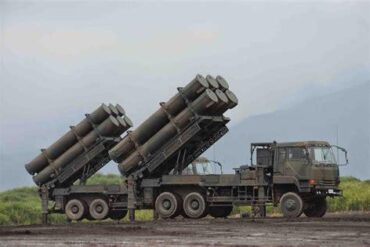
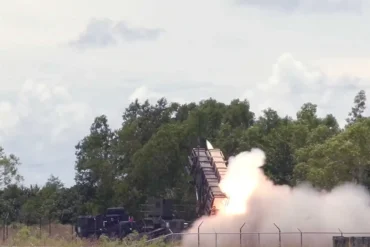
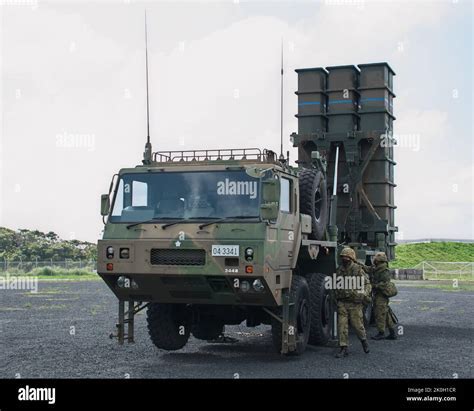
Developed in the 1990s by Mitsubishi Electric, the Type 03 Chu SAM was fielded to replace the aging U.S.-designed MIM-23 Hawk. The system is fully mobile, mounted on heavy-duty trucks optimized for rapid movement between dispersed firing positions. Each launcher typically carries six missiles, a configuration that enhances responsiveness during saturation threats.
The missile boasts an approximate 50-kilometer engagement range, reaching targets up to around 10 kilometers in altitude, with intercept speeds near Mach 2.5. Its design features a solid-propellant motor and a high-explosive fragmentation warhead engineered to defeat fast, maneuverable threats such as fighter aircraft, cruise missiles, and potentially unmanned systems.
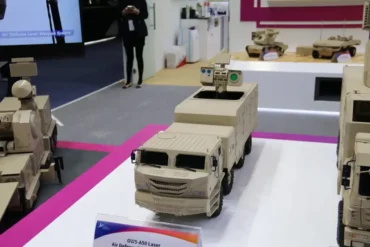
A distinctive component is the system’s AESA (Active Electronically Scanned Array) radar, mounted on its own 8×8 truck. Open-source assessments attribute to the radar the ability to track roughly 100 aerial targets simultaneously, while supporting engagements against about a dozen threats at once. Guided by inertial navigation for mid-course flight and an active radar seeker for terminal homing, the Chu SAM is resilient in cluttered, jammed, or poor-weather environments—an essential trait for archipelagic defense networks.
Within Japan’s own layered air and missile defense architecture, the Type 03 system bridges the gap between short-range Tan SAM units and long-range Patriot Advanced Capability-3 batteries defending major cities and strategic bases.
What the Philippines Gains: A New Medium-Range Defense Layer
For the Armed Forces of the Philippines (AFP), acquiring the Type 03 would mark another significant step in shifting from internal security operations to a modern, territory-focused defense posture. The Philippines has only recently begun fielding contemporary ground-based air defense systems, maritime radars, and coastal anti-ship missiles to protect ports, airfields, and offshore energy infrastructure.
A Type 03 battery deployed to Luzon or key coastal installations would provide the Philippines its first credible medium-range air defense layer. With proper integration into Philippine and allied sensor networks—including U.S. surveillance assets—the system could cover critical approach corridors and complicate Chinese surveillance or coercive flights around the West Philippine Sea.
Mobility is a crucial advantage. Road-mobile launchers allow the AFP to redistribute assets as tensions shift, reducing vulnerability to preemptive strikes and challenging adversary targeting cycles.
Expanding Japan–Philippines Security Cooperation
The potential deal follows expanding defense ties between Tokyo and Manila. The Reciprocal Access Agreement, signed in 2024 and entering into force the following year, permits the Self-Defense Forces and the AFP to deploy on each other’s territory. This agreement has already resulted in combined ground and maritime exercises on Philippine soil, reflecting a deeper strategic alignment.
Japan’s willingness to explore Chu SAM exports is part of a broader pattern aimed at reinforcing the security posture of frontline partners. It aligns with Tokyo’s commitment to preserve its defense industrial base and meet alliance expectations, particularly from the United States.
Strategic and Regional Implications
A confirmed export to the Philippines would mark a defining moment in Japan’s evolution into an Indo-Pacific security provider. It would also ripple across the region’s geopolitical landscape. A Japanese-manufactured medium-range air defense system positioned near contested waters introduces a new variable into the network of allied and partner defenses stretching from the East China Sea to the South China Sea.
Beijing would almost certainly protest the deployment. China has repeatedly criticized Japanese missile placements on the Ryukyu chain and is likely to view the export as a deliberate step toward encirclement. Yet for Washington and regional partners, such an export signals that Japan is ready not only to strengthen its own defenses but to actively support those facing the brunt of Chinese pressure.
The unfolding talks and potential rule changes point toward a landmark shift. Should the Type 03 Chu SAM export move from informal discussions to a signed contract, it will symbolize Japan’s decisive transition from a self-restrained buyer of foreign weapons to a proactive, rule-shaping contributor to Indo-Pacific security architecture.